ADDiTEC Demonstrates Material Freedom and Mission Readiness at JIFX 2026 with HYBRiD-X

Hardware
Originally reported by 3DPrint.com
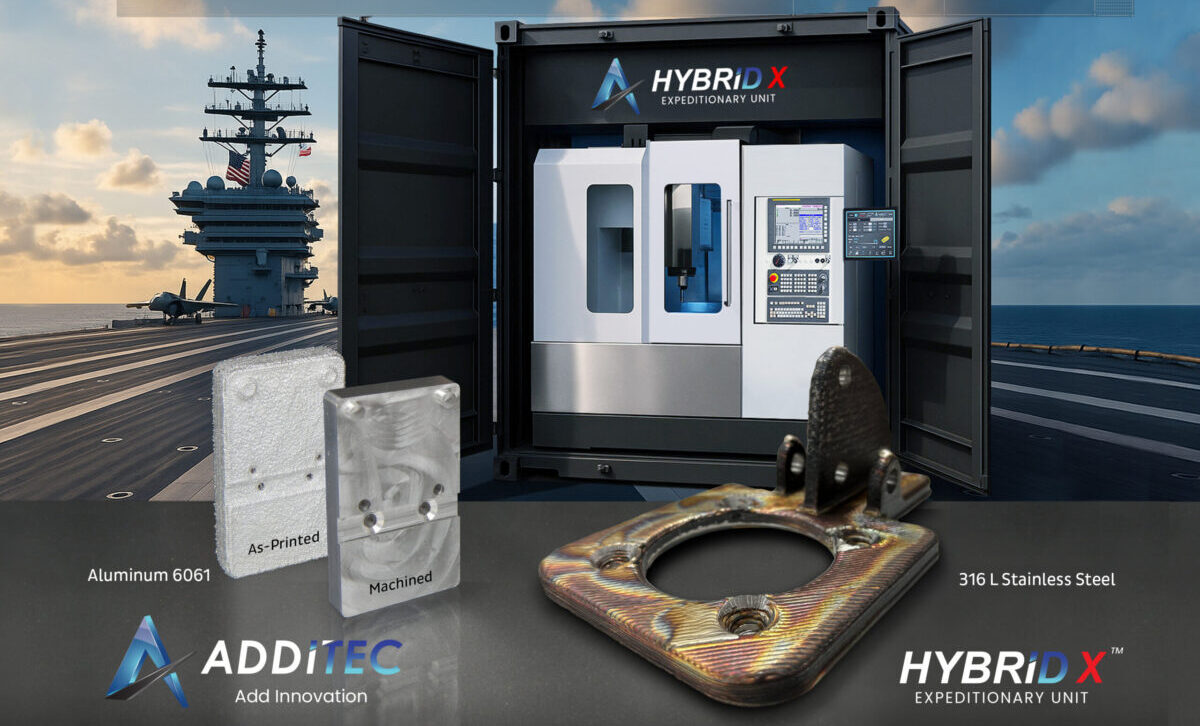
ADDiTEC showcased its HYBRiD-X expeditionary manufacturing platform at the Naval Postgraduate School’s Joint Interagency Field Experimentation (JIFX) in May 2026, successfully processing aluminum, stainless steel, and nickel-aluminum bronze within a single deployable system. The demonstration, supported by CAMRE and FLEETWERX, highlighted the platform’s ability to combine Liquid Metal Jetting (LMJ), Laser Directed Energy Deposition (LDED), and CNC machining in a containerized solution. ADDiTEC claims HYBRiD-X is the world’s first deployable system to integrate these three processes, enabling both additive and subtractive manufacturing for field repair and production of mission-critical metal components.
This demonstration lands squarely within the defense vertical’s politically accelerated 2025-26 wave, where distributed manufacturing and supply-chain resilience have become operational imperatives rather than experimental concepts. ADDiTEC’s “Material Freedom” pitch-multi-material, multi-process capability in a single footprint-directly addresses the U.S. Department of Defense’s push for expeditionary sustainment, reducing reliance on extended logistics chains. The HYBRiD-X platform competes with other containerized DED systems from vendors like MELD Manufacturing and SPEE3D, but ADDiTEC differentiates by layering LMJ and CNC finishing onto the DED core, aiming to cover a wider repair and production envelope. The key editorial question, however, is whether this integration translates into repeatable, qualified part output under field conditions, or remains a compelling but unproven capability demonstration.
For ADDiTEC, the JIFX event is a necessary de-risking step before larger defense procurement cycles like RIMPAC. The company must now convert this field experiment into documented, repeatable results-material properties, deposition rates, and surface finishes across the three alloys-that can survive the U.S. Navy’s qualification process. Buyers should treat the “world’s first” claim as a technical milestone, not a production-ready guarantee, and watch for third-party validation of part quality and system reliability under extended deployment.
Topics