ARC Gains ORNL Supercomputer Access for AI-Driven Defense Manufacturing via Exascale Foundry

Hardware
Originally reported by 3DPrint.com
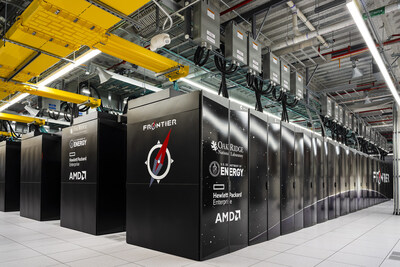
Autonomous Resource Corporation (ARC), the post-bankruptcy owner of Desktop Metal’s assets, has partnered with Oak Ridge National Laboratory (ORNL) to launch Exascale Foundry, a project granting ARC access to ORNL’s Peregrine AI software and the lab’s Manufacturing Demonstration Facility (MDF). The first research project targets high-temperature nickel superalloys for binder jetting of turbine components in autonomous aerospace engines. ARC will integrate Peregrine with its ARCNet distributed manufacturing operating system and ADAM AI model, aiming to compress qualification timelines from years to months for defense supply chains. The partnership leverages ORNL’s exascale supercomputing capabilities, a resource ARC acquired for $7 million in Desktop Metal’s IP and assets in 2025.
This partnership places ARC at the intersection of two critical AMPulse patterns: the Chinese localization arc inverted for US defense sovereignty, and the aerospace qualification grind now compressed by AI. ARC’s strategy repurposes Desktop Metal’s binder jetting technology-historically a metal-PBF-LB competitor-into a defense-specific production node, directly challenging incumbent LPBF suppliers like EOS and Velo3D in the turbine component space. The Exascale Foundry project addresses the defense vertical’s urgent need for rapid material qualification, a bottleneck that has historically taken 10–15 years for aerospace-grade nickel superalloys. By combining ORNL’s computational materials science with ARCNet’s autonomous production infrastructure, ARC is attempting to bypass the traditional qualification grind, though the technical risk of AI-certified defense components remains unproven at scale.
From an expert standpoint, ARC’s move is less about Desktop Metal’s revival and more about leveraging national lab infrastructure to solve the defense sector’s material qualification crisis. The practical test will be whether ARC can deliver qualified nickel superalloy turbine parts within 12–18 months, a timeline that would require ORNL’s AI models to match or exceed the certification rigor of traditional ASTM/ISO testing protocols. For buyers in the defense supply chain, this partnership signals that binder jetting may finally have a path to production-grade aerospace applications, but only if ARCNet’s data pipeline can generate the traceability and repeatability data that program managers demand.
This article is an AI-assisted rewrite of the linked source report. Facts originate from the source; phrasing is AMPulse's. Use Read Original below to verify, or Report an issue if something is wrong.
Topics