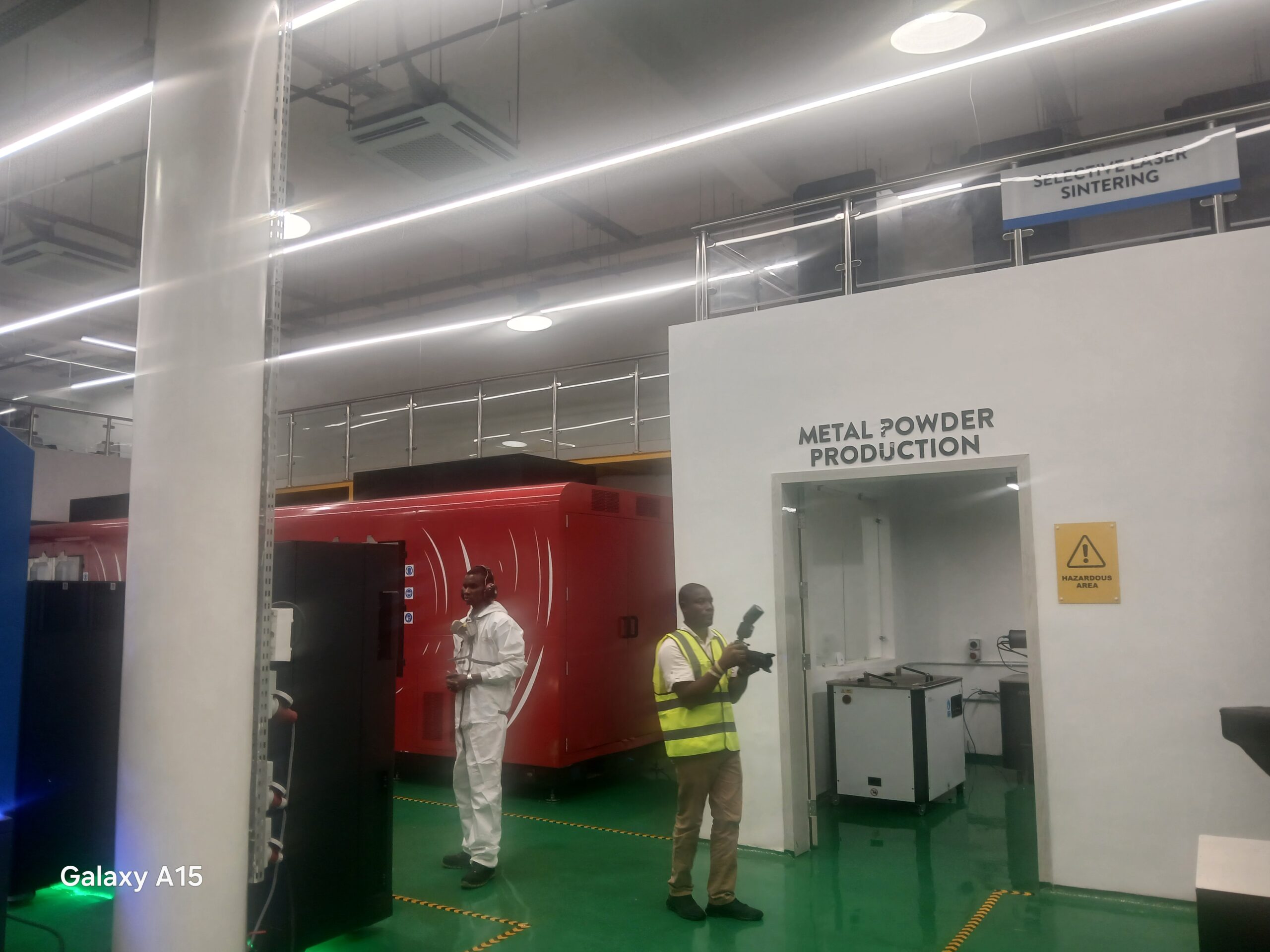
Arridex opens West Africa's first multi-technology industrial AM factory in Lagos, Nigeria

Service
Originally reported by businessday.ng
Arridex, a Nigerian multi-sector industrial technology group, has commissioned West Africa's first additive manufacturing factory in Lagos, Nigeria, a Phase 2 facility focused on producing critical spare parts and components for oil and gas, aerospace, and defense sectors. Group CEO Kayode Adeleke said the factory shift was driven by supply-chain vulnerabilities exposed during the COVID-19 pandemic, and noted a 2027 plan for a "mega-oil factory" that would operate among the largest single-site industrial 3D printing operations globally. The factory was officially commissioned by Lagos State Governor Babajide Sanwo-Olu, and Arridex holds ISO certification with existing partnerships with major international oil companies. Brig Gen A. A. Lawal of the Nigerian Army Defence Intelligence attended, affirming military interest in additive manufacturing.
This move places Arridex at a distinct frontier: building industrial AM service capacity from a base where there is effectively zero prior infrastructure. The factory addresses a clear import-reliance problem - Nigeria spends heavily on imported spare parts for oil and gas, aerospace, and defense - but the operational challenge is steep. Arridex must not only operate LPBF or DED equipment reliably in Lagos's power and logistics environment but also build a qualified materials supply chain and earn certification trust from IOCs and defense buyers who historically source from European or Asian suppliers. This is not a replication of the Western bureau model; it is a greenfield service-economics build in a market where AM adoption has been near zero in any industrial sense. The company's 21-year track record in broader industrial services gives it a longer runway than a pure startup would have, but the qualification grind for oil-and-gas and aerospace parts typically runs years, not months.
Practically, Arridex has opened a facility that can produce demonstration-quality parts now, but the commercial impact will depend entirely on how quickly it can work through acceptance-testing protocols with its anchor customers in oil and gas. For Lagos and Nigeria, the factory is a tangible vote that local industrial AM is possible; for the broader AM industry, it is a small-scale but structurally novel data point in the geographic expansion of service-bureau capacity. The real test will be whether Arridex can convert the governor's endorsement and military interest into repeatable orders for qualified parts at a price point that competes with imports plus logistics cost.
This article is an AI-assisted rewrite of the linked source report. Facts originate from the source; phrasing is AMPulse's. Use Read Original below to verify, or Report an issue if something is wrong.
Topics