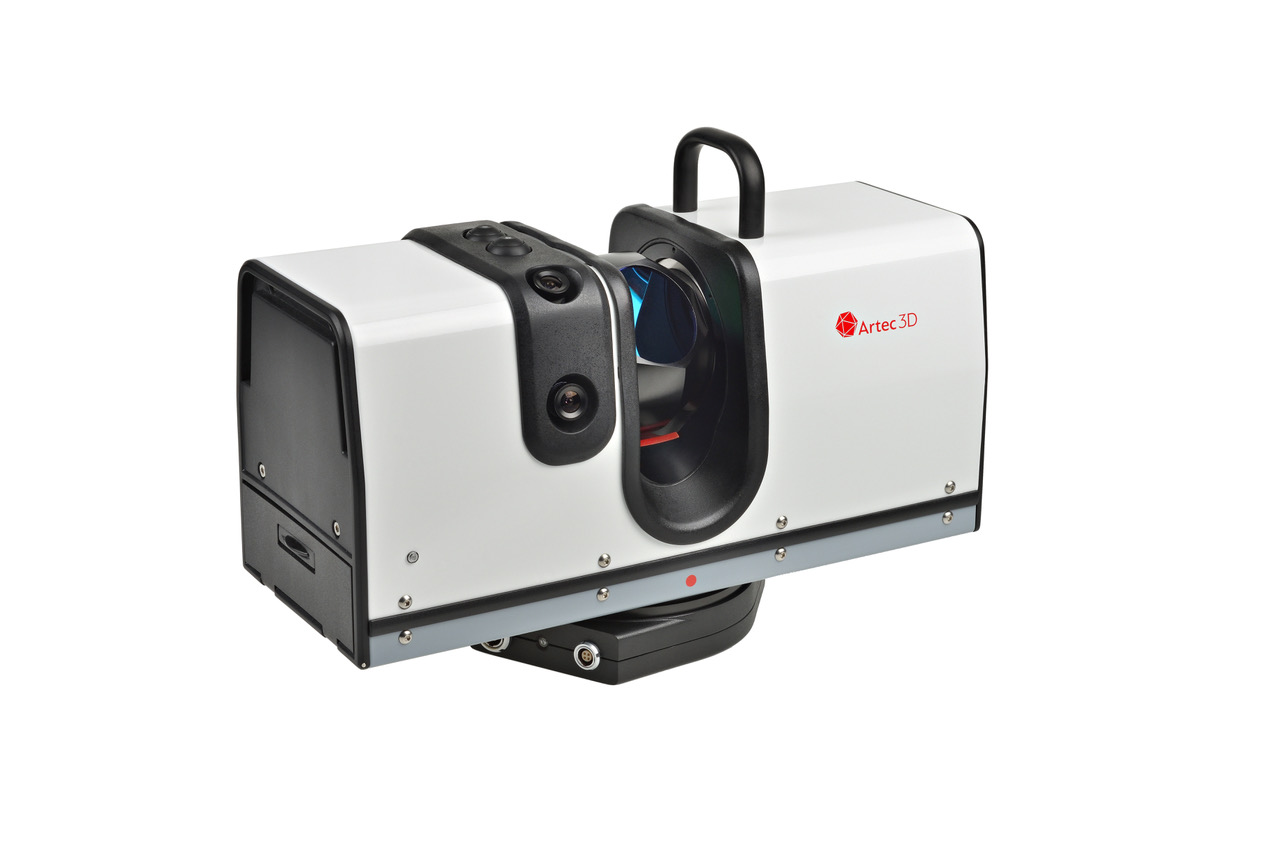
Artec 3D Launches Artec Ray Laser Scanner for Large-Scale Metrology at INDUSTRIE PARIS 2018

Hardware
Originally reported by 3Druck
Artec 3D Launches Artec Ray Laser Scanner for Large-Scale Metrology at INDUSTRIE PARIS 2018
Artec 3D unveiled the Artec Ray, a long-range laser scanner, at the INDUSTRIE PARIS 2018 trade fair. The device is designed for digitizing large objects up to 110 meters away with sub-millimeter precision and high angular accuracy. CEO Artyom Yukhin confirmed the unit features a four-hour internal battery for field use and integrates directly with Artec Studio software, supporting export formats like PTX and BTX for compatibility with Geomagic Design X, SOLIDWORKS, and ReCap. The system operates without the need for adhesive markers or external tracking aids, prioritizing ease of use for industrial inspection and documentation.
This launch expands Artec 3D's portfolio from handheld structured light scanners, such as the Eva and Space Spider, into the long-range terrestrial laser scanning market. By addressing large-scale applications like aerospace components, wind turbines, and construction sites, Artec 3D competes directly with established players in the terrestrial lidar space. The ability to combine data from the stationary Artec Ray with high-resolution handheld scanners within a unified software environment provides a hybrid workflow for capturing both global geometry and intricate surface details. This integration is critical for users requiring high-fidelity digital twins of complex, large-scale assemblies.
The Artec Ray offers a practical solution for users who need to bridge the gap between large-scale site documentation and high-resolution component inspection. By streamlining the data fusion process between stationary and handheld hardware, the company reduces the time required for post-processing in reverse engineering and quality control workflows. Users should focus on validating the registration accuracy when merging point clouds from the Ray with existing handheld scan data to ensure geometric integrity across varying scales.
This article is an AI-assisted rewrite of the linked source report. Facts originate from the source; phrasing is AMPulse's. Use Read Original below to verify, or Report an issue if something is wrong.
Topics