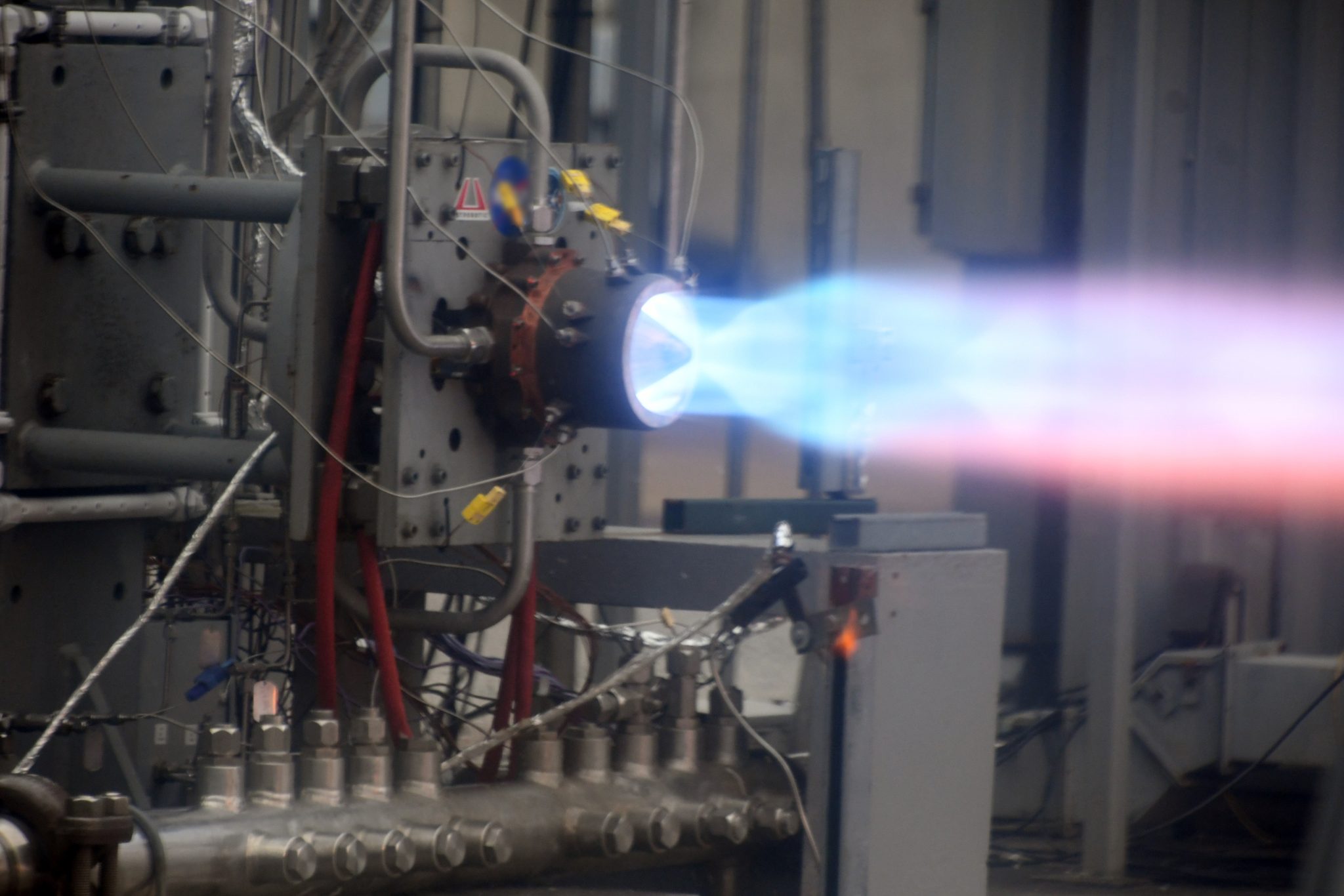
Astrobotic breaks rotating detonation engine record with patented PermiAM metal 3D printing

Application
Originally reported by 3D Printing Industry
Astrobotic, the Pittsburgh-based space robotics and lunar logistics company, completed a hot fire campaign for its Chakram rotating detonation rocket engine (RDRE) at NASA’s Marshall Space Flight Center, achieving eight successful tests across two prototypes. The campaign accumulated over 470 seconds of total run time, including a single 300-second continuous burn that the company claims is the longest ever recorded for an RDRE. Each prototype produced over 4,000 pounds of thrust, with nearly all hot fires reaching thermal steady state. The core enabler is PermiAM, a patented metal additive manufacturing technique co-developed with Elementum3D that allows tunable porosity within printed metal components, directly addressing thermal management and combustion stability challenges in RDRE design. The work was supported by NASA SBIR contracts focused on novel injector design and PermiAM application to RDRE components.
This milestone matters because it demonstrates that metal additive manufacturing can solve the fundamental physics challenge that has kept rotating detonation engines from practical deployment: controlling supersonic detonation waves with enough stability for sustained operation. RDREs offer up to 15% improvement in specific impulse over conventional rocket engines, plus better thrust-to-weight ratio and smaller engine footprint, but the qualification grind for such extreme propulsion applications has been severe. Astrobotic’s approach fits the IP lock-in grind pattern (P3) - PermiAM’s tunable porosity creates a narrow protected edge that, if embedded in NASA qualification documents and customer workflows, could form a durable moat. The company plans to incorporate Chakram into future lunar landers and in-space orbital transfer vehicles, positioning itself in the aerospace vertical where AM success often disappears from marketing language precisely when it succeeds.
From a practical standpoint, the 300-second steady-state burn is the most credible signal yet that RDRE technology can move from laboratory curiosity to engineering prototype. Astrobotic’s next execution challenge is translating these test-stand results into flight-qualified hardware with predictable service life, which typically requires 3-5 additional years of iterative testing and materials characterization. For buyers evaluating propulsion suppliers, the key question is whether PermiAM’s porosity control translates into reproducible part properties across production batches, not just single test articles.
Topics