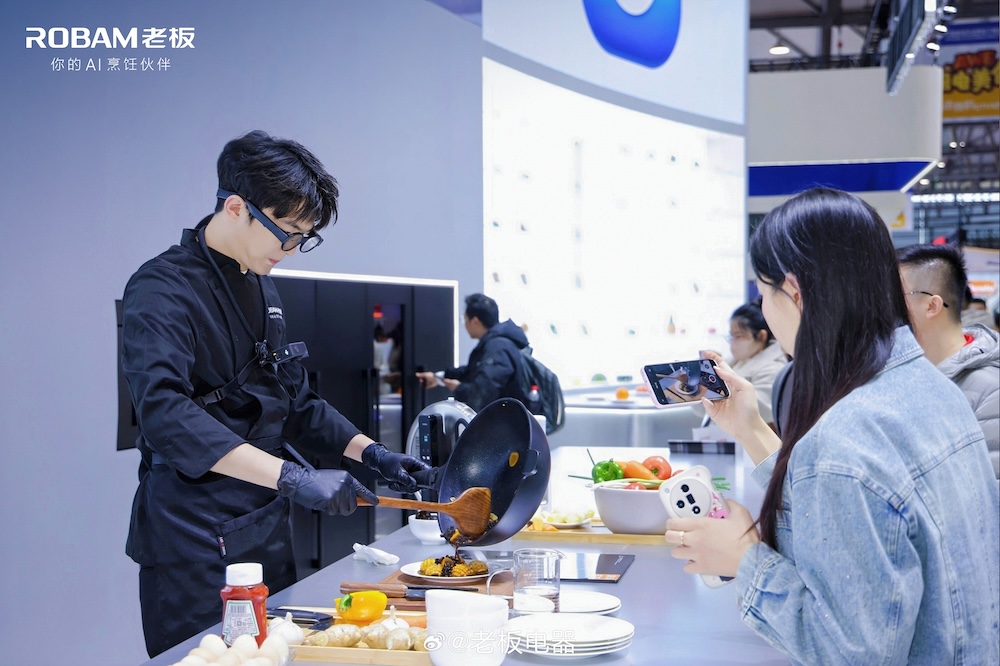
At AWE 2026, Robam Appliances unveiled its first AI-integrated smart glasses designed to optimize kitchen workflows through real-time visual processing.
Originally reported by cn.technode.com
At AWE 2026, Robam Appliances unveiled its first AI-integrated smart glasses designed to optimize kitchen workflows through real-time visual processing. The device utilizes the proprietary Shishen AI large language model to perform first-person visual recognition of ingredients, stove heat levels, and cooking progress. According to Robam Vice President He Yadong, the hardware integrates directly with the company's existing ecosystem of smart range hoods, stoves, and steam-bake ovens to provide automated culinary guidance and remote equipment control. This launch marks a strategic shift for the Hangzhou-based appliance manufacturer toward wearable human-machine interfaces that augment domestic labor.
This development highlights the growing trend of integrating edge computing and computer vision into consumer appliances to reduce cognitive load in complex environments. While traditional smart home systems rely on stationary touchscreens or voice assistants, Robam's wearable approach competes with broader AR-enabled industrial maintenance tools now migrating into the consumer sector. By positioning the appliance manufacturer as a software-centric service provider, Robam addresses the market demand for precision in home cooking, a segment currently valued at billions in the global smart kitchen hardware market. The company is moving beyond simple hardware manufacturing to capture value through proprietary AI-driven software ecosystems.
This integration signals a broader industry trend where appliance manufacturers will increasingly rely on specialized AI models to differentiate hardware performance in a saturated market. We expect to see further consolidation of kitchen IoT protocols as manufacturers seek to create seamless interoperability between wearable sensors and heavy-duty kitchen machinery. Future developments will likely focus on the accuracy of real-time thermal sensing and the expansion of the Shishen model to support more complex, multi-step culinary workflows across diverse international cuisines.
Topics