Avio Aero and Colibrium Additive showcase integrated GE Aerospace AM ecosystem
Service
Originally reported by Metal AM
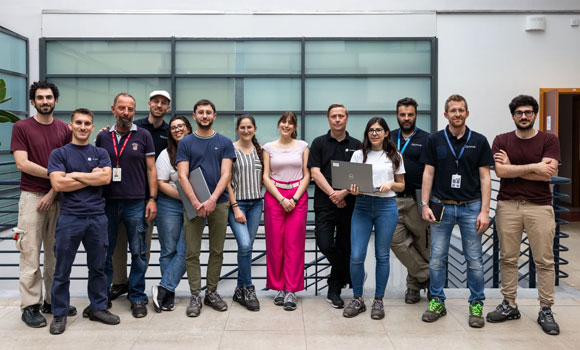
Avio Aero and Colibrium Additive, both part of GE Aerospace's Propulsion & Additive Technologies business, have detailed their integrated global additive manufacturing ecosystem spanning multiple sites in Europe, Canada, and the USA. The collaboration, highlighted on June 25, 2026, centers on Avio Aero's Cameri facility in Italy-a flagship metal AM production center operating Electron Beam Powder Bed Fusion (PBF-EB) at industrial scale since 2013. Key personnel include Fausto Asvisio, Commercial Director at Colibrium Additive, and Dario Mantegazza, Chief Manufacturing Engineer at Avio Aero. The ecosystem also includes the Turin Additive Laboratory (TAL), established in 2017 with the Polytechnic University of Turin, AP&C's metal powder production, and Colibrium Additive's engineering teams. A specific example of this integration is the industrialization of titanium aluminide (TiAl) low-pressure turbine blades for the GE9X engine, using AP&C-produced TiAl powder on Colibrium Additive PBF-EB machines, achieving blades weighing half as much as conventional nickel-alloy equivalents.
This announcement matters because it demonstrates the aerospace qualification grind in its mature, infrastructure phase-where AM success is no longer a headline but embedded in production workflows. The GE LEAP fuel nozzle case taught the industry that silence can be the maturity signal; here, Avio Aero's ecosystem is operating at a scale where collaboration across powder producers, machine developers, and manufacturing engineers is the norm, not the exception. The titanium aluminide blade program for the GE9X represents one of the few high-volume, certified metal AM production applications in aerospace, directly addressing fuel efficiency goals. This integrated model contrasts with the fragmented supply chains typical of many AM adopters, where powder, machine, and process qualification remain siloed. The ecosystem also shows how consumer-electronics titanium pull-through and defense acceleration are separate from aerospace's slower, qualification-driven adoption clock-this is the latter, operating at program-duration lock-in pace.
From an expert standpoint, this is a practical demonstration that the real frontier in metal AM is no longer machine speed or build volume, but repeatable factory integration across the value chain. Avio Aero's focus on safety, quality, delivery, and consistency before productivity and cost is the correct order for aerospace production. The mention of AI augmenting inspection-with human experts still making final decisions-reflects a pragmatic, risk-averse approach appropriate for certified components. For competitors, the lesson is that building a moat requires embedding innovation in qualification documents and customer workflows, not just impressive demo cells. The next step for Avio Aero is to extend this collaborative model to automation and AI while maintaining the qualification rigor that makes the GE9X blade program a reference case.
Topics