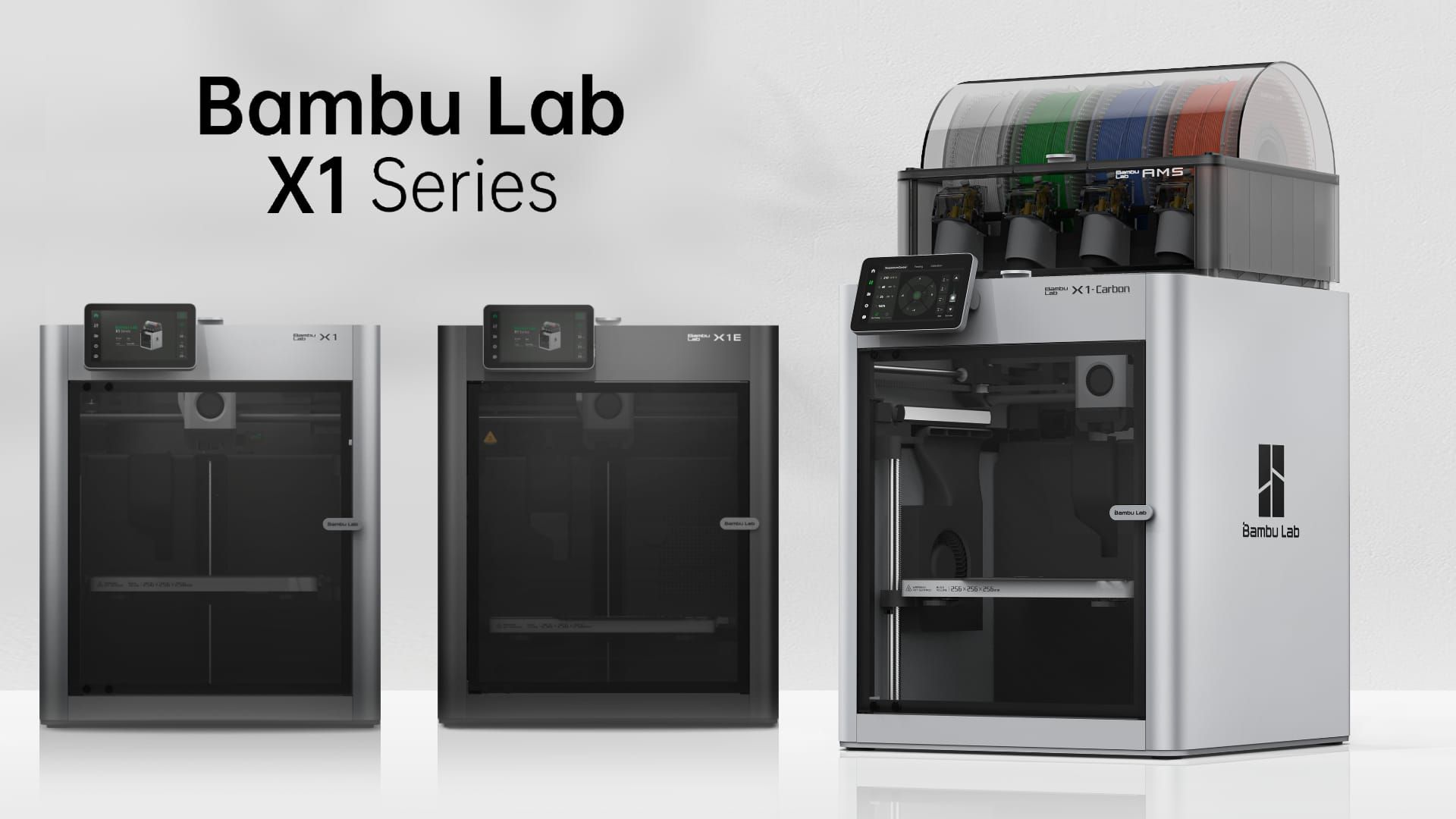
Bambu Lab ends production of X1, X1 Carbon, and X1E series as of March 31, 2026

Hardware
Originally reported by 3D Printing Industry
Bambu Lab has officially ceased manufacturing and active sales of its flagship X1, X1 Carbon, and X1E 3D printer series as of March 31, 2026. While the production lines for these CoreXY FDM machines have closed, the company has committed to a long-term support lifecycle extending through March 2031 to provide spare parts, technical assistance, and firmware security patches. Authorized distributors may continue to sell existing inventory under full warranty, but no new units will be manufactured. This move coincides with the launch of the X2D, a second-generation flagship featuring a dual-nozzle extrusion system with mechanical switching designed to resolve support material removal issues.
The discontinuation of the X1 series marks the end of a product cycle that fundamentally altered the desktop FDM market. Since its 2022 Kickstarter debut, which raised over $7 million, the X1 series forced competitors to adopt high-speed CoreXY architectures, enclosed chambers, and AI-driven automated calibration as standard features rather than premium add-ons. By retiring this line, Bambu Lab is transitioning from the hardware that established its market dominance to a more specialized ecosystem. The introduction of the X2D, starting at $649, utilizes AI algorithms derived from the high-end H Series to target a broader user base while addressing the mechanical limitations of single-nozzle multi-material printing.
For current X1 series owners, the five-year support window provides a stable transition period, but the shift toward dual-nozzle mechanical switching in the X2D indicates that the company is prioritizing ease of use and material versatility over pure print speed. Buyers should evaluate whether their specific workflows require the high-speed single-nozzle performance of the X1 or the improved support management of the X2D. The company must now execute the rollout of the X2D and P2S series to maintain its momentum in a segment where competitors are rapidly replicating its integrated software and hardware ecosystem.
This article is an AI-assisted rewrite of the linked source report. Facts originate from the source; phrasing is AMPulse's. Use Read Original below to verify, or Report an issue if something is wrong.