BLT supports validation of high-strength aluminium AM alloys with 707 MPa tensile strength
Hardware
Originally reported by Metal AM
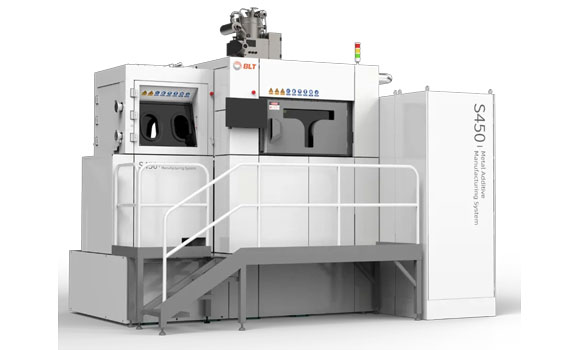
Xi'an Bright Laser Technologies (BLT) has supported the development and validation of a new family of high-strength aluminium alloys, RAE600 and RAE700, created by Chinese materials company AccMaterial and researchers at Shanghai Jiao Tong University. Published in Nature Communications, the alloys leverage a Ductile-Transformable Eutectic Nano-Skeleton (DT-ENS) design strategy to achieve porosity below 0.05% under PBF-LB processing, yield strengths of 648–707 MPa, ultimate tensile strengths of 656–714 MPa, and elongation of 7.0–10.3%. BLT's BLT-S210 and BLT-S450 PBF-LB machines were used for process development, parameter optimization, and component-scale verification, including robotic leg structures, satellite brackets, and lightweight topology-optimized parts. AccMaterial has filed IP in Europe, the USA, Japan, and Russia, and established an engineering ecosystem covering powder production, heat treatment, and validation.
This development addresses a persistent challenge in metal AM: simultaneously achieving high processability, strength, and ductility in aluminium alloys, which have historically been limited by cracking and poor mechanical performance. The RAE600/700 family targets aerospace and defense applications where weight savings and structural integrity are critical, competing with established high-strength aluminium grades like Scalmalloy and A20X. BLT's role as the validation partner reinforces its position as a key equipment supplier in China's growing AM materials ecosystem, leveraging its multi-laser architecture for consistent density and property distribution in larger parts. The collaboration also highlights the accelerating pace of materials innovation in China, where domestic supply chains and research institutions are increasingly driving alloy development independent of Western sources.
From an industry perspective, the practical significance lies in the demonstrated pathway from lab-scale alloy design to engineering validation using commercially available PBF-LB equipment. The next step for AccMaterial and BLT is scaling powder production and securing qualification from end-users in aerospace and defense, which remains the highest barrier to adoption. For buyers evaluating high-strength aluminium AM, the RAE alloys offer a credible alternative to existing options, but the absence of published fatigue data and long-term corrosion testing means qualification timelines will still be measured in years, not months.
This article is an AI-assisted rewrite of the linked source report. Facts originate from the source; phrasing is AMPulse's. Use Read Original below to verify, or Report an issue if something is wrong.
Topics