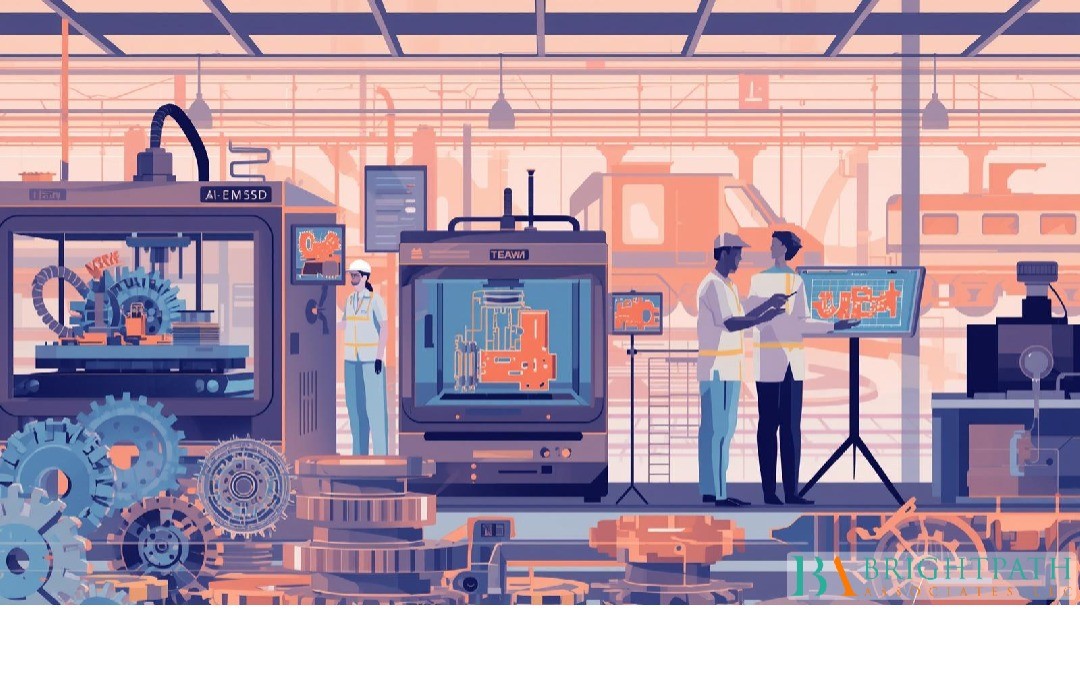
BrightPath Associates released a report on March 23, 2026, detailing the integration of additive manufacturing within the railroad sector to optimize component production.
Originally reported by brightpathassociates.com
BrightPath Associates released a report on March 23, 2026, detailing the integration of additive manufacturing within the railroad sector to optimize component production. The analysis, authored by Ellen Gomes, focuses on leveraging 3D printing to reduce material waste and shorten lead times for complex locomotive and infrastructure parts. The firm emphasizes that rail manufacturers are increasingly adopting these technologies to move away from traditional, inventory-heavy supply chains toward on-demand production models. BrightPath Associates, based in Bethany, Connecticut, is now prioritizing the recruitment of executives with specific expertise in advanced manufacturing and digital supply chain management to support these operational shifts.
This report highlights the ongoing transition of the rail industry from legacy casting and machining processes toward additive methods for low-to-medium volume, high-complexity parts. While the rail sector has historically been slow to adopt new manufacturing standards due to strict safety certifications, the move toward on-demand production addresses critical gaps in spare parts availability and inventory overhead. This shift places rail equipment manufacturers alongside aerospace and automotive sectors in the adoption of industrial-grade AM for end-use components. The focus on supply chain resilience reflects a broader trend in the US manufacturing landscape to mitigate logistics risks through localized, digital production capabilities.
For rail manufacturers, the practical value of this report lies in the identification of the talent gap currently hindering AM adoption. Organizations must prioritize hiring leaders who understand the intersection of material science, certification requirements, and digital workflows to move beyond prototyping. Buyers and stakeholders should focus on identifying specific components where AM provides a clear cost-benefit over traditional casting, particularly for legacy parts that are no longer in mass production.
This article is an AI-assisted rewrite of the linked source report. Facts originate from the source; phrasing is AMPulse's. Use Read Original below to verify, or Report an issue if something is wrong.
Topics