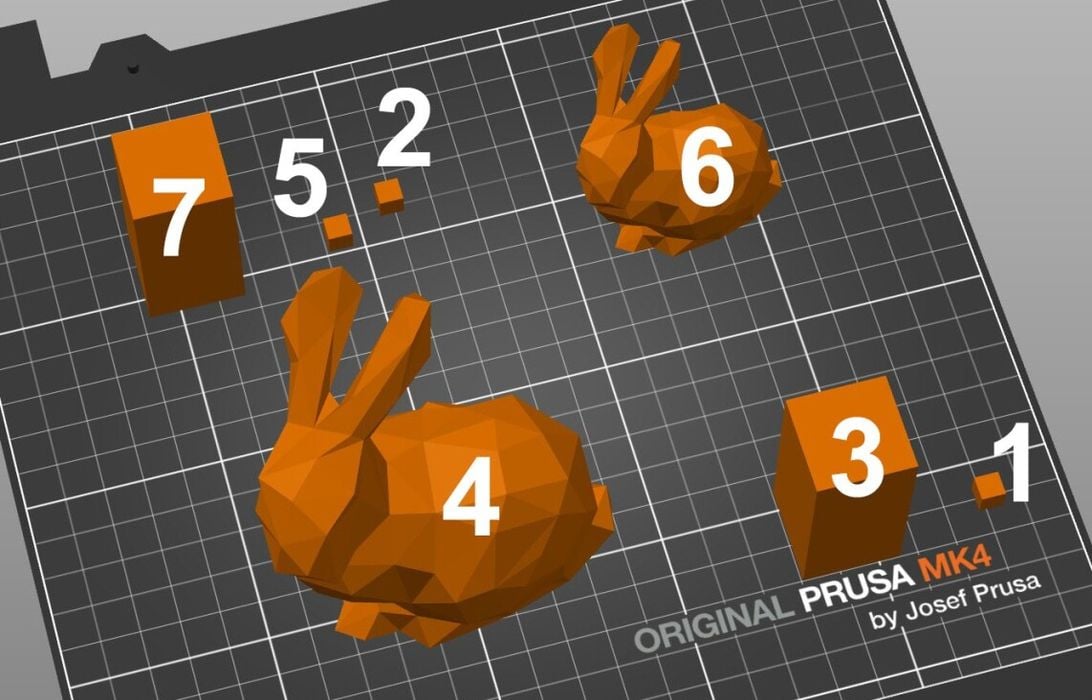
Cegar has introduced Portfolio-CEGAR-SEQ, a software-based scheduling approach designed to optimize sequential FFF 3D printing by leveraging multi-core CPU architectures.
Originally reported by Fabbaloo
Cegar has introduced Portfolio-CEGAR-SEQ, a software-based scheduling approach designed to optimize sequential FFF 3D printing by leveraging multi-core CPU architectures. The system utilizes a portfolio of parallelized algorithms to solve the complex geometric constraints of one-at-a-time printing, where the toolhead and gantry must avoid collisions with previously printed parts. By running multiple placement and ordering strategies simultaneously, the software selects the most efficient build plan to minimize the total number of build plates required for a given batch. This research-based development aims to replace manual, heuristic-based slicing methods with a formal, constraint-based solver that accounts for machine kinematics and clearance envelopes.
Sequential FFF printing is a critical workflow for print farms and service bureaus, as it allows for the completion of individual parts without the need for post-processing removal from a single large plate. However, current slicer implementations often rely on conservative safety buffers that limit build density and throughput. By automating the optimization of part placement and print sequence, this technology addresses a significant bottleneck in automated manufacturing, potentially reducing human intervention and increasing machine utilization rates. This software approach competes with proprietary slicer optimizations currently offered by major hardware manufacturers and independent software vendors in the FFF ecosystem.
This approach provides a clear path to improving throughput in high-mix, low-volume production environments. To move beyond the research phase, the developers must provide standardized benchmarks comparing this method against existing commercial slicers using real-world geometry and specific printer kinematics. Users should prioritize solutions that integrate directly into existing production workflows rather than standalone research tools. Success will depend on the ability to account for specific printer toolhead geometries and the integration of these solvers into automated print farm management systems.
Topics