Chinese Academy of Sciences completes in-orbit metal 3D printing demonstration on Qingzhou test spacecraft
Originally reported by 中国能源网
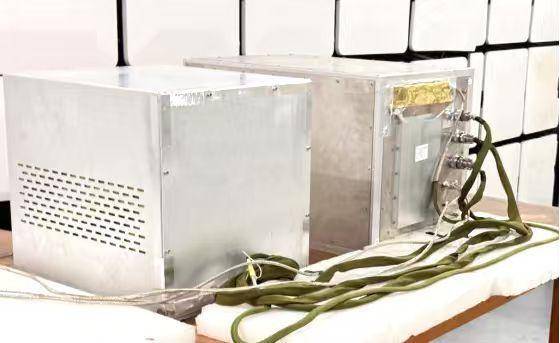
The Chinese Academy of Sciences (CAS) has successfully completed an in-orbit demonstration of space metal additive manufacturing aboard the Qingzhou test spacecraft, as announced on April 27, 2026. The payload, developed by the CAS Institute of Mechanics in collaboration with the CAS Innovation Academy for Microsatellites, used a laser-wire directed energy deposition (DED) process to perform metal melt deposition forming in microgravity. The demonstration validated multiple remote start-stop cycles, full-process autonomous execution, payload-spacecraft interface compatibility, and real-time data and image transmission under space conditions. The test marks China's first systematic in-orbit verification of key metal AM technologies for space applications.
This achievement places China among a small group of nations-alongside the US and Russia-that have demonstrated metal 3D printing in orbit. The laser-wire DED approach is particularly suited for in-space manufacturing because it avoids the powder handling and containment challenges of powder-bed systems in microgravity. The demonstration directly addresses the aerospace qualification grind pattern: rather than a single flight-ready claim, CAS has executed a structured, multi-step validation that tests process physics (melt pool dynamics, droplet transfer, liquid bridge stability under microgravity) alongside engineering constraints (launch vibration resistance, power interface, telemetry control). The payload was designed for the cargo spacecraft platform, establishing a reusable testbed for future missions. This is a deliberate, programmatic approach to building a space manufacturing technology stack, not a one-off publicity flight.
For the AM industry, this demonstration is a concrete step toward the long-term vision of on-demand manufacturing in space-moving from "bring what you need" to "make what you need" for orbital infrastructure repair, spare parts production, and deep-space mission self-sufficiency. The practical next step is extending the validation to longer-duration missions and more complex geometries, and establishing a Chinese space manufacturing standards framework. For hardware vendors and materials suppliers, the signal is clear: space-qualified DED systems and wire feedstock are now a validated technology pathway, not just a research concept.
This article is an AI-assisted rewrite of the linked source report. Facts originate from the source; phrasing is AMPulse's. Use Read Original below to verify, or Report an issue if something is wrong.
Topics