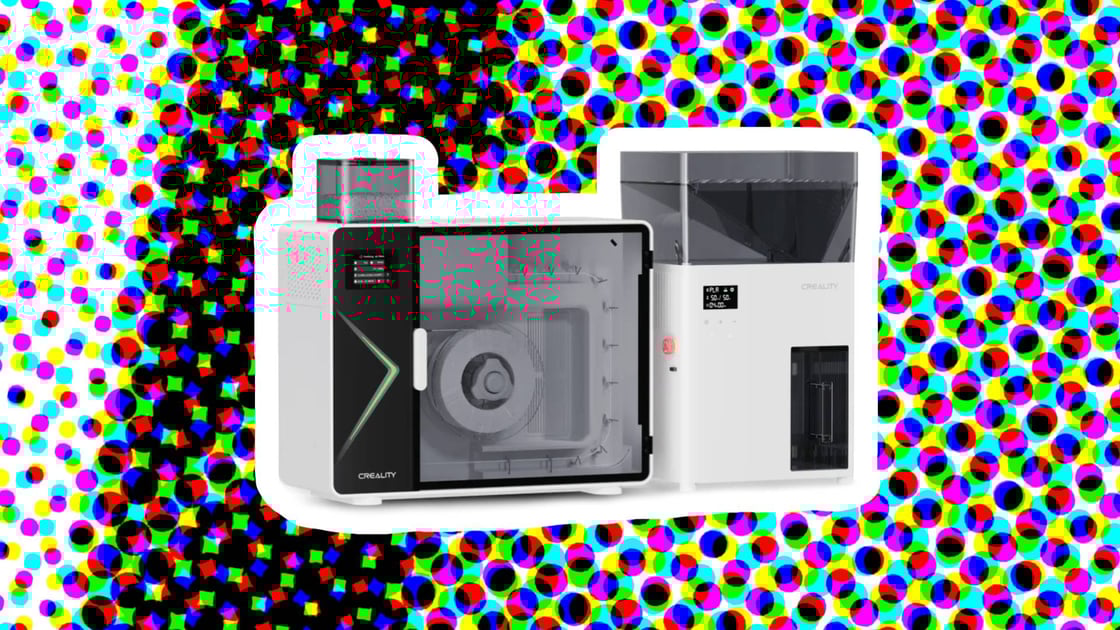
Creality Announces Desktop Filament Extruder for In-House Recycling of FDM/FFF Waste

Hardware
Originally reported by All3DP
Creality Announces Desktop Filament Extruder for In-House Recycling of FDM/FFF Waste
Creality is preparing to launch a crowdfunding campaign for a desktop filament extrusion system designed to convert 3D printing waste and scraps back into usable 1.75mm or 2.85mm thermoplastic filament. The unit functions by shredding failed prints and support structures, which are then processed through a heated screw extruder to create new spools. The manufacturer estimates a production cost of approximately $5 per spool, targeting hobbyists and small-scale makers looking to reduce material overhead. This hardware integration aims to close the loop on thermoplastic consumption, specifically for common materials like PLA, PETG, and ABS, by allowing users to reclaim material that would otherwise be discarded.
This development addresses the persistent issue of material waste inherent in FDM/FFF workflows, where support structures and failed prints often account for significant volume. While desktop extrusion is not a new concept, Creality enters a market previously dominated by niche players like 3devo and Felfil, leveraging its massive global distribution network and manufacturing scale in Shenzhen to lower the entry price point. The move aligns with broader sustainability trends in the additive manufacturing sector, where reducing the carbon footprint of prototyping is becoming a priority for both commercial and consumer segments. By integrating this into their ecosystem, Creality is positioning itself to capture value from the secondary material lifecycle, a segment that has historically lacked accessible, consumer-grade hardware solutions.
For the end-user, the primary challenge remains consistent filament diameter control and material purity, which are critical for reliable extrusion in standard FDM/FFF printers. Potential buyers should prioritize evaluating the system's integrated shredding capability and its ability to maintain stable melt temperatures, as these factors directly dictate the quality of the recycled output. Success for this product depends on the system's ease of operation and its ability to produce filament that does not clog standard 0.4mm nozzles during subsequent print jobs.
Topics