Cureus Launches Peer-Reviewed Collection on 3D Printed Orthopaedic Implants
Originally reported by cureus.com
Cureus, the open-access medical journal and publishing platform, has launched a dedicated collection titled "The Impact of 3D Printed Implants on Orthopaedic Surgical Practice." The collection invites submissions of original research, case reports, and reviews examining clinical outcomes, design methodologies, and regulatory pathways for patient-specific and off-the-shelf 3D-printed orthopaedic implants. As a peer-reviewed, indexed journal, Cureus positions this collection to aggregate evidence from surgeons, biomedical engineers, and device manufacturers working across metal and polymer additive manufacturing for bone reconstruction, joint replacement, and trauma fixation.
This collection arrives at a critical inflection point for medical-dental additive manufacturing. While patient-specific cranial and maxillofacial implants have achieved routine clinical use, orthopaedic adoption has lagged due to higher mechanical load requirements, longer qualification timelines, and fragmented reimbursement frameworks. The Cureus initiative directly addresses the evidence gap that has constrained broader orthopaedic uptake: the lack of aggregated, peer-reviewed clinical data comparing 3D-printed implants against conventional machined or forged alternatives. By creating a dedicated publication venue, Cureus is effectively lowering the barrier for surgeons and researchers to publish outcomes, which in turn supports the evidence packages needed for FDA 510(k) submissions and hospital formulary approvals. This aligns with the broader medical-dental vertical's shift from novelty case reports toward systematic clinical validation.
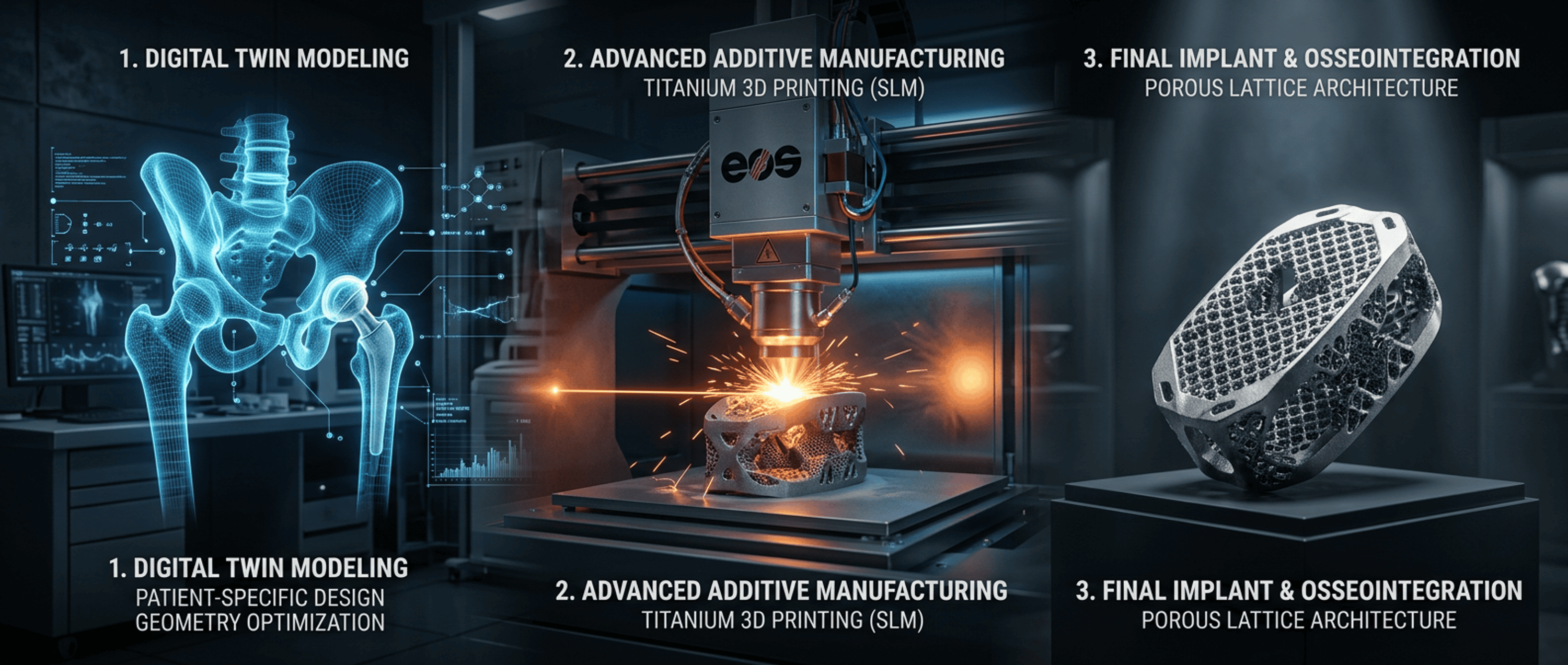
For the additive manufacturing industry, this collection represents a practical mechanism for accelerating the aerospace-qualification-grind equivalent in orthopaedics. The concrete next step is for implant manufacturers and academic medical centers to submit their clinical series, particularly those involving titanium alloy (Ti-6Al-4V) porous structures for osseointegration and cobalt-chrome for load-bearing applications. Cureus's open-access model and rapid peer-review timeline mean that submitted data can become citable evidence within months, not years. The value will be determined by submission volume and data quality, not by the collection's existence alone.
Topics