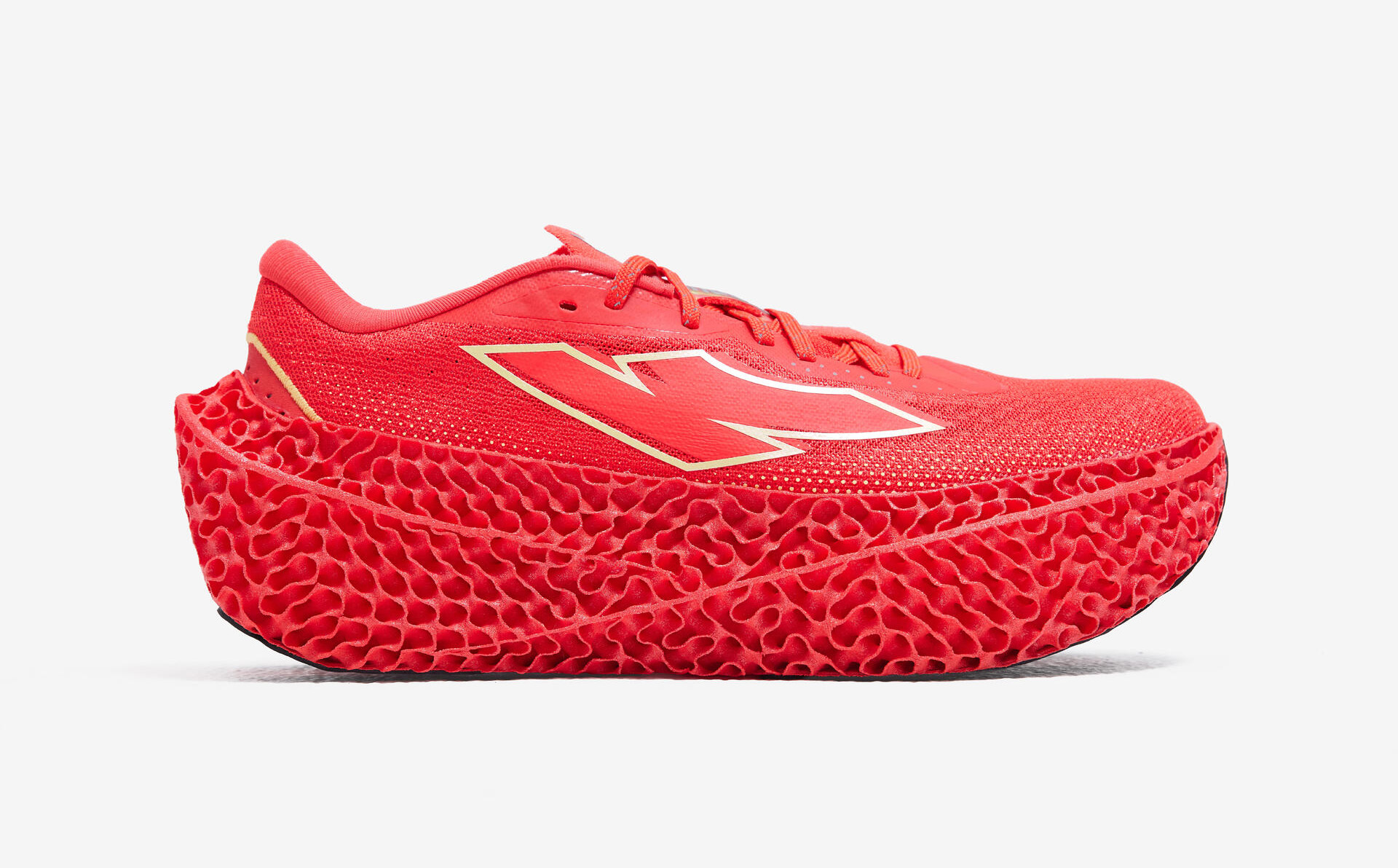
Decathlon's Kiprun launches KIPNEXT 3D running shoe with HP MJF midsole in China
Originally reported by 3Druck
Decathlon's running brand Kiprun has introduced the KIPNEXT 3D, a performance running shoe featuring a 3D-printed midsole produced via HP Multi Jet Fusion (MJF) technology. The shoe combines a knitted upper with a lattice-structured midsole made from a custom thermoplastic polyamide (TPA) material developed for high energy return and rebound properties. Kiprun claims 75 percent energy return, compared to 50–65 percent for conventional EVA foam midsoles. The shoe is priced at approximately 250 USD and is initially available only in select Decathlon stores in China. Development took under six months at Decathlon's Innovation Powerhouse in Shenzhen, with support from Barcelona-based footwear 3D-printing specialist Something Added.
This launch is significant because it represents a major global sporting goods retailer moving beyond prototyping into limited commercial production of an AM-enabled performance product, using HP's polymer MJF process rather than the more common powder bed fusion or vat photopolymerization routes seen in footwear. Decathlon's approach is pragmatic: it uses AM only for the midsole, the part where lattice geometry can deliver measurable mechanical advantage, while retaining conventional knitting for the upper. This hybrid strategy lowers cost and qualification risk compared to fully printed shoes from Nike or Adidas. The KIPNEXT 3D also builds on Decathlon's 2023 AddLab collaboration with HP and Lonati Group, showing a deliberate, multi-year qualification arc rather than a speculative leap. The China-only launch suggests Decathlon is testing market response and production repeatability before a wider rollout, consistent with the pattern of cautious, regionally gated consumer AM introductions.
From a practical standpoint, the KIPNEXT 3D is a credible but contained step. Decathlon has demonstrated that a large retailer can move from concept to shelf in six months using HP MJF and a specialized partner, but the limited geography and single-material approach mean this is not yet a scalable production play. The real test will be whether Decathlon can maintain quality and cost across higher volumes, and whether the 75 percent energy return claim holds up under real-world runner feedback. For now, this is a well-executed pilot that adds a legitimate reference case for polymer MJF in athletic footwear, but it does not yet signal a shift in how Decathlon sources its broader shoe lineup.
Topics