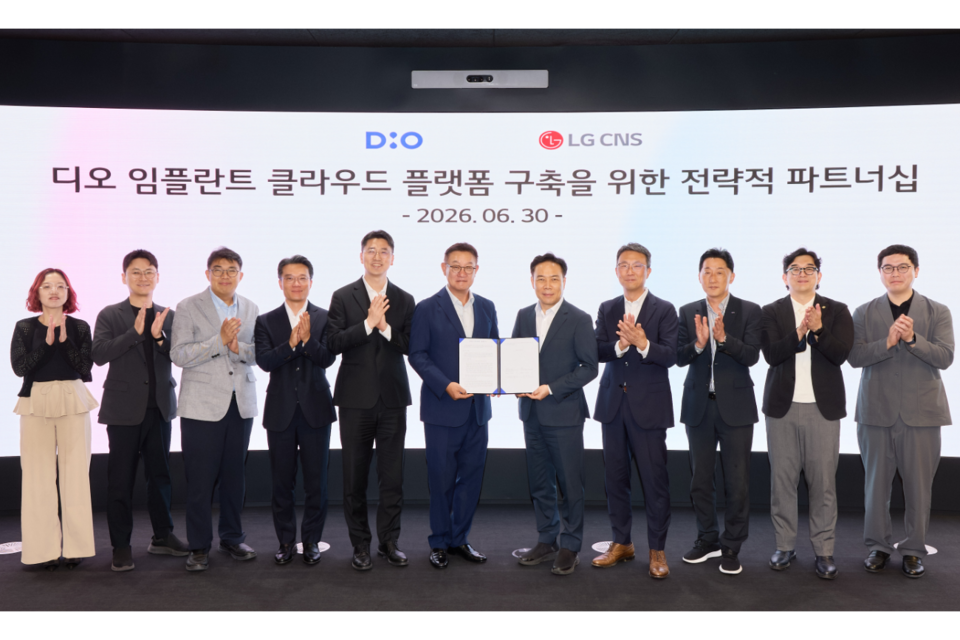
DIO and LG CNS form strategic partnership for AI-based digital dentistry innovation
Hardware
Originally reported by aipostkorea.com
DIO, a South Korean digital implant specialist, has signed a strategic memorandum of understanding with LG CNS, the digital transformation arm of the LG Group, to accelerate AI-driven innovation in dental care. The partnership, announced on June 30, 2026, at LG CNS headquarters in Seoul, was formalized by DIO CEO Kim Jong-won and LG CNS President Hyun Shin-kyun. The collaboration targets three core areas: AI-based automation of implant surgery design, construction of a cloud-based integrated platform, and global-scale data security and infrastructure stability. The goal is to create a one-stop digital treatment environment that connects consultation, diagnosis, planning, surgery, and prosthetics in a single workflow.
This partnership sits at the intersection of two converging trends: the industrialization of digital dentistry and the deepening role of AI in medical-device workflows. DIO is a major producer of dental implants and has been a significant user of metal additive manufacturing for custom abutments and surgical guides, primarily via metal PBF-LB and polymer vat photopolymerization. By integrating LG CNS's AI systems integration and cloud platform expertise, DIO is effectively moving from a component supplier toward a platform-driven service model. This mirrors a broader shift in the medical-dental vertical, where the value is migrating from hardware and materials to software-enabled clinical workflows and data-driven treatment planning. The partnership also reflects the growing importance of cloud infrastructure for managing global regulatory compliance and real-time collaboration across dental labs, clinics, and production sites.
For the AM industry, this deal is a concrete signal that digital dentistry leaders are prioritizing software and AI integration over incremental hardware improvements. DIO's next challenge will be executing the platform build-out and securing adoption from dental professionals who may be skeptical of AI-driven clinical decisions. The partnership does not change the competitive landscape overnight, but it raises the bar for what a digital dentistry company must offer beyond implant production. Buyers and partners should watch for the actual platform launch and its integration with existing CAD/CAM and practice management systems, as that will determine whether this remains a press release or becomes a genuine workflow shift.
Topics