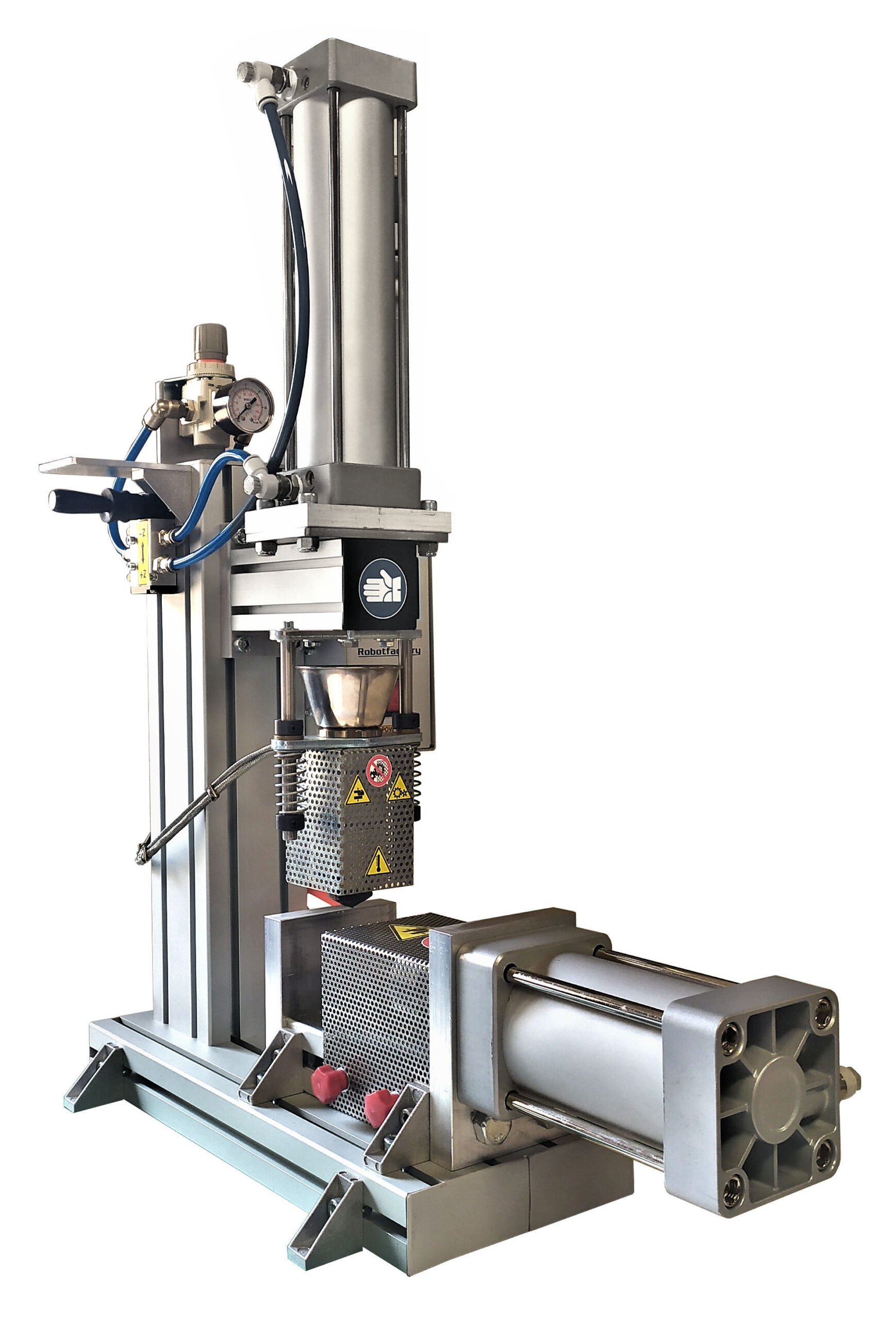
Robot Factory Expands Desktop Injection Molding Line with Hydraulic Systems for Small-Series Production

Hardware
Originally reported by 3DPrint.com
Robot Factory, the Mirano, Venice-based manufacturer founded by Andrea Martini in 2006, has expanded its desktop injection molding product line with a new oleodynamic (hydraulic) system offering up to 1,900 kg of extrusion force and 4 tons of clamping force, with a 100 cm³ injection chamber. The company, which began with robotics education kits and CNC machines before moving into 3D printing, now offers both pneumatic and hydraulic bench-top injection molding units alongside its FDM and SLA printers. The new hydraulic system is available in manual and automated versions, targeting production of larger objects with greater process control. Robot Factory also produces a companion shredder for in-house material recycling and automation tools for handling and production line integration.
This move by Robot Factory reflects a broader industry recognition that desktop injection molding fills a specific gap between 3D printing and high-volume mass production. While polymer AM processes like SLS and MJF have improved throughput for small parts, they still struggle with per-part economics at volumes above a few hundred units, particularly for parts requiring consistent surface finish and material properties. Robot Factory's pneumatic system handles volumes up to 32 cm³, and the new hydraulic system extends that to 100 cm³, making it viable for consumer electronics, medical device components, packaging, and industrial parts. The company's approach of using 3D-printed mold inserts for rapid iteration before committing to steel tooling mirrors the broader trend of hybrid digital workflows, where AM serves as a bridge to traditional manufacturing rather than a replacement. Customers are already using the systems with PP, PE, PC, PA, PET, engineering plastics, and glass-filled materials, as well as regrind, indicating real production use rather than lab curiosity.
Robot Factory's injection molding line is a practical, well-executed product for a specific market need: small-series production of precision parts where 3D printing is too slow and traditional injection molding is too expensive or distant. The company's strength lies in building robust, machine-tool-quality equipment that fits on a desk, which is rare in the desktop injection molding space. The key execution challenge will be scaling sales and support beyond Europe and building a user community around mold design and material profiles. For buyers evaluating desktop injection molding, Robot Factory's systems are worth a serious look if the application requires consistent part quality at volumes of hundreds to low thousands of units, and if the workflow can tolerate the mold-making step.
Topics