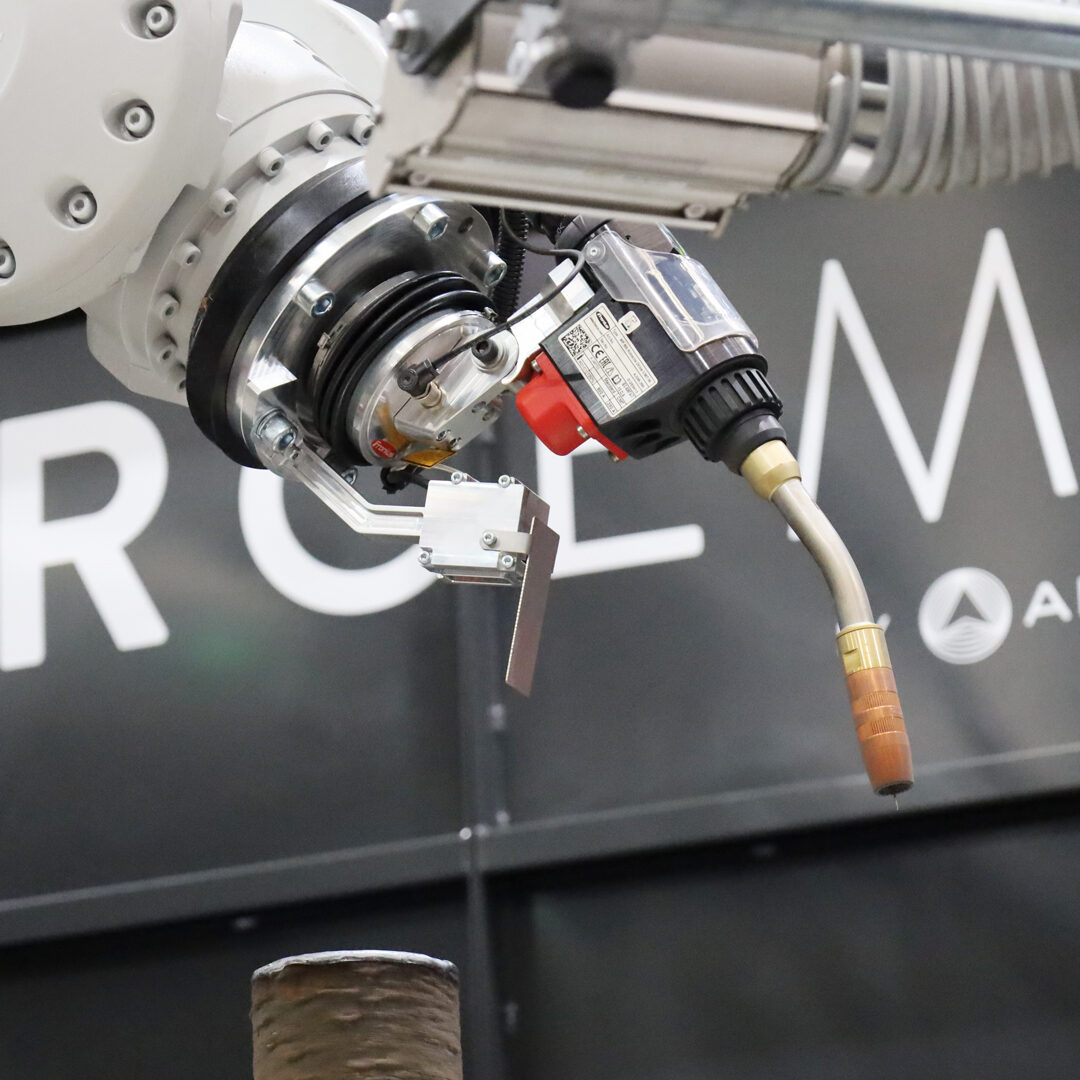
AML3D installs first containerized ARCEMY system at US Navy AM Center of Excellence

Hardware
Originally reported by 3DPrint.com
AML3D has installed its first portable, containerized ARCEMY wire-arc additive manufacturing (WAAM) system at the US Navy Additive Manufacturing Center of Excellence (AM CoE) in Danville, Virginia, operated by Austal USA. The system, mounted in a 20-foot shipping container and valued at AU$1.2 million (~$864,000), is the third AML3D machine at the facility, joining two custom large-format units already in service. CEO Sean Ebert confirmed the installation builds on a Letter of Intent from the US Navy indicating a potential need for up to 100 AM systems and 3,400 additively manufactured parts by 2030. The containerized design reduces reinstallation time to 1–2 days versus 2–3 weeks for fixed systems, enabling rapid reconfiguration of production space and supporting expeditionary manufacturing trials.
This deployment directly advances the defense vertical's politically accelerated adoption wave, where the US Navy is moving beyond fixed-site qualification toward forward-operating capability. The containerized ARCEMY system addresses a persistent barrier in large-format metal DED: the high cost and long lead time of site preparation and installation. By packaging a WAAM cell into a standard shipping container, AML3D lowers the adoption barrier for both military expeditionary use and industrial customers who need flexible production capacity. The synergy with Austal USA's recently launched Digital SEA platform further reduces workflow friction, creating a combined hardware-software proposition that could accelerate qualification cycles for maritime and energy applications. This aligns with the broader pattern of Chinese localization pressure in metal AM, where Western suppliers must demonstrate deployment agility and supply-chain integration to maintain competitive positioning.
For AML3D, the practical next step is converting the Navy's Letter of Intent into firm purchase orders by demonstrating the containerized system's reliability under field conditions. The company must also prove that the portability advantage translates into measurable cost savings or readiness improvements compared to fixed installations. Buyers evaluating WAAM for defense or energy applications should treat this as a proof-of-concept milestone, not a production-scale commitment - the real test will be whether the system can sustain consistent part quality across multiple redeployments and operating environments.
Topics