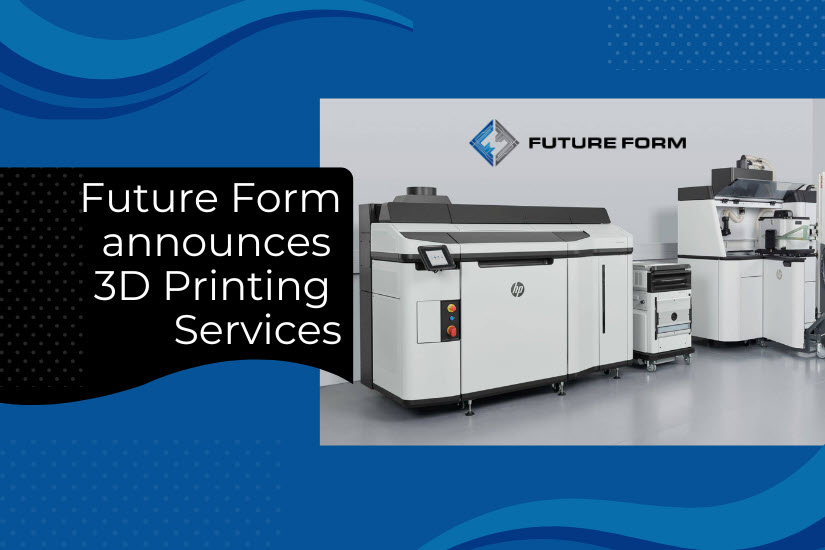
Future Form has integrated HP Multi-Jet Fusion (MJF) 3D printing systems into its U.S.-based manufacturing operations to provide end-to-end additive services for the medical, aeros...
Originally reported by jsa.net
Future Form has integrated HP Multi-Jet Fusion (MJF) 3D printing systems into its U.S.-based manufacturing operations to provide end-to-end additive services for the medical, aerospace, and data center sectors. CEO Ben Thomas announced that the company is shifting from traditional injection molding to MJF technology to facilitate low- to mid-volume production of functional plastic parts. This expansion allows the firm to bypass tooling costs and long lead times, focusing on high-quality surface finishes and rapid turnaround for precision-engineered components. The move positions Future Form as a comprehensive service provider capable of handling complex industrial requirements across multiple high-stakes industries.
This expansion highlights the ongoing transition of MJF technology from a prototyping tool to a core industrial production platform. By adopting MJF, Future Form is competing with established service bureaus that utilize powder bed fusion to address supply chain volatility and the need for localized production. The integration is particularly relevant to the data center industry, where demand for liquid-to-chip cooling components and modular construction elements is rising. As more than 90 percent of major U.S. aerospace firms now utilize additive manufacturing for flight-certified parts, Future Form is positioning itself to capture market share in a sector that prioritizes speed and material efficiency over traditional subtractive methods.
Future Form's investment signals a broader trend of manufacturers localizing production to mitigate global supply chain risks and reduce transportation overhead. Industry observers should monitor the company's ability to scale its MJF throughput and maintain quality standards as it integrates these systems into its existing precision-engineered solutions portfolio. The shift underscores a growing preference for on-demand manufacturing models that reduce scrap waste and improve overall production economics in the U.S. industrial base.
This article is an AI-assisted rewrite of the linked source report. Facts originate from the source; phrasing is AMPulse's. Use Read Original below to verify, or Report an issue if something is wrong.
Topics