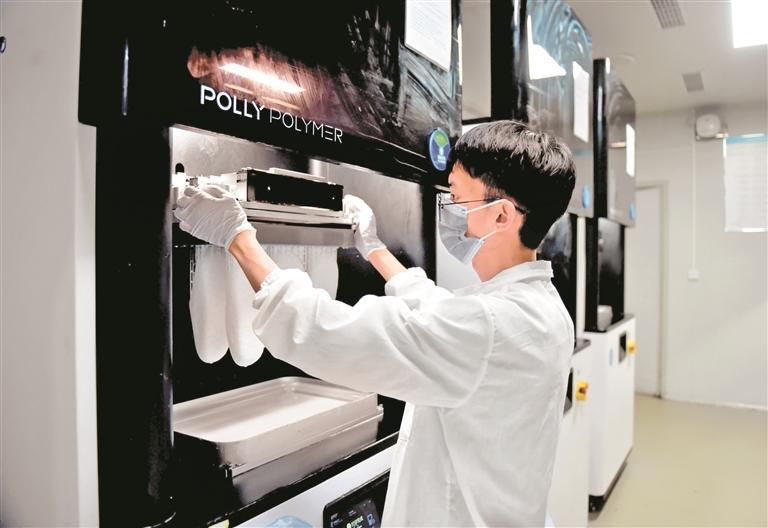
Guizhou Senyuan AM delivers 300,000 3D-printed products in 3 years, claims foreign monopoly break

Service
Originally reported by 新浪财经
Guizhou Senyuan Additive Manufacturing Technology Co., Ltd., based in Guizhou Province, China, announced on May 13, 2026, that it has delivered over 300,000 3D-printed products across more than 100 customer enterprises over the past three years. The company operates through the Guizhou Provincial High-Performance Polymer Materials Preparation and Additive Manufacturing Pilot Platform, which it says has broken a foreign technology monopoly. Its production portfolio includes automotive parts, bicycle saddles, and sports shoe components, all manufactured using polymer additive manufacturing processes.
This announcement is a concrete data point in the Chinese localization arc pattern, where a domestic entrant leverages localized supply chains and government-backed pilot platforms to scale production and undercut established Western suppliers. Guizhou Senyuan is not a Tier S market-shaping event - it lacks disclosed recurring revenue, named anchor customers, or qualification lock-in - but it does illustrate how Chinese polymer AM service bureaus are moving beyond prototyping into serial production for automotive and consumer goods verticals. The 300,000-unit volume over three years suggests a steady, if not explosive, production cadence, likely serving domestic OEMs and tier-2 suppliers in southwestern China's industrial ecosystem. The claim of breaking a foreign monopoly should be treated with caution: without specifying which technology or material was previously monopolized, the statement functions more as a domestic marketing signal than a verifiable competitive displacement.
From an industry perspective, Guizhou Senyuan's trajectory is a reminder that the Chinese AM services market is fragmenting into regional players with distinct vertical focuses, rather than consolidating around a few national champions. The company's next practical step is to disclose a named customer or a qualification standard (e.g., automotive IATF 16949 or a specific OEM part number) to move from volume claims to credibility. For buyers evaluating Chinese polymer AM suppliers, the key question is not whether 300,000 parts were made, but whether those parts meet repeatability and certification requirements for the intended end-use application.
Topics