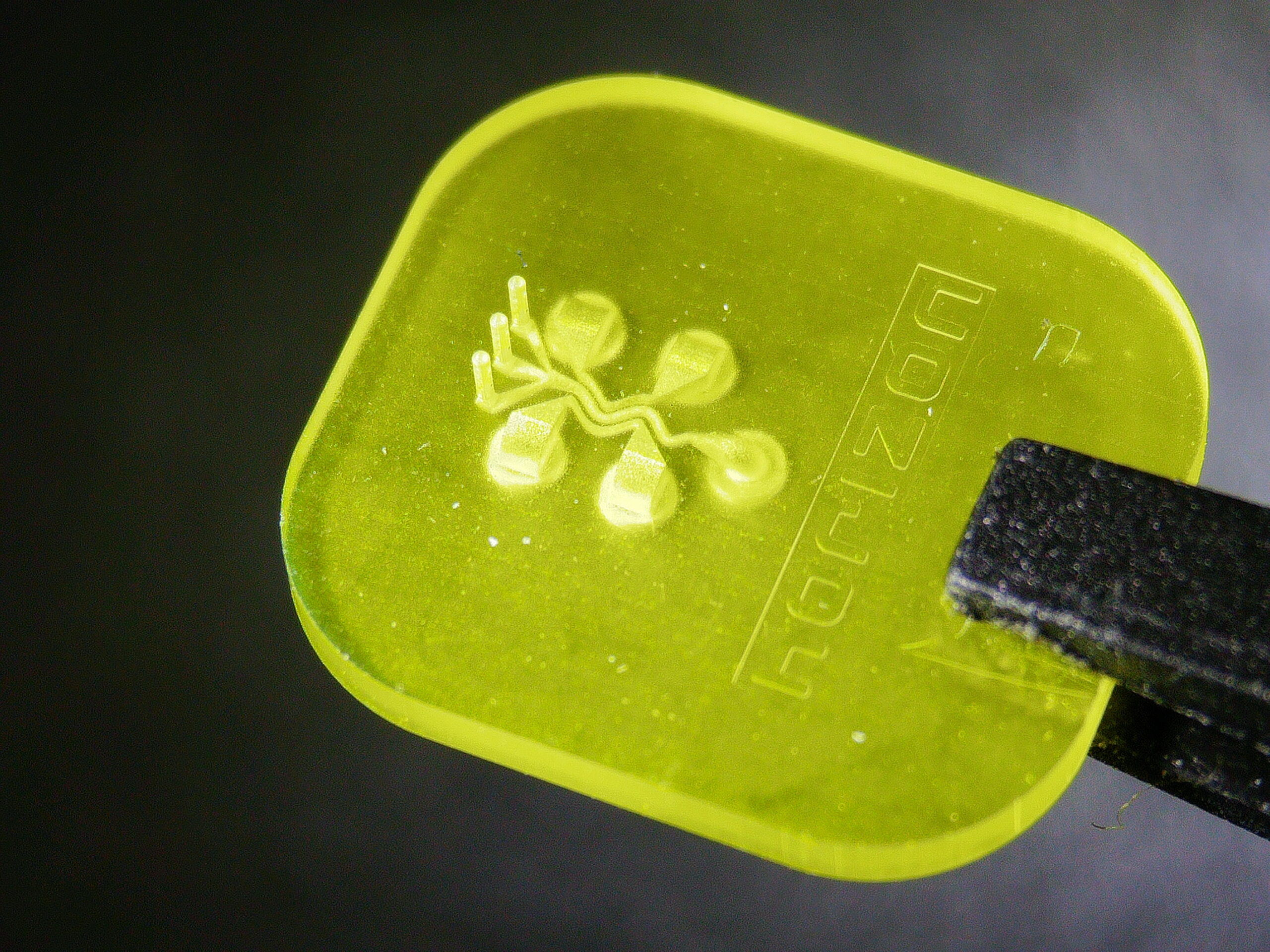
Horizon Microtechnologies has expanded its service portfolio into microfluidics by leveraging Boston Micro Fabrication PμSL technology.

Hardware
Originally reported by 3DPrint.com
Horizon Microtechnologies has expanded its service portfolio into microfluidics by leveraging Boston Micro Fabrication PμSL technology. The company integrates its proprietary post-processing coating techniques with high-resolution polymer printing to create leak-free, monolithic 3D channel networks. This process eliminates the need for traditional multi-part assembly and bonding, enabling the production of complex internal geometries and micro-needle structures with side openings as small as one millimeter. The initiative targets high-precision applications in lab-on-a-chip diagnostics and drug delivery systems.
The microfluidics market remains hindered by high costs associated with manual assembly and the inherent limitations of bonding discrete components. By utilizing PμSL, which offers sub-10-micron resolution, Horizon Microtechnologies addresses the critical need for scalable, integrated fluidic architectures that avoid the failure points of bonded layer interfaces. This approach positions the firm to compete with traditional soft lithography and injection molding methods, particularly for low-to-medium volume production runs where tooling costs are prohibitive. The move reflects a broader trend of applying high-precision AM to replace labor-intensive cleanroom manufacturing processes.
For end-users, the value lies in the elimination of assembly-related leakage and the ability to iterate complex fluidic designs without expensive mold modifications. Horizon Microtechnologies must now demonstrate that its proprietary coatings maintain long-term chemical compatibility and structural integrity under the specific pressure and flow requirements of clinical diagnostic environments. Buyers should prioritize validating the surface finish and material stability of these coated parts against their specific reagent requirements to ensure performance parity with traditional materials.
This article is an AI-assisted rewrite of the linked source report. Facts originate from the source; phrasing is AMPulse's. Use Read Original below to verify, or Report an issue if something is wrong.
Topics