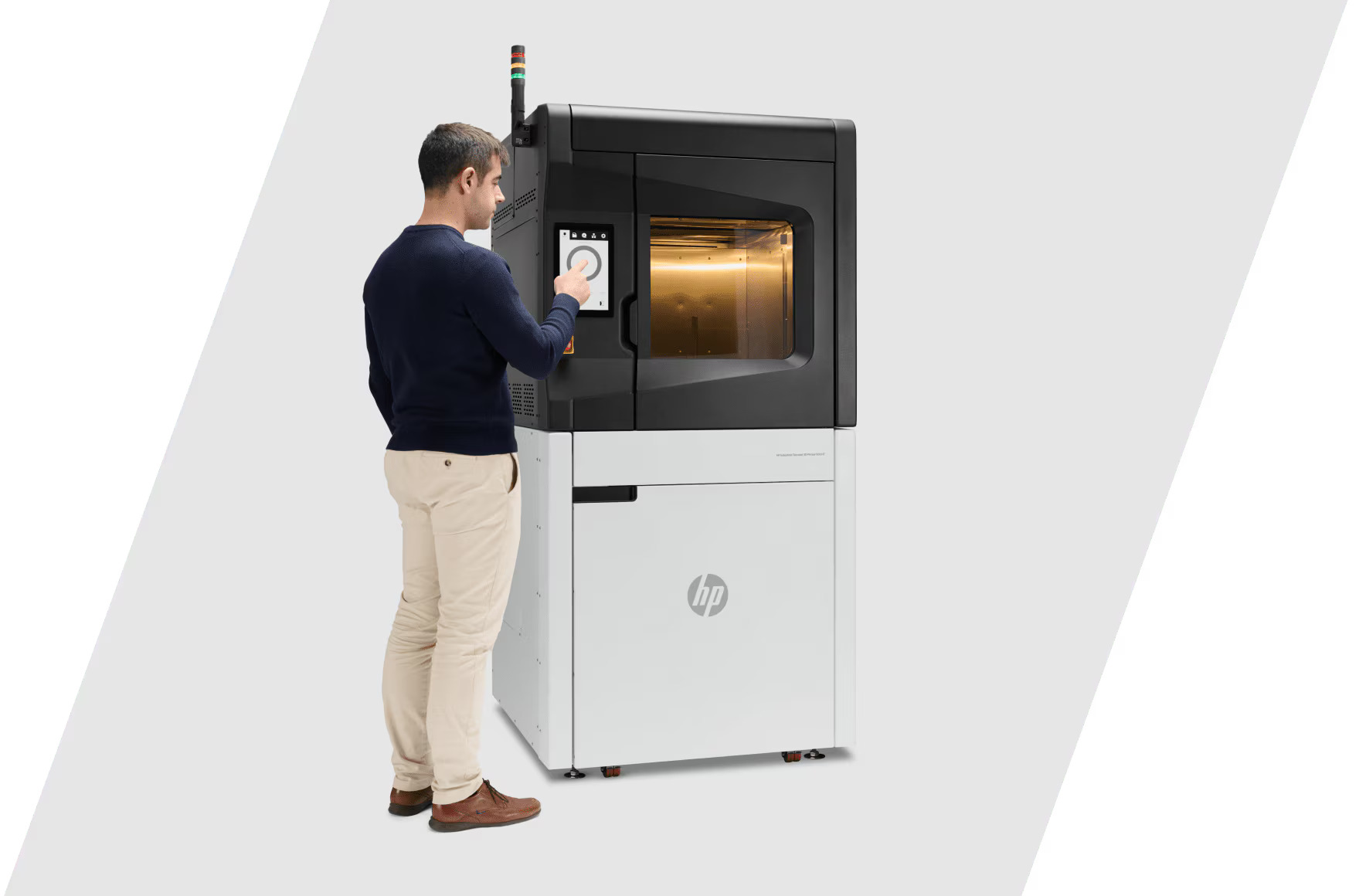
HP launches Industrial Filament 3D Printer 600 HT with 500°C extruder for advanced polymers

Hardware
Originally reported by 3D Printing Industry
HP has introduced its first Fused Filament Fabrication (FFF) platform, the HP Industrial Filament (IF) 3D Printer 600 High Temperature (HT), marking the company's entry into the filament-based additive manufacturing market after a decade of focus on powder-based Multi Jet Fusion (MJF) technology. The system features a fully enclosed, actively heated build chamber that maintains up to 195°C, combined with a modular extruder architecture offering three interchangeable print modules rated at 280°C, 360°C, and 500°C. This design allows a single platform to process engineering-grade thermoplastics like ABS and carbon-fiber nylon, advanced materials such as Ultem 9085 (PEI) and polycarbonate, and high-performance polymers including PEEK, PAEK, and PEEK-CF. HP is positioning the printer for production applications in aerospace cabin interior ducts, sterilizable medical surgical guides, and automotive components replacing aluminum under severe operating conditions.
This move represents a significant strategic expansion for HP, which has built its AM credibility on MJF for polymer powder bed fusion. By entering the high-temperature FFF segment, HP directly competes with established industrial FFF vendors that have historically locked buyers into proprietary material ecosystems. The open materials platform approach is a deliberate differentiator, addressing a persistent pain point for manufacturers who need procurement flexibility and lower per-part costs when running advanced polymers. The timing aligns with growing demand for PEEK and PEI in regulated verticals where thermal stability and layer adhesion have been barriers to reliable production, particularly in aerospace and medical device manufacturing.
The practical test for HP will be whether its system-level reliability and application engineering support can match the thermal consistency required for multi-day PEEK builds without warping or delamination. The modular extruder design reduces capital expenditure for buyers who need to run multiple material classes, but qualification cycles in aerospace and medical will determine whether this platform becomes a production workhorse or remains a prototyping tool. HP's brand credibility and service infrastructure give it an advantage in enterprise adoption, but the company must now demonstrate that its FFF system can deliver the same repeatability that made MJF a standard for polymer production.
This article is an AI-assisted rewrite of the linked source report. Facts originate from the source; phrasing is AMPulse's. Use Read Original below to verify, or Report an issue if something is wrong.
Topics