I1LAB adopts Formlabs Fuse SLS for military drone development and production

Application
Originally reported by KIDD
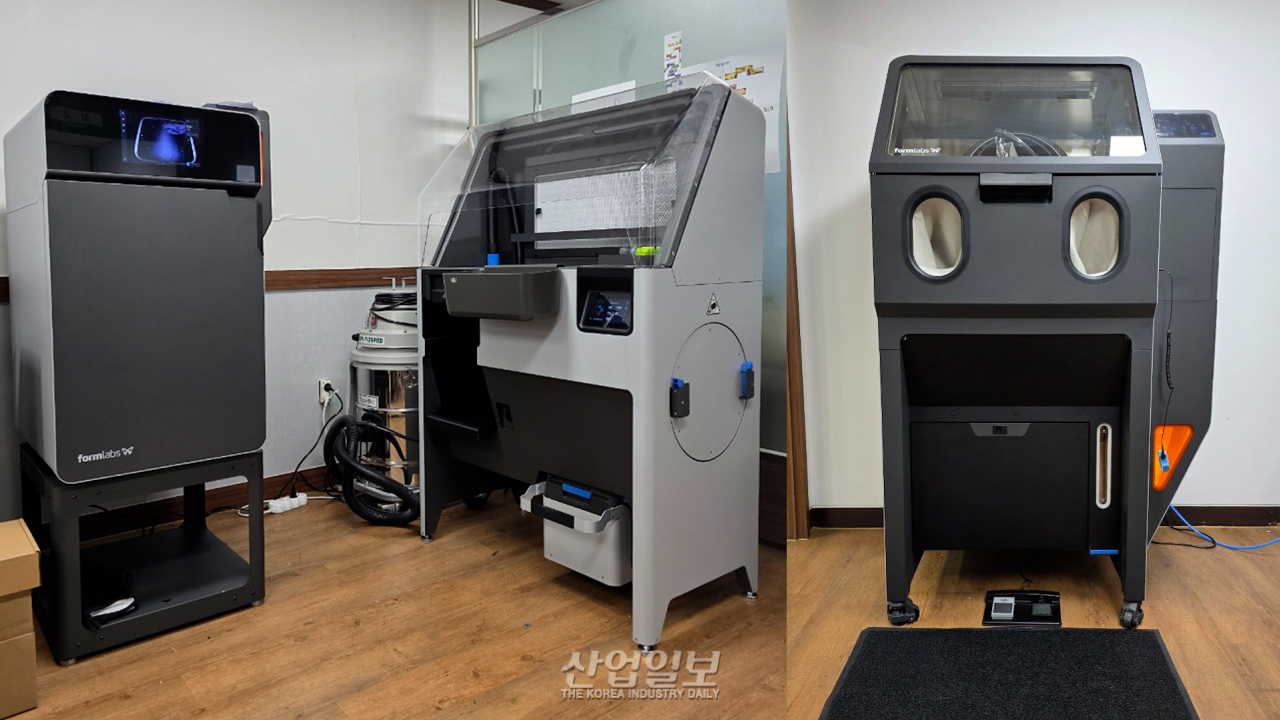
South Korean defense and AI company I1LAB has integrated Formlabs' Fuse Series SLS 3D printing systems into its military drone development and production workflow. The company, which develops drones, flight control systems, avionics, ground control stations, and AI-based mission processing software, has deployed Fuse printers along with the Fuse Sift powder recovery station and post-processing equipment to create a complete SLS manufacturing line. CEO Hyukjun Jung stated the system now serves as a manufacturing infrastructure connecting design changes, validation, and actual production, moving the company beyond legacy machining and molding constraints.
This deployment is a concrete example of polymer SLS finding a home in defense applications where rapid design iteration and low-volume production meet demanding operational requirements. Military drones require high reliability under vibration, impact, and sustained load cycles, and I1LAB uses unsupported SLS geometry to produce lightweight structural components, sensor mounts, cable management features, and electronic housings with integrated cooling and stiffening ribs. What matters here is not novel machine capability but workflow integration: I1LAB collapsed a multi-day to multi-week outsource cycle into an internal CAD-to-print-to-validate loop. The company also plans to extend additive manufacturing into field sustainment logistics, using digital design data for on-demand spare part production to improve operational readiness rates.
From a market perspective, this is a measured but structurally significant adoption. I1LAB is not a drone integrator buying parts from a service bureau; it is a vertically integrated developer using polymer AM to compress its internal hardware iteration cycle. The economic logic is in-house agility versus external tooling dependency, not unit cost parity at scale. For the defense vertical, which has seen politically accelerated AM adoption in 2025-2026, this case demonstrates how SLS can serve as both a prototyping tool and a low-volume production method for non-critical structural and electronic enclosure parts. The real test will be whether I1LAB can translate this internal capability into faster program qualification and field deployment timelines that justify the equipment investment.
Topics