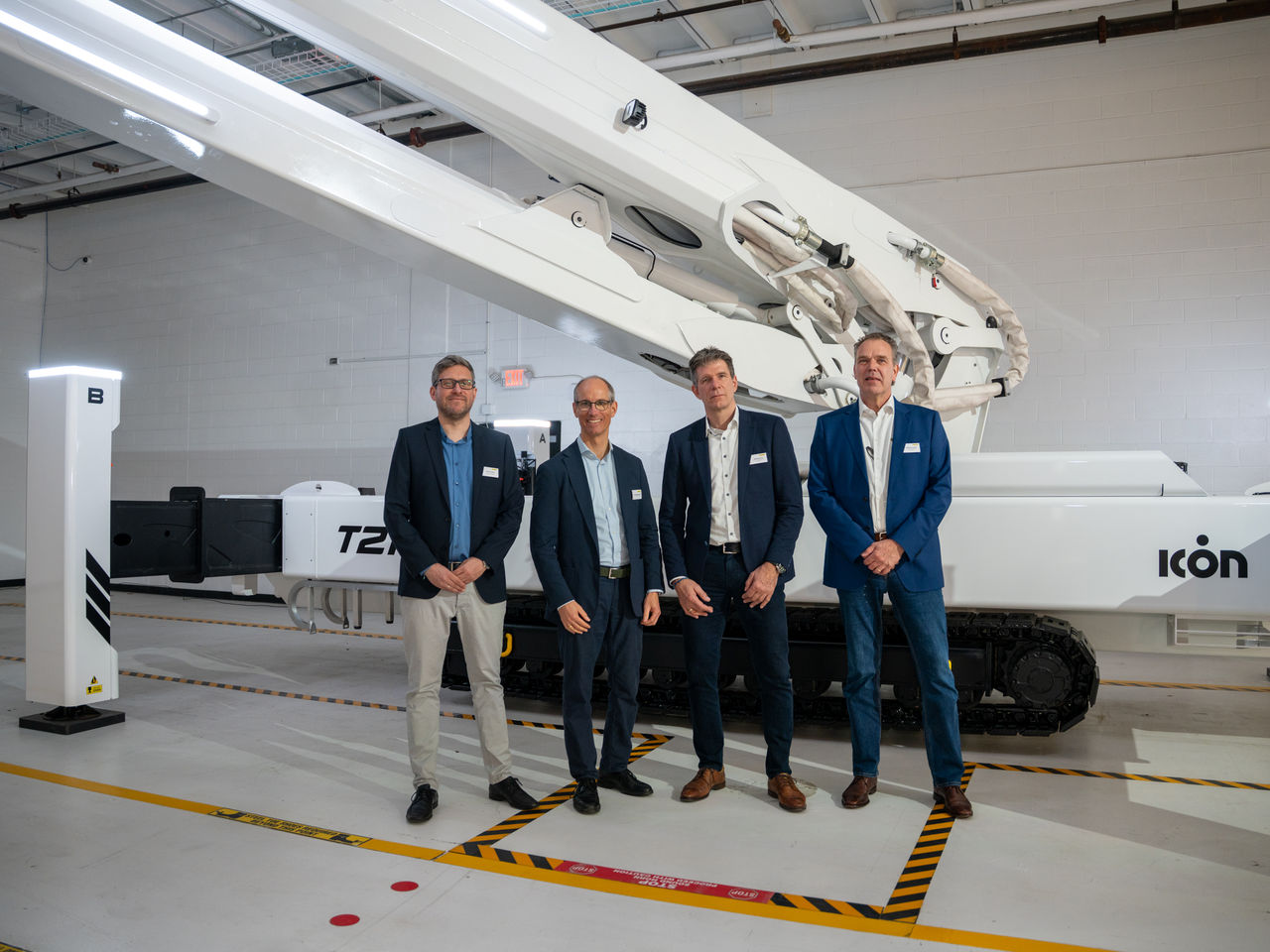
ICON has partnered with Austrian crane and lifting specialist PALFINGER to integrate heavy-duty lifting and stabilization technology into its Titan large-scale construction 3D printing platform.

Hardware
Originally reported by 3DPrint.com
ICON has partnered with Austrian crane and lifting specialist PALFINGER to integrate heavy-duty lifting and stabilization technology into its Titan large-scale construction 3D printing platform. The Titan system, capable of printing multi-level structures up to 27 feet in height, will utilize PALFINGER hardware to improve site deployment, positioning, and operational stability. This collaboration coincides with ICON transitioning its business model to offer the Titan system directly to third-party builders, targeting a wall system production cost of approximately $20 per square foot. By leveraging PALFINGER's industrial engineering expertise, ICON aims to reduce the logistical complexity currently associated with deploying large-scale robotic extrusion systems in active construction environments.
This partnership addresses the primary bottleneck in construction AM: the transition from controlled, experimental environments to standard, high-throughput job sites. While competitors like COBOD and various regional concrete printing startups focus on gantry-based systems, ICON is attempting to standardize its hardware for broader commercial adoption. The integration of established heavy machinery components is a necessary step for the industry to move beyond pilot projects and meet the rigorous safety and operational standards required for mainstream construction. As ICON shifts from a service-provider model to a hardware-vendor model, the ability to deploy and stabilize the Titan system efficiently is critical for its market penetration.
For ICON, the success of this partnership depends on the seamless integration of PALFINGER's lifting systems with the Titan software and control architecture. Builders should evaluate whether this hardware synergy effectively reduces the total cost of ownership and site setup time compared to existing gantry-based extrusion methods. The focus must remain on reliability and ease of operation for non-specialized construction crews to ensure the system achieves the projected 40% cost reduction over traditional masonry.
This article is an AI-assisted rewrite of the linked source report. Facts originate from the source; phrasing is AMPulse's. Use Read Original below to verify, or Report an issue if something is wrong.
Topics