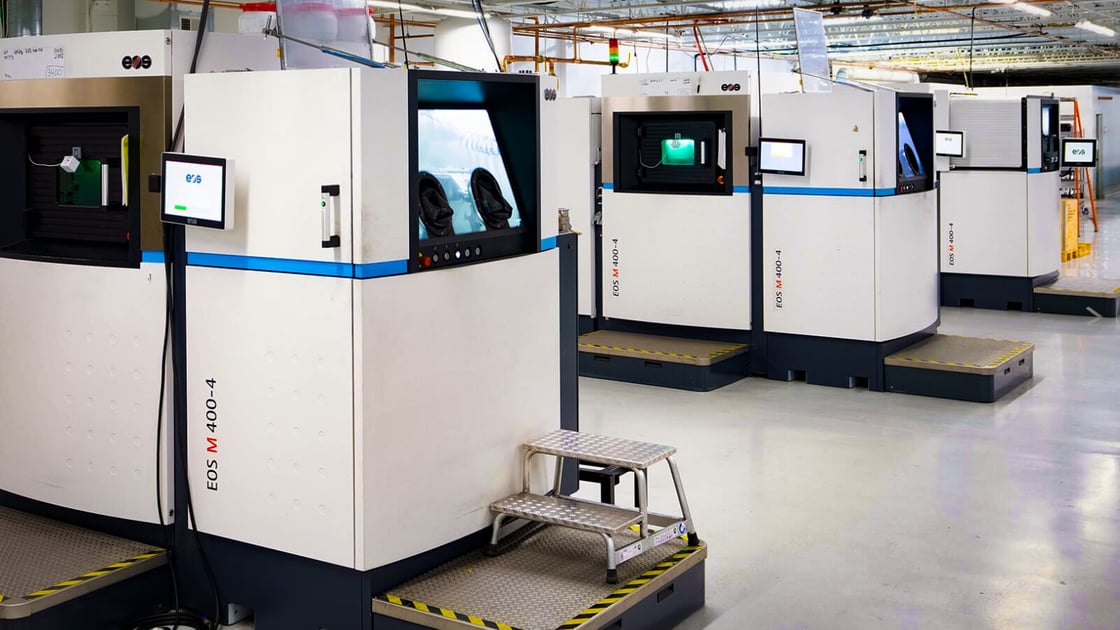
Incodema3D's 14-printer EOS deal proves metal AM has left prototyping behind

Service
Originally reported by All3DP
Incodema3D, a New York-based metal additive manufacturing service bureau, has placed a 14-machine order for EOS M 300-4 systems, one of the largest single-site LPBF fleet expansions in North America this year. The deal, announced June 3, 2026, is driven by sustained production demand from defense and energy customers requiring repeatable, qualified metal parts in materials such as Inconel 718 and Ti-6Al-4V. CEO Sean Criscuolo stated that the order reflects a deliberate shift from prototyping to serial part runs, with the new capacity slated for deployment over the next six months at the company's Ithaca facility.
The significance of this order extends beyond a single service bureau. It signals that the metal AM value chain is moving past the demo-cell phase into standardized, factory-scale production-a transition that aligns with the broader aerospace qualification grind and the defense-driven acceleration of domestic supply chains. Incodema3D's investment directly challenges the prevailing skepticism that service bureaus cannot achieve the throughput and cost discipline required for production: by standardizing on a single OEM platform (EOS) and targeting specific verticals-defense and energy-the company is effectively building a repeatable factory, not an impressive demo cell. This parallels the playbook seen in consumer electronics titanium pull-through, where fleet homogeneity and process control enable the economic repeatability that end-users demand.
For the industry, this is a practical signal that service-led production is viable when the operator commits to platform standardization and vertical specialization. Incodema3D must now execute on qualification throughput for defense primes and energy operators, which typically demand months of part-specific validation. Buyers evaluating service bureau partners should treat single-platform investments as a proxy for process maturity, as mixed-fleet shops often struggle with the repeatability that program-duration lock-in demands.
Topics