Incus scales lithography-based metal AM for orthodontics and electronics, targeting MIM replacement

Hardware
Originally reported by 3DNatives
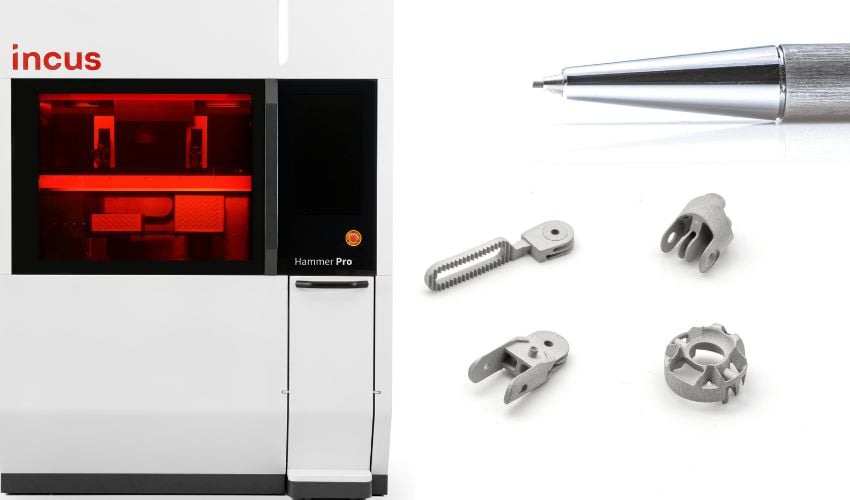
Incus, a Vienna-based additive manufacturing company, is scaling its Lithography-based Metal Manufacturing (LMM) process for serial production of small, precise metal components. The sinter-based technology uses a light-curable metal-polymer feedstock to build green parts layer by layer via digital light projection, followed by debinding and sintering to achieve full density. CEO Gerald Mitteramskogler reports that Incus customers are already producing millions of parts per year, primarily in patient-specific orthodontics and jewelry, with growing adoption in miniaturized smart electronics components for major US OEMs. The company positions LMM as a direct production alternative to Metal Injection Molding (MIM), offering comparable surface quality, tolerances, and cost structure while adding design freedom for geometries that cannot be machined or cast.
This development targets a persistent gap in metal AM: the reliable, cost-effective production of small, high-precision parts at MIM-like volumes. While LPBF dominates aerospace and medical implant applications, it struggles with surface finish, throughput, and cost for sub-centimeter components. Binder jetting offers higher throughput but typically lower green strength and resolution. LMM occupies a specific niche - combining the resolution of vat photopolymerization with the material properties of powder metallurgy - that directly competes with MIM's estimated $3 billion addressable market in orthodontics, electronics, and consumer goods. Incus's traction in orthodontics mirrors the pull-through that Align Technology demonstrated for polymer vat photopolymerization, but applied to metal brackets and custom appliances. The company's focus on process stability, in-process monitoring, and software integration for high-volume manufacturing reflects the operational maturity required to move beyond prototyping into true serial production.
For Incus, the immediate challenge is expanding its machine-installed base beyond early adopters while maintaining the production economics that make LMM competitive with MIM at scale. Buyers evaluating metal AM for high-volume precision parts should benchmark LMM against binder jetting and MIM on total cost per part, not just per-machine metrics. The technology is credible for orthodontics and jewelry today; the electronics applications will depend on qualification cycles with those major OEMs.
This article is an AI-assisted rewrite of the linked source report. Facts originate from the source; phrasing is AMPulse's. Use Read Original below to verify, or Report an issue if something is wrong.
Topics