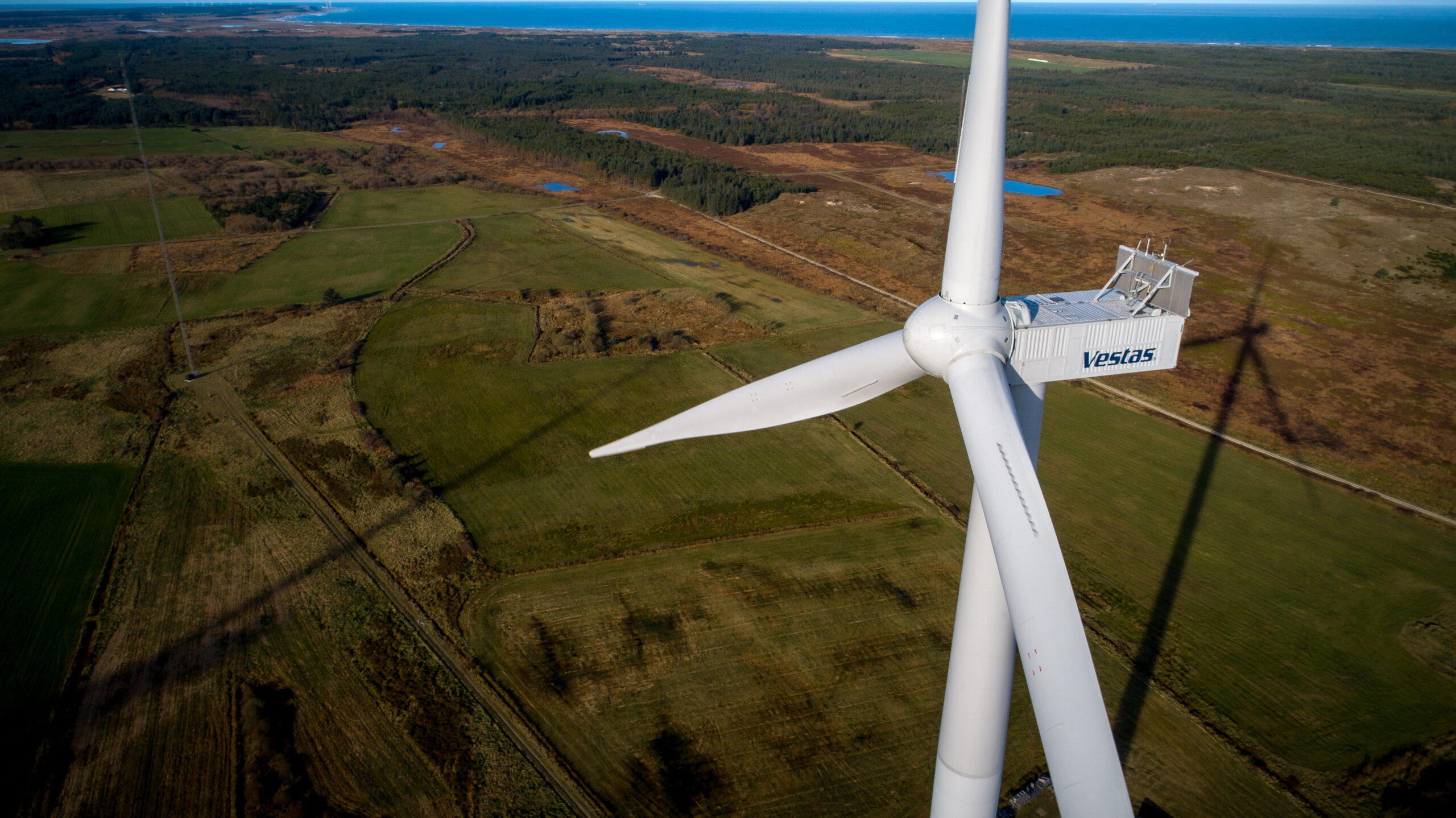
Jeremy Haight on Vestas’s AM strategy: 'We don’t want AM to be one of those buzzwords.

Hardware
Originally reported by 3D ADEPT
Vestas, the world’s largest wind turbine manufacturer with nearly 35,000 employees and headquarters in Denmark, is pursuing a proprietary additive manufacturing strategy that diverges from the shared-inventory model adopted by peers like Equinor and Vår Energi. Jeremy Haight, Product Owner and Chief Engineer for Additive Manufacturing & Applied Technologies, revealed that Vestas has built its own digital inventory system for AM parts, keeping it locked down rather than pooling qualified part files through an external platform like Fieldnode. The company operates an additive laboratory in the United States and is focused on deploying AM for internal spare parts and tooling, with a deliberate emphasis on avoiding hype: 'We don’t want AM to be one of those buzzwords,' Haight stated.
This approach places Vestas firmly in the energy vertical, a fragmented and early-adoption segment where AM is still proving its economic case against traditional casting and machining. Unlike aerospace, where qualification timelines stretch over a decade, or consumer electronics, where fast-turn titanium parts are now production-standard, the wind energy industry faces a different challenge: distributed, high-mix, low-volume spare part demand across thousands of installed turbines. Vestas’s decision to build a proprietary digital inventory rather than join a shared pool signals a bet on internal control over part quality, design ownership, and long-term cost management. It also reflects a broader pattern in the AM industry where large OEMs with deep engineering resources-similar to how GE embedded AM into its LEAP fuel cell infrastructure-choose to internalize the technology rather than outsource it, making AM invisible to the market precisely when it becomes operationally critical.
For AM suppliers and service bureaus, this means Vestas is unlikely to be a near-term customer for external print services or shared platforms; the value lies in selling materials, software, or post-processing equipment that fits a closed-loop internal workflow. The practical takeaway for the industry is that Vestas’s strategy validates AM’s role in renewable energy spare parts, but only when the technology is treated as a disciplined production tool, not a marketing label. Haight’s emphasis on avoiding buzzwords is a reminder that the most durable AM adoptions are the ones that never make headlines.
Topics