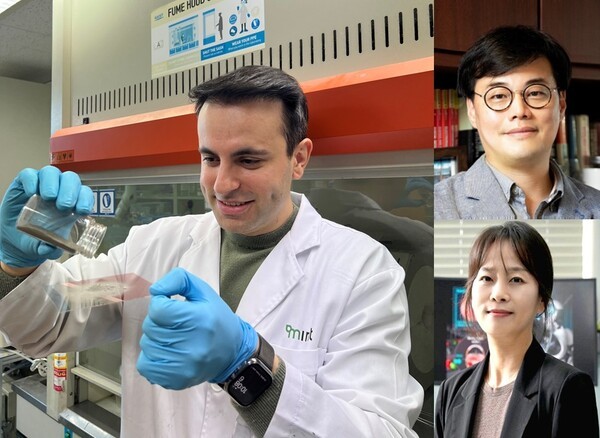
KAIST and ETRI researchers have developed a mechanochemically activatable liquid metal powder for additive electronics printing, as detailed in a study published in Advanced Functi...
Originally reported by naewoeilbo.com
KAIST and ETRI researchers have developed a mechanochemically activatable liquid metal powder for additive electronics printing, as detailed in a study published in Advanced Functional Materials on December 9, 2025. Led by Professor Inkyu Park of KAIST and Dr. Hye-Jin Kim of ETRI, the team created a material consisting of liquid metal particles encapsulated in a thin oxide layer that remains non-conductive until subjected to physical pressure. This material allows for the manual or automated drawing of conductive circuits on diverse substrates including paper, plastic, textiles, and organic matter like leaves, without requiring high-temperature sintering or complex deposition equipment. The process is reversible, as the metal can be recovered using sodium hydroxide and recycled into new powder.
This technology addresses the persistent challenges of surface tension and poor wetting associated with traditional liquid metal printing, which often lead to circuit smearing and inconsistent patterning. By transitioning from a liquid state to a pressure-sensitive powder, the material enables high-precision, additive-style circuit fabrication on irregular or soft surfaces, positioning it as a viable alternative to conventional conductive inks or vacuum-deposited metal traces. While existing flexible electronics often rely on silver-based conductive pastes or inkjet-printed nanoparticle inks, this liquid metal approach offers superior mechanical durability, maintaining conductivity through tens of thousands of bending cycles. The ability to print directly on soft robotics and wearable health monitors aligns with the growing demand for sustainable, reconfigurable electronics that reduce e-waste.
For industrial adoption, the primary hurdle remains the transition from manual application to scalable, high-speed automated deposition systems. Users should evaluate this material for prototyping and specialized soft-electronic applications where traditional rigid PCB manufacturing is impractical. Future development must focus on standardizing the pressure-activation threshold to ensure consistent electrical performance across varied manufacturing environments.
This article is an AI-assisted rewrite of the linked source report. Facts originate from the source; phrasing is AMPulse's. Use Read Original below to verify, or Report an issue if something is wrong.
Topics