LIG D&A opens South Korea's first defense-dedicated metal AM center for missile and drone lightweighting

Hardware
Originally reported by g-enews.com
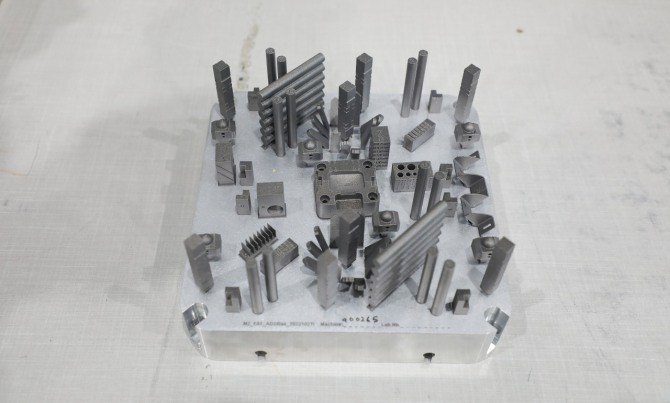
South Korean defense contractor LIG D&A has opened a dedicated metal additive manufacturing center in Daejeon, investing 7.8 billion KRW (approximately $6 million) in a 168-pyeong (roughly 555 square meters) facility. The Metal AM Center, established in partnership with LIG Precision in May 2026, houses an M-Line system for large-format aluminum production, M2 Series 5 machines for process development, and an MRSS 04 depowdering station. The facility is focused on producing lightweight components for guided missiles, drones, and unmanned surface vessels, with LIG D&A CEO Shin Ik-hyun personally attending the opening ceremony.
This move places LIG D&A at the intersection of two powerful trends in the AM industry: defense-sector acceleration and the aerospace qualification grind. While Western defense primes like Lockheed Martin and RTX have been quietly embedding metal AM into missile programs for years, LIG D&A is among the first Asian defense contractors to build a dedicated production-scale facility rather than relying on service bureaus or R&D labs. The company is targeting specific high-value applications - actuator fins for missile guidance, radomes, antenna assemblies that consolidate 10+ machined parts into single printed components, and housings for EO/IR systems on aerial platforms. This mirrors the GE LEAP fuel nozzle pattern where AM disappears into the supply chain once it becomes production infrastructure, but with a defense-specific twist: the parts are not just weight-saving but also performance-critical under extreme thermal and aerodynamic loads.
The practical significance here is that LIG D&A is not running a technology demonstration - it is building a production pipeline for parts that must survive hypersonic flight conditions and electronic warfare environments. The company has already shown a suicide unmanned surface vessel at MADEX with 3D-printed hull components and is developing variable-reflector drones for electronic attack. For the AM industry, this represents a concrete reference case in the defense vertical that sits outside the usual US-centric narrative. The key execution risk is whether LIG D&A can move from prototype parts to qualified production at scale, particularly for RF components and thermal management systems where material properties and surface finish directly affect system performance. If successful, this facility could become a template for other Asian defense contractors evaluating metal AM for production.
Topics