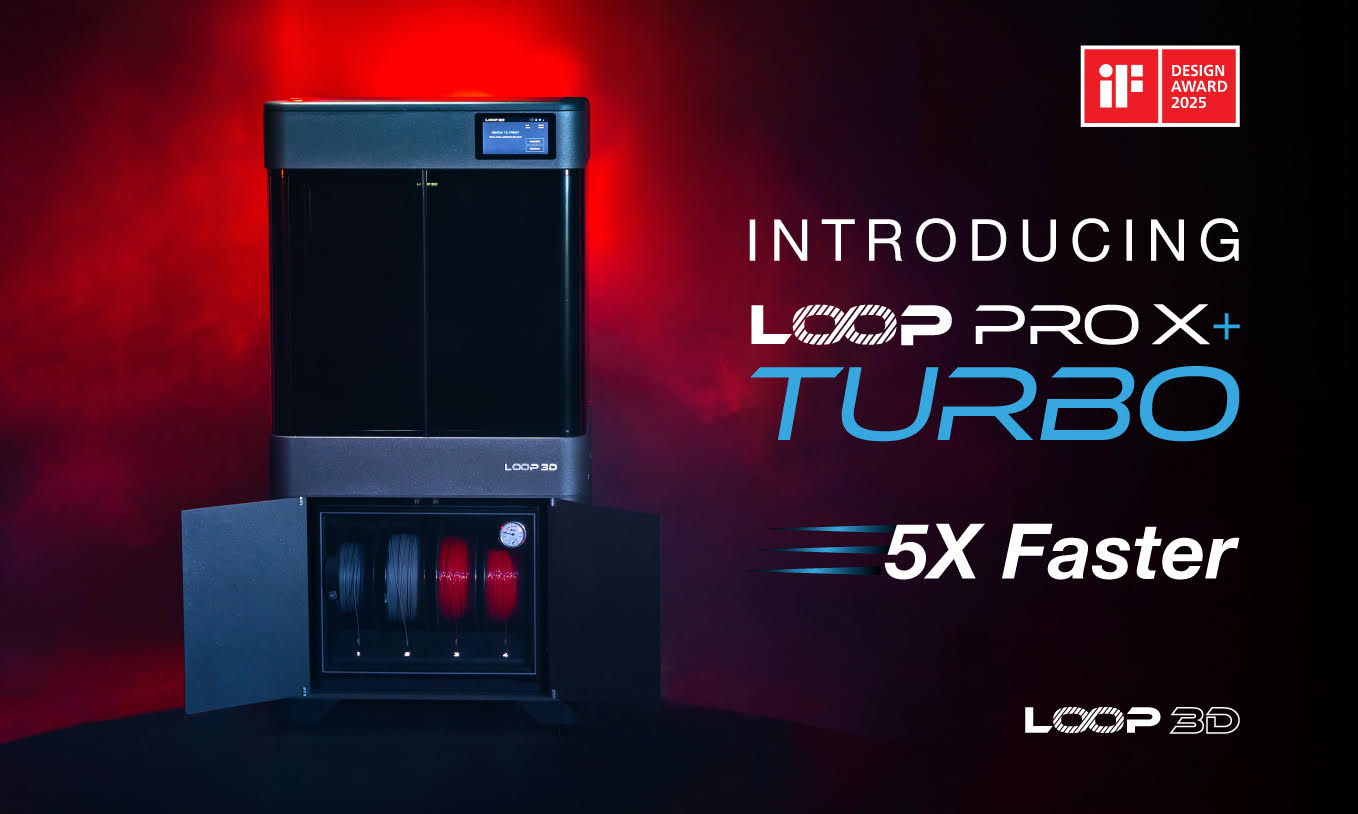
LOOP 3D launches LOOP PRO X+ TURBO Gen2 with modular architecture for industrial uptime
Originally reported by 3DPrint.com
LOOP 3D Additive Manufacturing has unveiled the LOOP PRO X+ TURBO Gen2, a material extrusion system engineered for production environments. The printer features a 500 x 350 x 500 mm build volume, a milled aluminum chassis weighing 170 kg, dual high-flow swappable printheads, HEPA and carbon filtration, automated sliding doors, and an automated filament changeover system. The system uses an H-Bot kinematic architecture with servo motors and linear rails, controlled via the browser-based LOOP 3D Cloud software that enables remote monitoring, build tracking, and per-project file management. CEO Erkan Ustaoglu stated the Gen2 is built for production, with every subsystem engineered for speed, reliability, and consistency.
This launch targets a specific gap in the polymer material extrusion market: industrial-grade uptime in demanding environments. While Bambu Lab and other consumer-focused brands have driven desktop FDM/FFF to remarkable speed and price points through software compensation and lightweight Core XY designs, LOOP 3D is betting on mechanical robustness and serviceability. The modular architecture-with swappable controller, UI, and printhead modules-directly addresses the maintenance pain point in hospitals, military bases, oil platforms, and other settings where downtime is unacceptable. This positions LOOP 3D against a different competitive set: not Bambu Lab, but industrial polymer systems from Stratasys and Markforged, where reliability and certification pathways matter more than raw speed or cost per part.
The Gen2's design philosophy reflects a deliberate choice to prioritize mechanical engineering over software compensation, a bet that becomes more relevant as polymer AM moves beyond prototyping into regulated production. The 170 kg chassis and linear rails aim to eliminate racking inherent in H-Bot architectures without relying on algorithmic correction. For users in aerospace maintenance, defense logistics, or medical device manufacturing-where a printer must work on the first try with gloved hands in dusty environments-this tradeoff is rational. LOOP 3D's success will depend on whether it can build the partner ecosystem and industry-specific certifications that justify the higher upfront cost, rather than competing on price alone.
This article is an AI-assisted rewrite of the linked source report. Facts originate from the source; phrasing is AMPulse's. Use Read Original below to verify, or Report an issue if something is wrong.
Topics