Armada raises $230M at $2B valuation, plans Arizona modular data center factory with Johnson Controls
Originally reported by techbuzz.ai
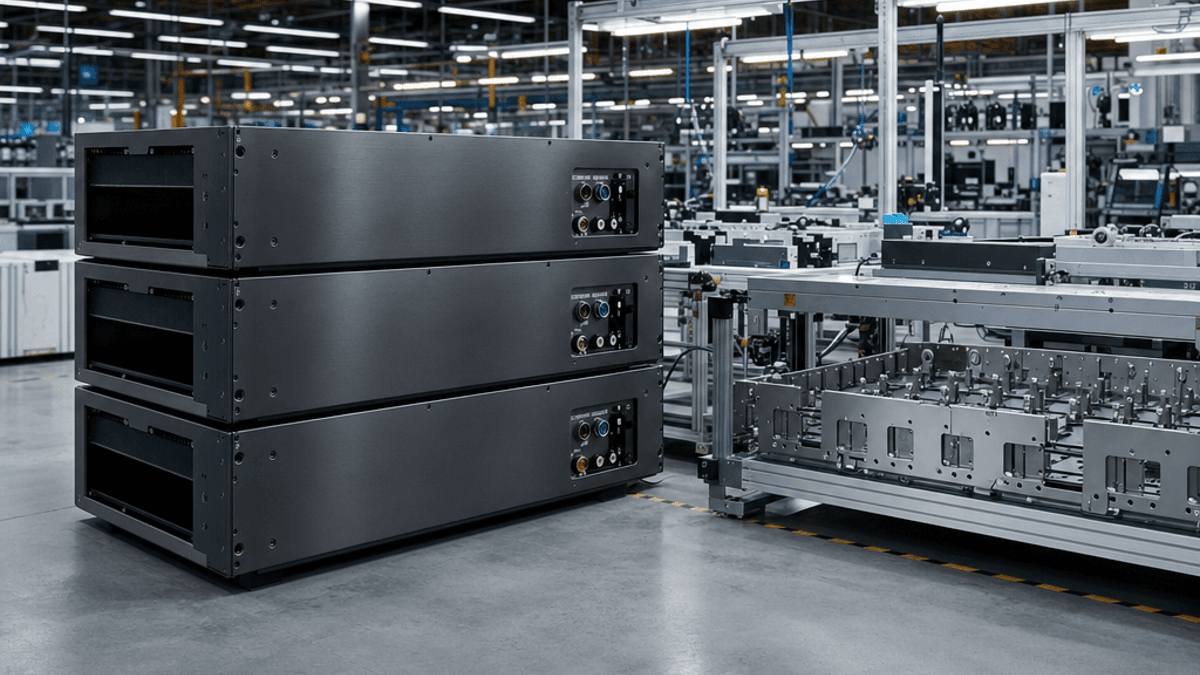
Armada, a startup building modular data centers optimized for AI workloads, has closed a $230 million funding round at a $2 billion valuation, with BlackRock joining as a new investor. The company plans to open a dedicated manufacturing facility in Arizona in partnership with Johnson Controls, which also invested and will supply cooling technology and supply chain expertise. Armada’s prefabricated “pods” - standardized modules containing cooling, power distribution, and server racks - aim to deploy compute capacity in six to nine months versus the two to four years required for traditional data center construction. The round represents one of the largest infrastructure bets in the AI hardware space this year.
This development sits at the intersection of two accelerating trends: the AI infrastructure buildout and the modularization of industrial manufacturing. While Armada is not an additive manufacturing company, its factory approach - mass-producing standardized modules in a controlled facility - mirrors the production logic that AM advocates have long promoted for distributed, on-demand manufacturing. The partnership with Johnson Controls, a global leader in building systems and industrial equipment, gives Armada access to mature cooling technology critical for AI chips that generate extreme heat loads. The Arizona location also aligns with CHIPS Act-driven reshoring, placing Armada near TSMC and Intel fabs for talent and supply chain synergies. For the AM industry, this signals that modular, factory-based production models are gaining institutional credibility and capital, potentially opening new demand for large-format additive tooling, jigs, and fixtures used in module assembly.
From an industrial manufacturing perspective, the practical takeaway is that Armada must now execute on factory ramp-up and module quality at scale - the $230 million validates the concept, but the Arizona facility will determine whether modular data centers can match traditional builds on reliability and cost. For AM suppliers, the opportunity lies in serving the tooling and fixture needs of this new factory ecosystem, not in printing the modules themselves. The deal is a reminder that the most significant AM-adjacent growth may come from infrastructure sectors adopting factory-based production, rather than from AM directly displacing conventional manufacturing.
Topics