NCAME and 6K Additive partner to generate cold spray mechanical performance data for defense repair

Materials
Originally reported by 3D Printing Industry
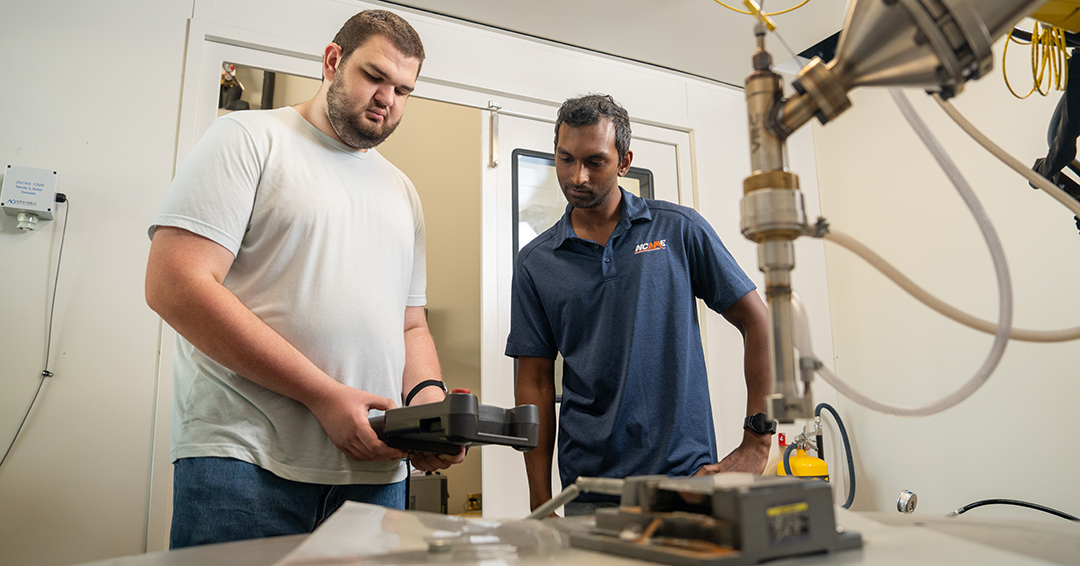
Auburn University’s National Center for Additive Manufacturing Excellence (NCAME) has launched a research study with metal powder producer 6K Additive to evaluate cold spray feedstock materials under demanding repair conditions. The project, led by NCAME research engineer Mikyle Paul, will use the center’s VRC Gen IV Cold Spray System to generate mechanical performance data on a range of feedstock materials. The explicit goal is to close the data gap that has prevented cold spray from wider adoption in critical-component repair for defense and industrial sectors, where structural reliability is non-negotiable.
This partnership addresses a persistent bottleneck in cold spray adoption: the technology’s capability has been proven in principle, but procurement and maintenance engineers lack standardized mechanical performance benchmarks for specific feedstock materials under specific conditions. Without that evidence base, qualification for critical repair applications remains stalled. 6K Additive’s role as feedstock supplier positions it to embed its materials into the resulting data sets and qualification pathways, a classic materials qualification discipline play that can create long-tail competitive advantage. The project aligns with parallel efforts at the University of Utah, Penn State, and Florida International University, all building the evidence base rather than the hardware, signaling that the cold spray segment is shifting from capability demonstration to qualification infrastructure.
For 6K Additive, this is a low-cost, high-leverage move: funding academic research that generates qualification data for its own powders, with direct relevance to the U.S. defense sustainment market. The practical outcome will be a set of material-performance curves that maintenance depots can cite in repair procedures. If the data is robust, 6K Additive’s powders become the default reference material for those applications. The company must now ensure its production consistency matches the benchmarks the study produces.
Topics