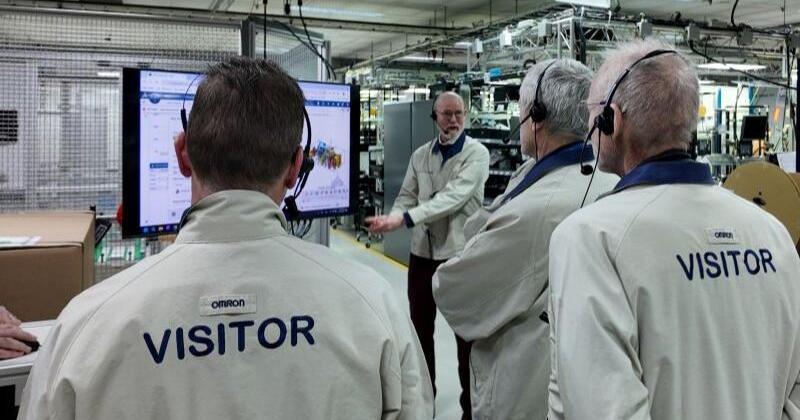
Omron and Dassault Systèmes partner to integrate Sysmac automation with 3D virtual twins
Originally reported by Advanced Manufacturing
Omron Corp. and Dassault Systèmes have entered a strategic partnership to integrate Omron's Sysmac industrial automation platform with Dassault Systèmes' 3D UNIVERSE platform. The collaboration focuses on bridging the gap between Information Technology (IT) and Operational Technology (OT) by creating a continuous digital continuum. This integration allows for the development of Virtual Twins of Production Systems, enabling manufacturers to design, simulate, and validate robot behavior and logistics flows in a virtual environment before physical deployment. The partnership aims to reduce commissioning times and minimize error risks in complex production environments.
For Omron, a global leader in industrial automation headquartered in Kyoto, Japan, this move is a calculated step to enhance the value proposition of its hardware ecosystem. By embedding high-fidelity simulation capabilities into its automation roadmap, Omron addresses the growing demand for flexible, software-defined manufacturing. In the context of additive manufacturing and advanced production, this allows for more seamless integration of AM cells into larger automated lines. While competitors like Siemens and Rockwell Automation focus heavily on the digital thread, Omron is positioning its Sysmac platform as a highly interoperable hardware-software bridge that can handle the complexities of modern, high-mix production.
From an implementation standpoint, the success of this partnership depends on how effectively the virtual models translate to real-world sensor and actuator performance on the factory floor. Users should focus on the fidelity of the Virtual Twin to ensure that simulated robot paths and sensor feedback loops accurately reflect the physical constraints of the Sysmac hardware. For machine builders, the immediate utility lies in the ability to perform pre-deployment validation, which directly impacts the reduction of downtime during the initial setup of automated production cells.
This article is an AI-assisted rewrite of the linked source report. Facts originate from the source; phrasing is AMPulse's. Use Read Original below to verify, or Report an issue if something is wrong.
Topics