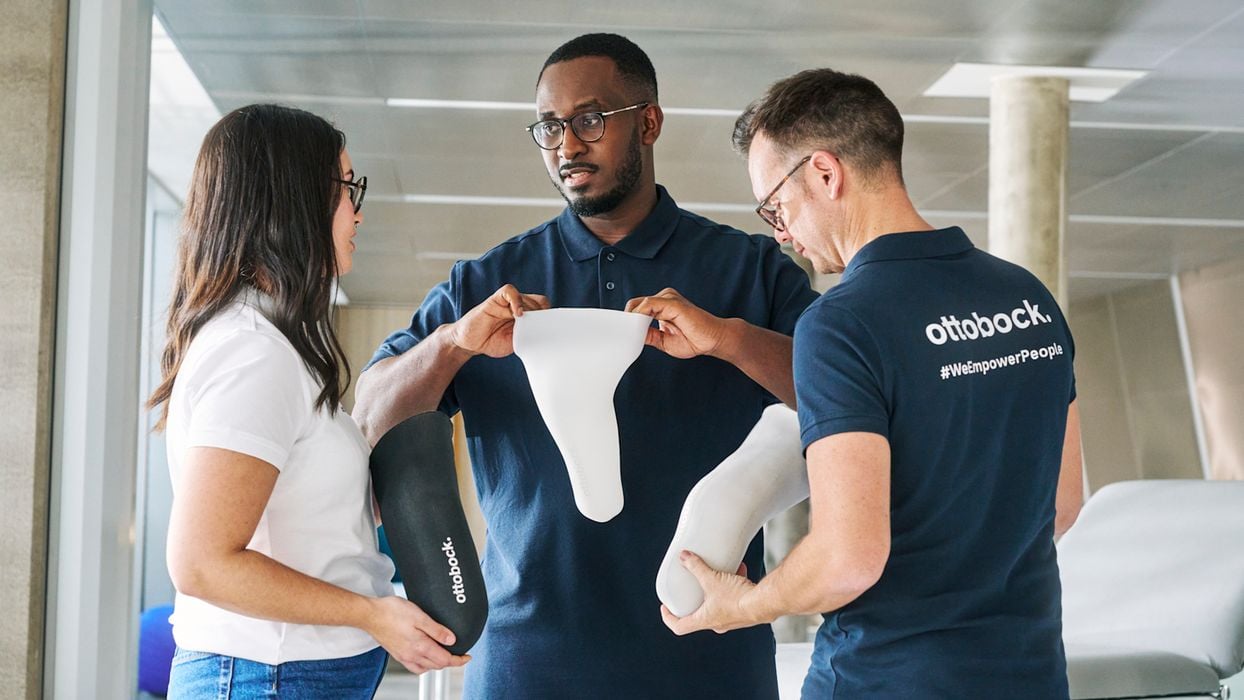
Ottobock launches iconiq 3D printed silicone prosthetic liner for mass-customized fit

Hardware
Originally reported by Fabbaloo
Ottobock, the German medical technology company, has unveiled iconiq, a 3D printed silicone prosthetic liner designed for individualized fit using digital scans and additive manufacturing. The liner sits between the residual limb and the prosthetic socket, addressing a critical comfort and mobility gap: Ottobock cites data that nearly 68% of lower-limb prosthesis users experience residual limb problems such as pain, sores, or skin irritation. Clinicians perform a digital scan of the residual limb, upload the data through Ottobock’s ordering platform, and the liner is produced with variable thicknesses tailored to the patient’s anatomy, scar tissue, and sensitive regions-eliminating traditional mold creation entirely.
This launch fits squarely within the medical-dental vertical’s long-standing push toward mass customization, where individualized devices are produced at industrial scale rather than handcrafted one at a time. Ottobock has been building a digital ecosystem for years: its MyFit TT and MyFit TF platforms already deliver 3D printed transtibial and transfemoral sockets using Multi Jet Fusion and PA12 nylon. The iconiq liner is the natural complement-a highly customized liner achieves its full potential only when paired with a precisely fitting socket. Together, these components create a fully digital, data-driven prosthetic fitting workflow that can be retained, modified, and reproduced without restarting fabrication. The broader healthcare industry increasingly views additive manufacturing as a way to shorten lead times, improve fit, and enable more patient-specific care, and Ottobock is positioning itself at the center of that shift.
For Ottobock, the practical challenge now is scaling the digital workflow across clinics and reimbursement systems. The iconiq liner’s success depends not just on print quality but on clinician adoption of digital scanning, the ordering platform’s ease of use, and payer acceptance of a higher-cost customized product. Competitors in the prosthetic liner space-including traditional silicone fabricators and emerging 3D printing startups-will need to match Ottobock’s integrated socket-and-liner system to offer a comparable end-to-end solution. For buyers, the key question is whether the clinical outcomes justify the premium over standard liners, and whether the digital workflow reduces overall fitting time and revision rates.
This article is an AI-assisted rewrite of the linked source report. Facts originate from the source; phrasing is AMPulse's. Use Read Original below to verify, or Report an issue if something is wrong.
Topics