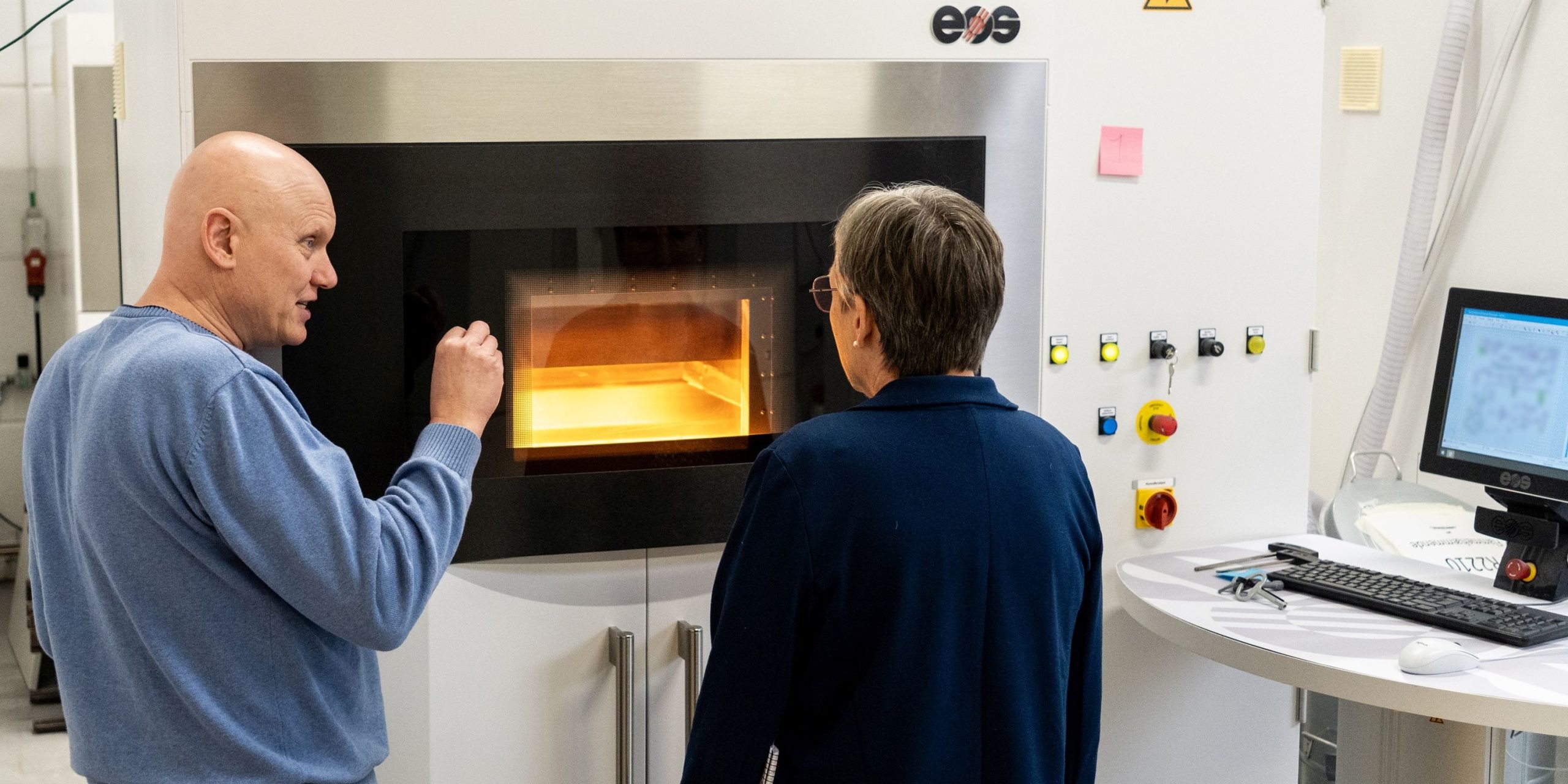
Prototal Group opens DACH-region service center in Dornbirn, Austria for serial polymer AM production

Service
Originally reported by ingenieur.de
Prototal Group, the Nordic region's largest industrial 3D printing and injection molding service provider, has opened a new subsidiary, Prototal GmbH, in Dornbirn, Austria, on Lake Constance. The facility serves customers in Germany, Austria, and Switzerland (DACH region) with serial polymer additive manufacturing. The company operates over 130 industrial 3D printers and 110 injection molding machines across ten European production sites, with headquarters in Jönköping, Sweden. CEO Jan Löfving stated that local consulting and service are critical for scaling new product solutions globally, while Business Developer Kilian Rottenberger highlighted the digital supply chain and cloud-warehouse model that reduces physical inventory costs and cuts downtime from months to days.
This expansion is a textbook example of the European AM service bureau consolidation and geographic pull-through pattern. Prototal is not a startup; it is an established production partner with certified competence centers for aerospace, defense, and automotive - three verticals with the highest qualification barriers and longest sales cycles. By placing a local entity in the DACH region, Prototal directly competes with regional leaders like Oechsler, FIT AG, and voxeljet for serial polymer production contracts. The move also leverages its 2023 acquisition of 1zu1scale, a specialist in micro-precision parts with ISO 13485 certification and cleanroom capability, which already operated in Dornbirn. The strategic logic is clear: reduce friction for risk-averse industrial buyers who require local engineering support, stable supply chains, and certified quality management before committing to AM series production.
For buyers evaluating polymer AM service partners in Central Europe, Prototal's move signals that the competitive bar has shifted from technology availability to integrated service depth and supply chain resilience. The company must now demonstrate that its distributed production network can match the delivery reliability and quality consistency of established German injection molders. The cloud-warehouse model is a concrete differentiator worth watching - if it genuinely reduces inventory carrying costs for serial parts, it could accelerate adoption in automotive and industrial tooling segments where cost-per-part still dominates procurement decisions.
Topics