PSI scales up boron nitride coating process for 316L powders to industrial batch sizes

Hardware
Originally reported by Metal AM
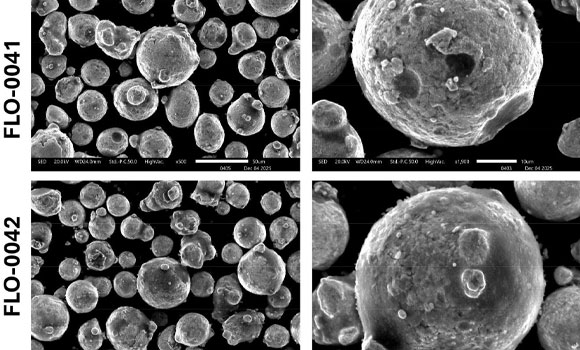
Phoenix Scientific Industries Ltd (PSI), based in Hailsham, East Sussex, UK, has developed and scaled a fluidised bed reactor (FBR) process for coating 316L stainless steel powders with boron nitride nanoparticles for additive manufacturing. The company produced two 20 kg batches of coated powder using a larger retort system, maintaining coating quality comparable to laboratory trials. PSI reported that initial investigations found commercially available boron nitride nanopowder exhibited significant agglomeration, which was addressed through a solution-based dispersion approach that reduced agglomerate sizes to approximately 1–2 µm before coating. The company identified the FBR route as the most effective among several evaluated coating technologies.
This development addresses a persistent challenge in powder engineering: achieving uniform dispersion and adhesion of nanoparticles onto metal powder surfaces at industrially relevant scale. Nanoparticle coatings have long attracted interest for modifying material properties and processing behaviour in metal AM, but agglomeration has limited commercial adoption. PSI's scale-up to 20 kg batches moves the technology from laboratory curiosity toward production relevance, particularly for applications requiring modified thermal conductivity, wear resistance, or high-temperature performance. The company indicated the coated powders could support oxide dispersion-strengthened (ODS) alloys and high-temperature materials, though further work is needed to validate mechanical properties in Laser Beam Powder Bed Fusion (PBF-LB) components.
The practical significance here is that PSI has demonstrated a repeatable coating process at a batch size that could support pilot production runs, not that nanoparticle-coated powders are ready for qualification in aerospace or medical applications. The next step is mechanical property evaluation of PBF-LB parts made from these powders, which will determine whether the coating survives the melt pool and delivers measurable property improvements. Until that data is published and independently replicated, this remains an enabling process development rather than a production-ready material solution.
This article is an AI-assisted rewrite of the linked source report. Facts originate from the source; phrasing is AMPulse's. Use Read Original below to verify, or Report an issue if something is wrong.
Topics