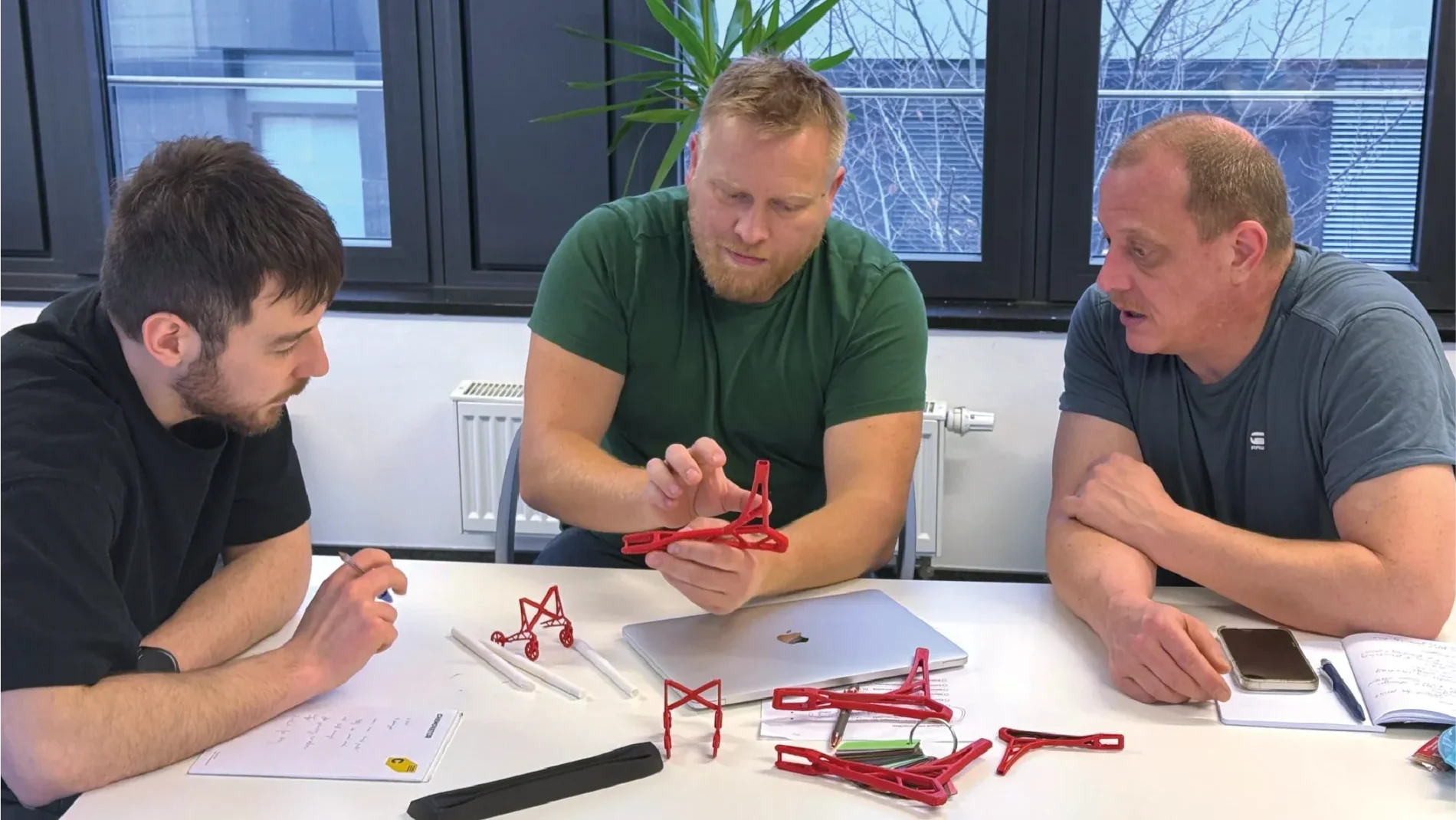
Replique has expanded its B2B industrial additive manufacturing services to the Mannheim region, targeting the Rhein-Neckar industrial cluster.

Platform
Originally reported by replique.io
Replique has expanded its B2B industrial additive manufacturing services to the Mannheim region, targeting the Rhein-Neckar industrial cluster. The service provides on-demand production for spare parts, prototypes, and small series, utilizing a diverse technology stack including FDM/FFF, SLS, and CNC machining. The platform focuses on engineering-led procurement, offering technical validation for material selection, tolerance requirements, and geometric feasibility to address supply chain bottlenecks for local automotive, chemical, and mechanical engineering firms. By integrating digital inventory management with localized production, Replique aims to reduce lead times for obsolete or low-volume components that are otherwise difficult to source through traditional manufacturing channels.
This move highlights the growing demand for decentralized, service-oriented additive manufacturing in high-density industrial hubs. While global platforms like 3D Hubs or Protolabs provide broad access, Replique differentiates itself by emphasizing technical consulting and a curated supplier network, which is critical for industrial-grade parts that require strict documentation and quality assurance. The Rhein-Neckar region, home to major chemical and automotive players, represents a significant market for on-demand manufacturing as companies seek to mitigate the risks of long-tail supply chain disruptions and high warehousing costs for legacy parts. This expansion reflects a broader trend of moving from generic printing services toward specialized, application-specific manufacturing partnerships.
For industrial buyers in Mannheim, the value lies in the transition from simple file-to-part services to a managed engineering workflow that includes material qualification and post-processing. Replique must now demonstrate consistent scalability in its supplier network to maintain the quality standards required for critical industrial components. Users should prioritize providers that offer clear documentation and process validation rather than just rapid turnaround times for non-critical parts.
This article is an AI-assisted rewrite of the linked source report. Facts originate from the source; phrasing is AMPulse's. Use Read Original below to verify, or Report an issue if something is wrong.
Topics