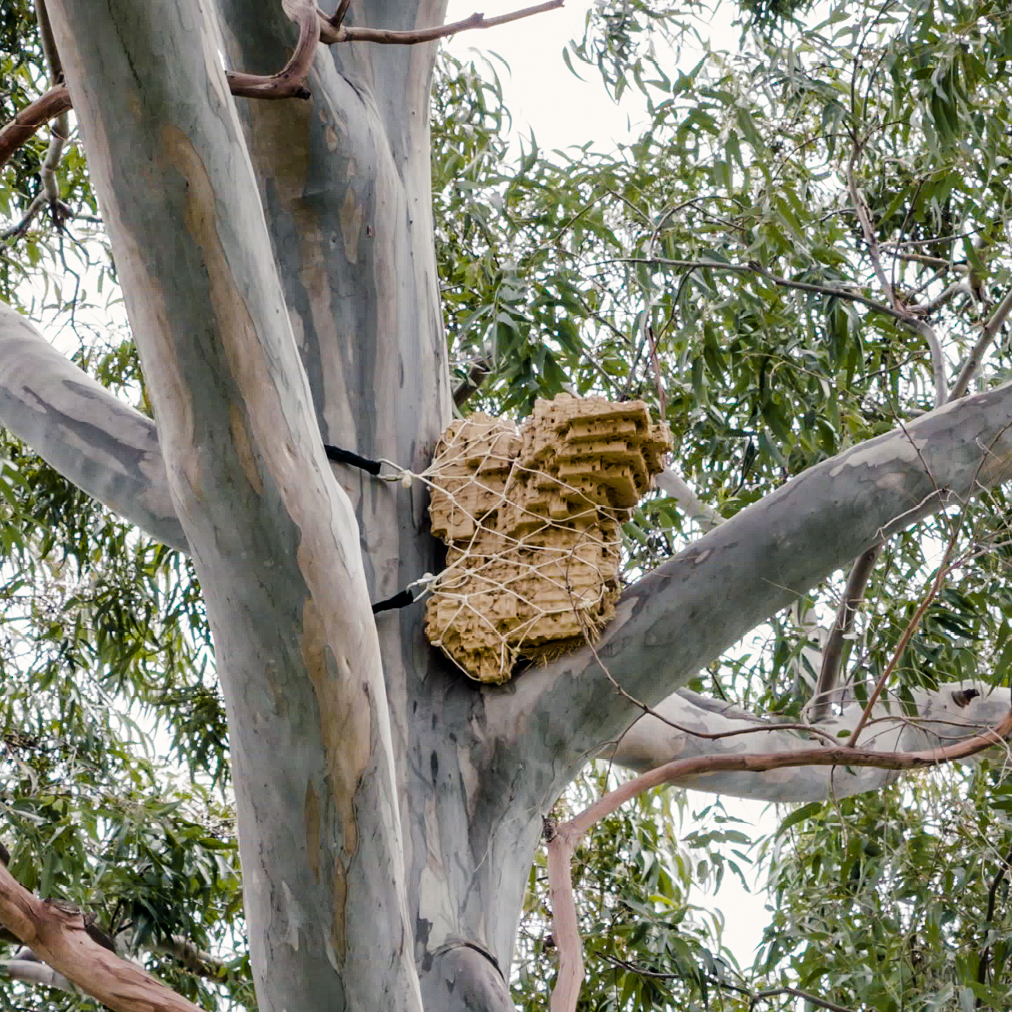
Researcher Dan Parker, representing the University of Oxford and the University of Melbourne Deep Design Lab, has developed 3D printed prosthetic bird nests to address the decline ...
Originally reported by 3DPrint.com
Researcher Dan Parker, representing the University of Oxford and the University of Melbourne Deep Design Lab, has developed 3D printed prosthetic bird nests to address the decline of endangered cavity-nesting species in the UK and Australia. The project utilizes a combination of biodegradable polymers and mycelium-based composites to create artificial hollows that mimic the thermal properties of natural tree cavities. These structures are designed to mitigate the temperature fluctuations and moisture infiltration common in traditional wooden bird boxes, which have historically contributed to high chick mortality rates. The initiative focuses on restoring habitats for species such as the marsh tit, nuthatch, and sparrow, which are currently threatened by the loss of ancient, hollowed trees due to agricultural intensification.
This application highlights the growing utility of bio-based materials and additive manufacturing in ecological restoration and environmental conservation. While the AM industry is predominantly focused on industrial aerospace or medical applications, this project demonstrates the efficacy of FDM/FFF and bio-fabrication techniques for high-value, low-volume environmental engineering. By integrating mycelium with 3D printed scaffolds, the researchers are addressing a specific material science gap: creating structures that are both structurally sound and biologically compatible with natural ecosystems. This niche application underscores the potential for AM to provide customized, site-specific solutions where mass-produced, standardized alternatives fail to meet biological requirements.
This project serves as a practical case study in functional biomimicry, proving that additive manufacturing can solve complex environmental challenges through precise material deposition. For future scalability, the team must focus on standardizing the curing processes for mycelium-polymer composites to ensure consistent structural integrity across varying climate conditions. Stakeholders should view this as a validation of using localized, bio-degradable AM solutions for ecological infrastructure rather than relying on traditional, less durable materials.
This article is an AI-assisted rewrite of the linked source report. Facts originate from the source; phrasing is AMPulse's. Use Read Original below to verify, or Report an issue if something is wrong.
Topics