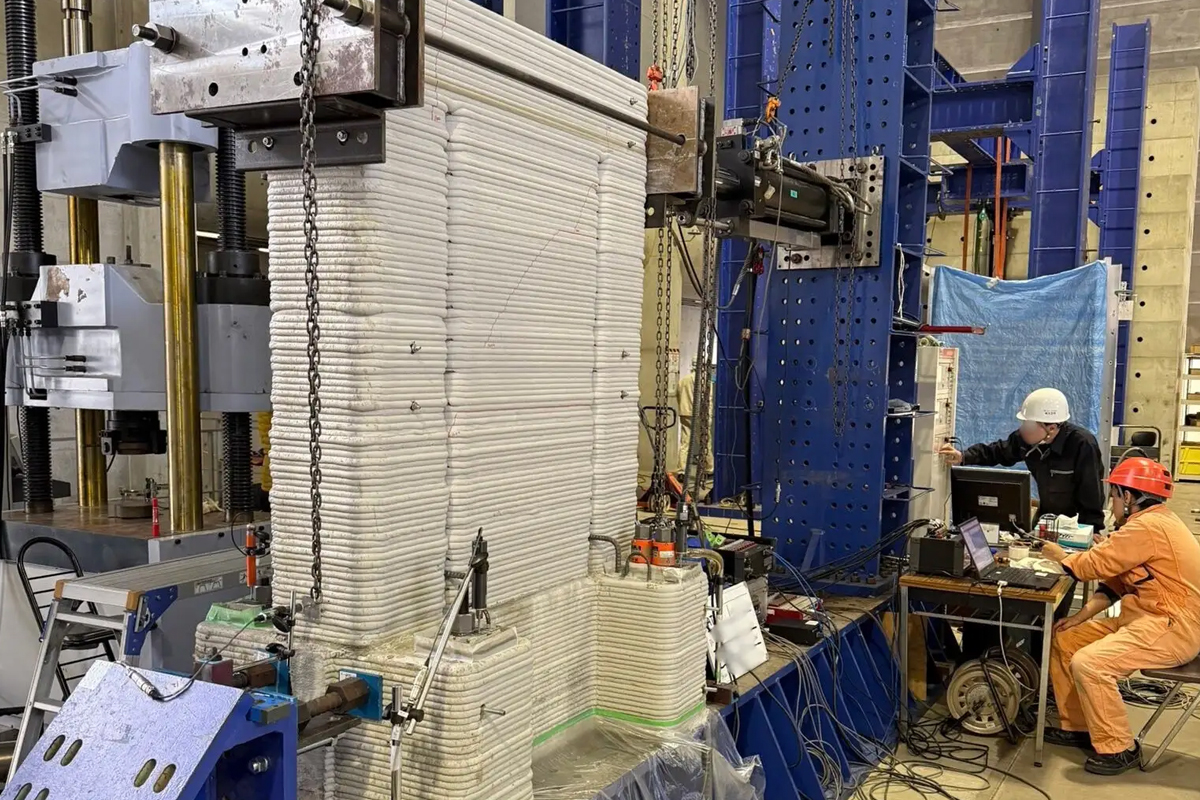
Serendix and the University of Tokyo completed structural experiments on 3D-printed mortar components to move from non-structural formwork to self-supporting status.

Hardware
Originally reported by SEKAPRI
Serendix and the University of Tokyo completed structural experiments on 3D-printed mortar components to move from non-structural formwork to self-supporting status. Scientific results confirmed stable load-bearing performance even after cracking, providing the foundation for Ministerial certification by 2027. This shift allows the printed material itself to serve as the structure, eliminating traditional RC reinforcement and lowering costs. Standardizing this data is key to scaling 3D-printed housing in seismic regions. 🏗️🏠 #3DPrinting #Construction #Serendix #AM #Innovation
This article is an AI-assisted rewrite of the linked source report. Facts originate from the source; phrasing is AMPulse's. Use Read Original below to verify, or Report an issue if something is wrong.