Shaanxi Province targets trillion-yuan future industry sector by prioritizing additive manufacturing in 15th Five-Year Plan
Originally reported by 3D打印资源库
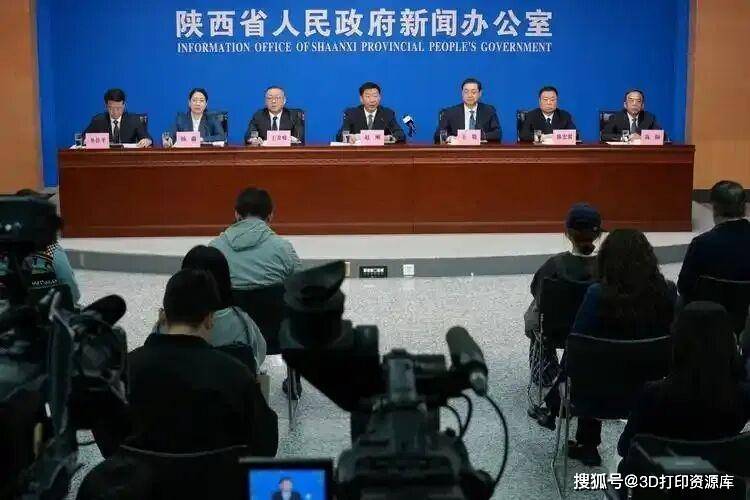
Shaanxi Province has officially announced that additive manufacturing will be a core pillar of its 15th Five-Year Plan industrial strategy. During a recent press conference held by the Shaanxi Provincial Government Information Office, officials detailed plans to develop a trillion-yuan future industry ecosystem focusing on 17 key directions, including AM. This follows a successful 14th Five-Year period where the province's GDP reached 3.66 trillion yuan, representing a net increase of 1 trillion yuan. The provincial government aims to leverage this momentum to build advanced technical capabilities and mature application scenarios within the regional manufacturing landscape.
This strategic pivot places Shaanxi in direct competition with other Chinese industrial hubs like Guangdong and Jiangsu for dominance in high-end manufacturing technologies. By integrating additive manufacturing into a broader trillion-yuan industrial framework, the province is addressing the need for localized supply chains in high-tech sectors such as aerospace, medical, and specialized electronics. The move aligns with global trends where regional governments are moving beyond simple hardware adoption toward creating integrated ecosystems that combine AM hardware, specialized materials, and software-driven design. This approach targets the gap between prototype-level production and large-scale industrial deployment of technologies like LPBF and SLM.
For stakeholders in the AM sector, Shaanxi's commitment means an upcoming increase in regional demand for industrial-grade metal and polymer printers, as well as specialized powder and resin materials. Companies specializing in SLM and DED technologies should prepare for potential procurement opportunities as the province builds out its technical infrastructure. The success of this plan will depend on the province's ability to attract high-tier R&D talent and integrate these manufacturing capabilities into its existing heavy industry and aerospace clusters.
This article is an AI-assisted rewrite of the linked source report. Facts originate from the source; phrasing is AMPulse's. Use Read Original below to verify, or Report an issue if something is wrong.
Topics