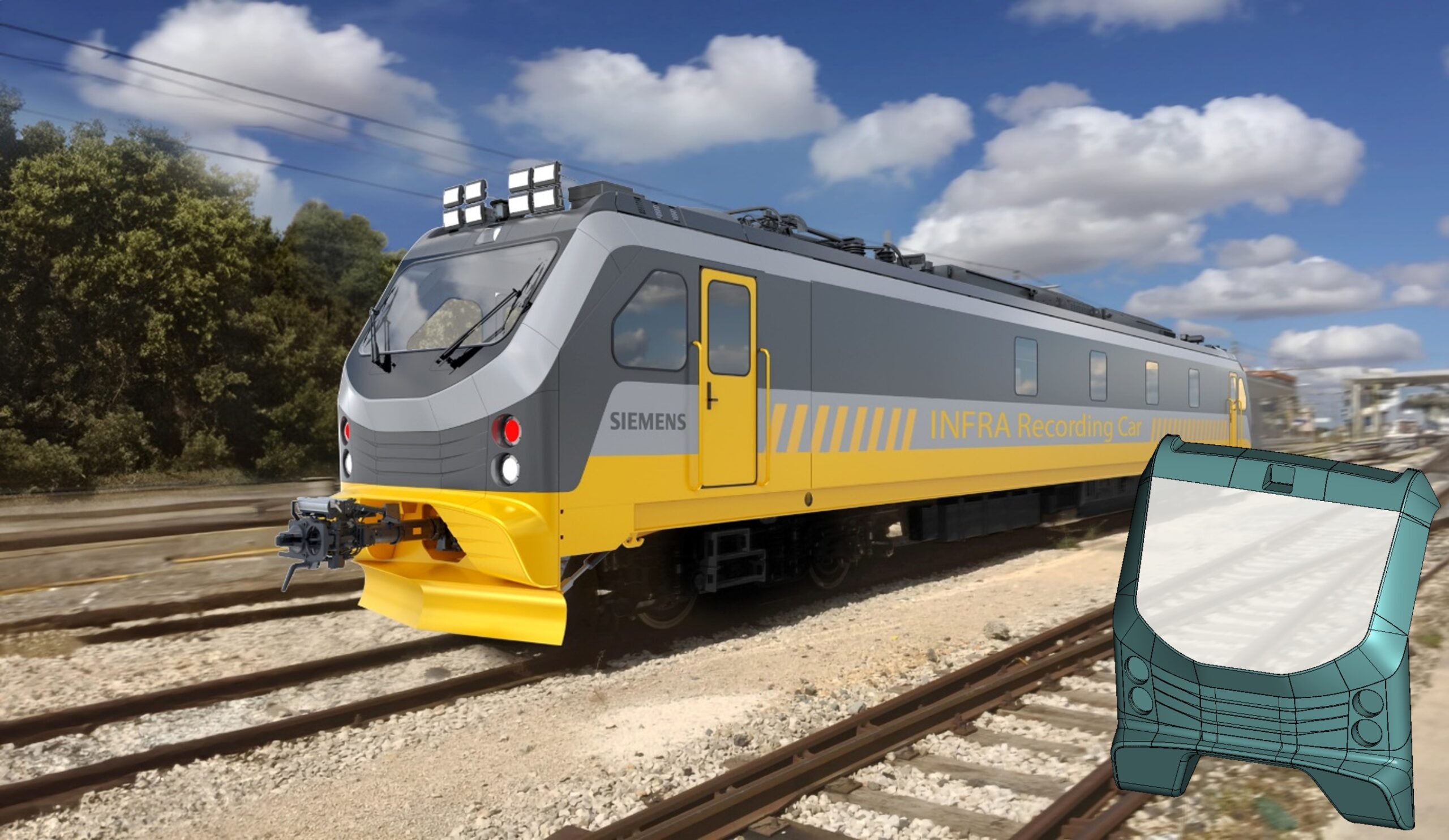
Siemens Energy, Siemens Mobility, and Bausch+Ströbel have been selected as finalists for the rapid.tech 3D Excellence Award, to be presented on May 6, 2026, in Erfurt, Germany.
Originally reported by wirtschaftsspiegel-thueringen.com
Siemens Energy, Siemens Mobility, and Bausch+Ströbel have been selected as finalists for the rapid.tech 3D Excellence Award, to be presented on May 6, 2026, in Erfurt, Germany. The finalists demonstrate industrial-grade additive manufacturing applications: Siemens Energy presents hydrogen-compatible gas turbine blades, Siemens Mobility showcases a rail vehicle front panel certified for 200 km/h, and Bausch+Ströbel displays a pharmaceutical feed track consolidated from a multi-part welded assembly into a single printed component. The selection process, overseen by a jury and public voting, focuses on technical validation, reproducibility, and economic viability rather than conceptual prototypes. Özlem Weiss, CEO of expertants GmbH, serves as a co-initiator of the award, which aims to establish standardized benchmarks for industrial AM adoption.
This competition highlights the transition of additive manufacturing from rapid prototyping to series production in high-stakes sectors like energy, rail, and medical packaging. By focusing on certified, end-use parts, the rapid.tech 3D Excellence Award addresses the critical market requirement for process reliability and quality assurance. While competitors often focus on machine throughput or material variety, this initiative emphasizes the validation of complex, functional components that replace traditional subtractive or assembly-heavy manufacturing methods. The integration of these projects into the regional industrial ecosystem of Thuringia underscores the state's role as a hub for European manufacturing innovation.
These finalists demonstrate that the primary barrier to wider AM adoption is no longer technical capability but the rigorous documentation and certification of production processes. For industrial users, the focus must remain on the transition from successful pilot projects to repeatable, cost-effective series manufacturing. Success for these companies depends on maintaining strict quality control standards that satisfy the stringent regulatory requirements of the energy and pharmaceutical sectors.
Topics