Singapore's first 3D-printed concrete pedestrian bridge to open in 2028, testing infrastructure viability
Originally reported by ShareLab
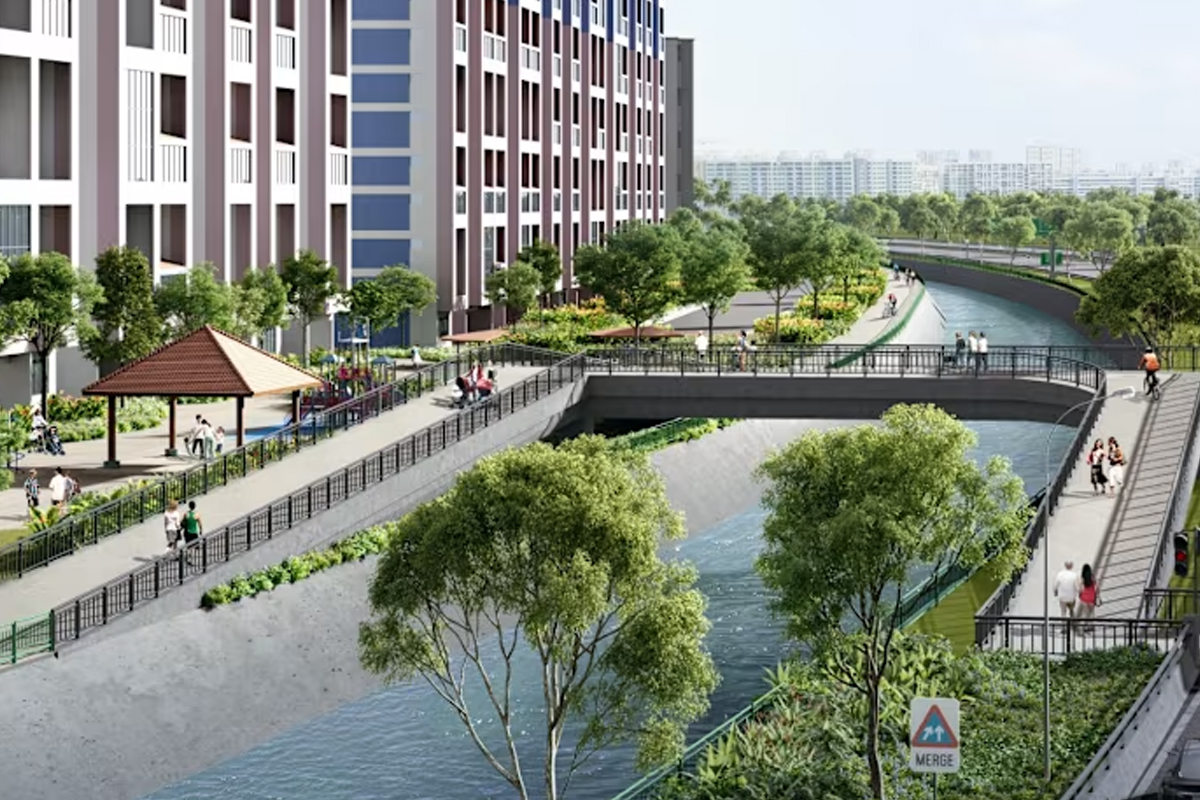
Singapore's Land Transport Authority (LTA) has announced plans to build the country's first 3D-printed concrete pedestrian bridge, targeting a 2028 opening. The 10-meter-long, 5-meter-wide structure will connect Jurong West with the new Tengah housing estate, accommodating both pedestrians and cyclists. The project is a pilot to evaluate additive construction for public infrastructure, developed in collaboration with Nanyang Technological University's Singapore Centre for 3D Printing, Dutch engineering firm Witteveen+Bos, and construction company CES_Innovfab. A half-width scale model (10m x 2.5m) has already been load-tested using 18 water tanks weighing approximately one ton each, with sensor data currently under analysis to validate structural performance against design specifications.
This project represents a deliberate, conservative entry into infrastructure-scale additive construction, using a segmented approach that combines 3D-printed concrete blocks with post-tensioned steel cables - a hybrid method that borrows proven civil engineering techniques rather than pursuing fully monolithic printing. The approach mirrors the broader construction AM industry's cautious trajectory: while residential-scale 3D-printed buildings have proliferated globally (ICON in the US, COBOD in Europe, Winsun in China), public infrastructure applications remain rare due to higher safety factors, longer design lives, and stricter regulatory oversight. Singapore's labor shortage context provides a clear economic driver - the country's construction workforce has been structurally constrained since COVID-19 border closures - making automation and labor reduction a policy priority rather than a speculative efficiency gain. The bridge's 2028 timeline reflects the multi-year qualification and approval cycle typical for load-bearing public works, distinct from the faster deployment cycles seen in private residential printing.
The practical significance here lies in the validation methodology: the segmented post-tensioning approach allows individual printed components to be tested and certified separately before assembly, potentially creating a replicable qualification pathway for other jurisdictions. For the construction AM sector, the key deliverable is not the bridge itself but the structural test data and certification framework it produces. If the scale-model load tests confirm design margins, the project will demonstrate that 3D-printed concrete can meet established infrastructure standards without requiring novel structural engineering - a lower-risk path to adoption than pursuing entirely new design codes. The real test will be whether the full-scale bridge's cost and timeline beat conventional construction on Singapore's next comparable project.
This article is an AI-assisted rewrite of the linked source report. Facts originate from the source; phrasing is AMPulse's. Use Read Original below to verify, or Report an issue if something is wrong.
Topics