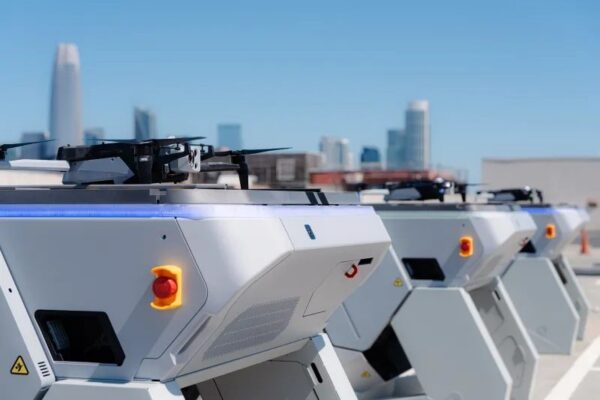
Skydio raises $110M Series F at $4.4B valuation, commits $3.5B to U.S. drone manufacturing

Application
Originally reported by dronelife.com
Skydio has closed a $110 million Series F round led by existing investors, bringing its valuation to $4.4 billion. CEO Adam Bry emphasized the round's modest size relative to investor demand, citing a core business generating hundreds of millions in annual revenue with strong unit economics. The company simultaneously announced a $3.5 billion commitment to expand U.S. drone manufacturing capacity, including new facilities, supply chain development, and workforce expansion. Skydio's autonomous drone platforms are deployed across public safety, defense, and critical infrastructure inspection, with NDAA-compliant domestic production positioning it as a primary U.S. alternative to foreign-made systems.
This funding round is notable within the broader additive manufacturing and robotics landscape for what it reveals about capital efficiency at scale. Skydio's trajectory mirrors the pattern of companies that successfully transition from venture-dependent growth to operational self-funding - a rare position among AI and robotics hardware firms. The $3.5 billion manufacturing commitment aligns with accelerating policy pressure to localize drone production for government and critical infrastructure applications, particularly under NDAA §849 restrictions that take full effect in December 2026. Skydio competes directly with DJI in the commercial drone market and with defense primes like AeroVironment and Anduril in the defense segment, but its manufacturing investment signals a bet on domestic supply chain sovereignty as a durable competitive moat.
From an AM industry perspective, Skydio's manufacturing expansion will likely involve significant additive production tooling - drones require complex, lightweight structures where polymer and metal AM can reduce part count and assembly time. The company's ability to execute on a $3.5 billion capital deployment over the next several years will determine whether this becomes a template for domestic drone manufacturing or an overcommitment. Buyers in public safety and defense should watch for specific production timelines and facility locations to assess delivery risk.
This article is an AI-assisted rewrite of the linked source report. Facts originate from the source; phrasing is AMPulse's. Use Read Original below to verify, or Report an issue if something is wrong.