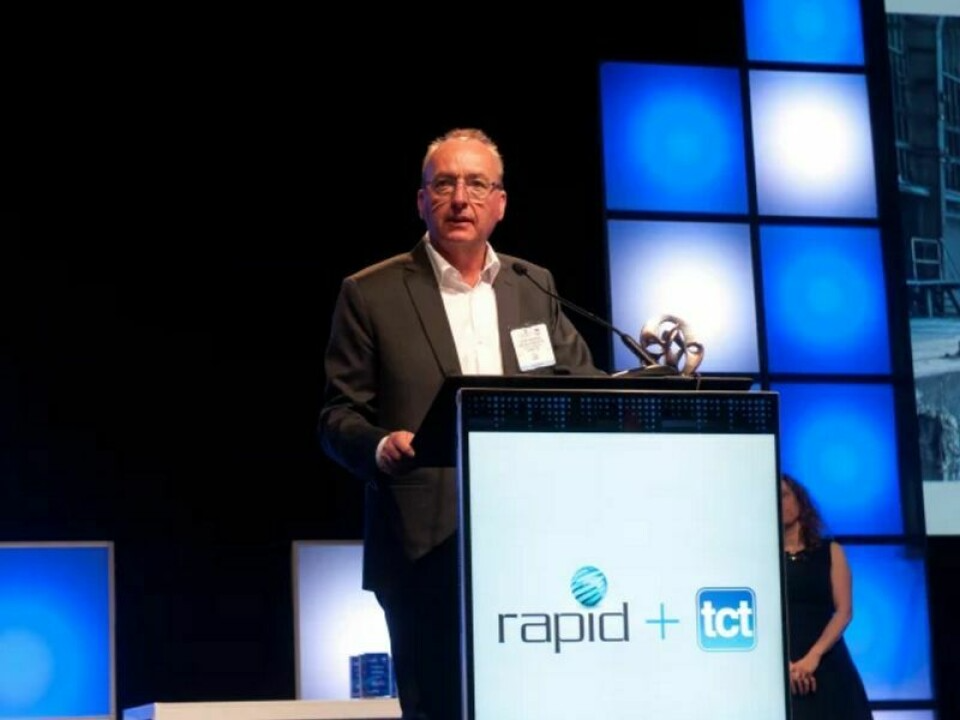
SLM co-inventor and Nikon SLM Chief Engineer Dieter Schwarze retires after 40-year career
Originally reported by TCT Magazine
Dr. Dieter Schwarze, co-inventor of Selective Laser Melting (SLM) technology and Chief Engineer at Nikon SLM Solutions, has retired after a 40-year career dedicated to metal additive manufacturing. Nikon SLM Solutions announced the news, noting that Schwarze contributed to every generation of the company's technology and holds over 100 inventions and patents. CEO Sam O'Leary stated that the entire AM industry would not be the same without him, and staff honored Schwarze with a guard of honor and a commemorative 3D-printed trophy on his final day.
Schwarze's retirement marks the end of an era for metal PBF-LB, the process segment that remains the central workhorse of industrial AM. As co-inventor of the SLM process roughly 30 years ago, Schwarze helped establish the technical foundation that now supports aerospace qualification programs, medical device production, and the recent consumer electronics titanium pull-through. His departure from Nikon SLM occurs at a time when the metal PBF-LB competitive field has split: Chinese OEMs are applying localized supply-chain pressure, the US defense market is becoming more domestically biased, and the frontier question is no longer raw machine performance but which vendors can turn fleets into repeatable factories. Schwarze's sustained engineering intensity across three decades of incremental improvement-rather than a single breakthrough-embodies the discipline that built the credibility metal AM enjoys today.
Practically, Schwarze's retirement is a personnel transition at a company that must now execute on its product roadmap without its foundational technical leader. Nikon SLM's challenge is to maintain the engineering rigor and customer confidence that Schwarze's presence provided, particularly as the market demands production-ready systems rather than demo cells. For the industry, this is a reminder that the deep knowledge embedded in long-tenured engineers is a form of institutional capital that cannot be quickly replaced, and that the next generation of AM progress will depend on whether companies can transfer that expertise into their engineering culture and qualification workflows.
Topics