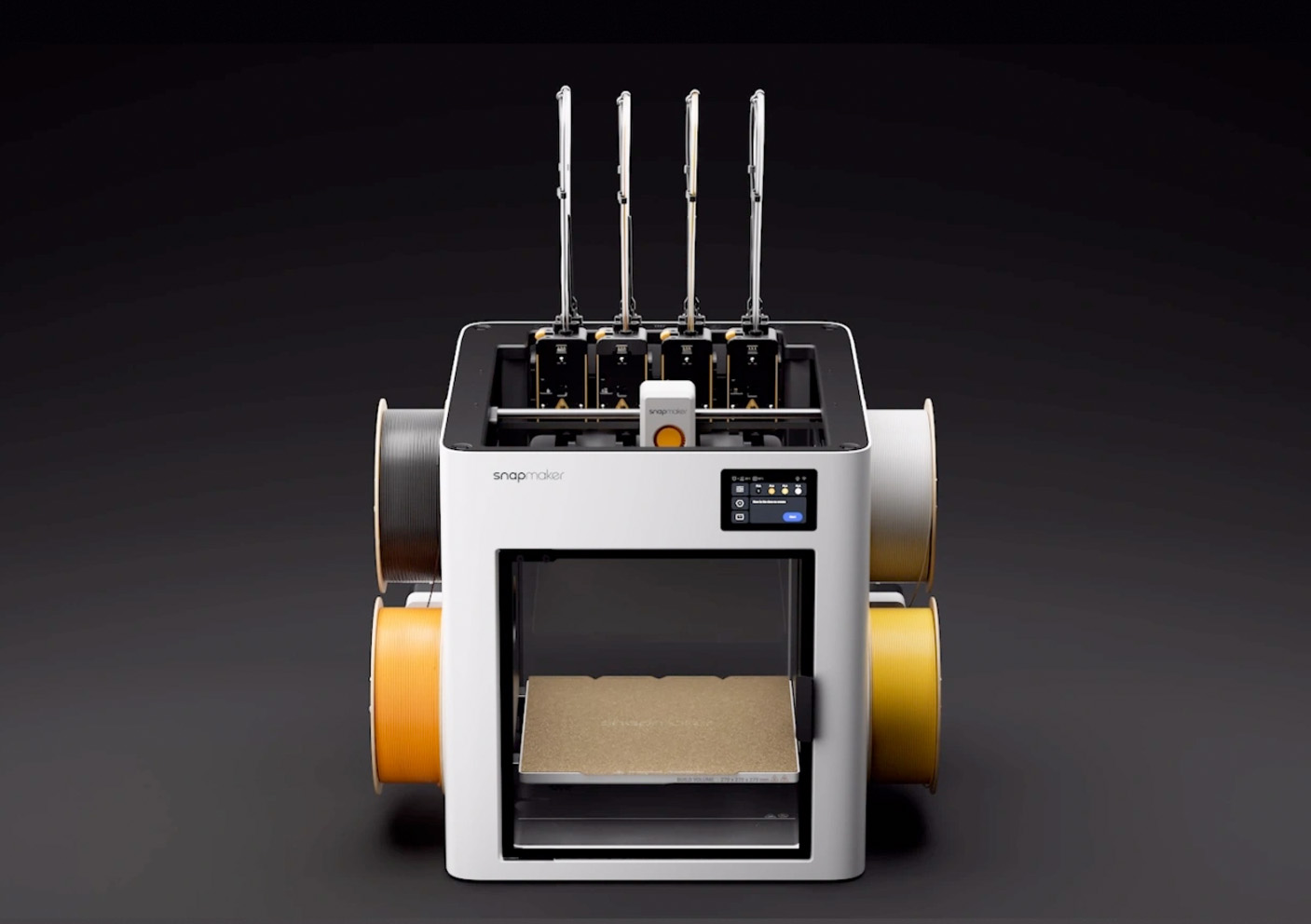
Snapmaker has launched the U1, a multicolor FDM/FFF 3D printer featuring a four-head tool-changer system, following a successful multi-million dollar crowdfunding campaign.

Hardware
Originally reported by TechKrams
Snapmaker has launched the U1, a multicolor FDM/FFF 3D printer featuring a four-head tool-changer system, following a successful multi-million dollar crowdfunding campaign. The machine offers a 270 x 270 x 270 mm build volume, a maximum print speed of 500 mm/s, and 20,000 mm/s² acceleration, with a retail price point of approximately $999. The system utilizes a CoreXY motion structure and supports materials including PLA, PETG, ABS, and TPU, with tool-head swaps occurring in roughly five seconds. Snapmaker, headquartered in Shenzhen, China, has integrated Klipper-based firmware and a proprietary slicer based on OrcaSlicer to manage the multi-material workflow.
The U1 addresses the primary limitations of single-nozzle multicolor systems, specifically the high material waste associated with purge towers and the inability to effectively combine incompatible materials like rigid polymers and flexible TPU. By moving to a tool-changer architecture, Snapmaker competes directly with established players like Bambu Lab and Prusa Research, who have dominated the consumer high-speed segment. This transition reflects a broader market trend toward reducing post-processing requirements and increasing material versatility in the sub-$1,000 desktop segment. The integration of AI-based failure detection and automated calibration is essential for maintaining the reliability required for high-speed, multi-material production environments.
For users, the U1 represents a practical shift toward hardware-level material management rather than software-driven purging. Success for Snapmaker will depend on the mechanical longevity of the tool-changer interface and the consistency of the automated calibration routines during rapid tool swaps. Buyers should prioritize evaluating the long-term wear of the tool-docking mechanism and the availability of specialized tool-head profiles for non-standard materials.
This article is an AI-assisted rewrite of the linked source report. Facts originate from the source; phrasing is AMPulse's. Use Read Original below to verify, or Report an issue if something is wrong.