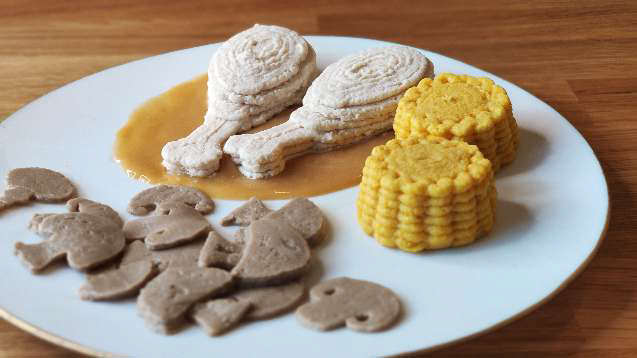
Spellman Care and the University of Leeds Collaborate to Develop 3D Printed Food for Elderly Dysphagia Patients

Application
Originally reported by iDarts
Spellman Care and the University of Leeds Collaborate to Develop 3D Printed Food for Elderly Dysphagia Patients
Spellman Care, a UK-based operator of elderly care facilities in Yorkshire, has partnered with the University of Leeds to research and develop 3D printed food solutions specifically for patients suffering from dysphagia. The project aims to address the nutritional deficiencies and loss of appetite common in elderly populations by using food 3D printing technology to reconstruct pureed ingredients into visually appealing, nutrient-dense forms. By leveraging layer-by-layer deposition, the team is working to optimize the texture and protein content of meals while maintaining the safety standards required to prevent choking or aspiration. The collaboration integrates the expertise of food scientists at the university with the practical operational insights of care facility chefs and staff to ensure the technology is viable for high-volume kitchen environments.
This initiative addresses a critical gap in the healthcare sector, where traditional pureed diets often suffer from low nutritional density and a lack of aesthetic appeal, contributing to malnutrition among the estimated 1.3 million people over 65 in the UK at risk. While the food 3D printing market is currently dominated by niche applications in fine dining and specialized confectionery, this move into clinical nutrition highlights a shift toward functional, end-use applications in healthcare. The project positions 3D printing as a tool for personalized nutrition, competing with conventional food processing methods that struggle to balance texture modification with structural integrity. As the global population ages, the demand for scalable, automated food preparation systems that can customize macronutrient profiles for individual patients is expected to grow, placing hardware providers and food-tech researchers at the center of the value chain.
The success of this project depends on the ability of the research team to transition from laboratory-scale prototypes to a consistent, food-safe workflow that meets the rigorous hygiene standards of care facility kitchens. For stakeholders, the focus should remain on the scalability of the printing process and the long-term cost-benefit analysis of replacing manual food processing with automated additive manufacturing systems. Future implementation will require validation of the nutritional stability of the printed materials and the development of standardized, easy-to-clean hardware interfaces for non-technical kitchen staff.
This article is an AI-assisted rewrite of the linked source report. Facts originate from the source; phrasing is AMPulse's. Use Read Original below to verify, or Report an issue if something is wrong.
Topics