Stratasys expands industrial portfolio with ULTEM 1010 for F3300 and WAM software for automated distortion correction

Hardware
Originally reported by ShareLab
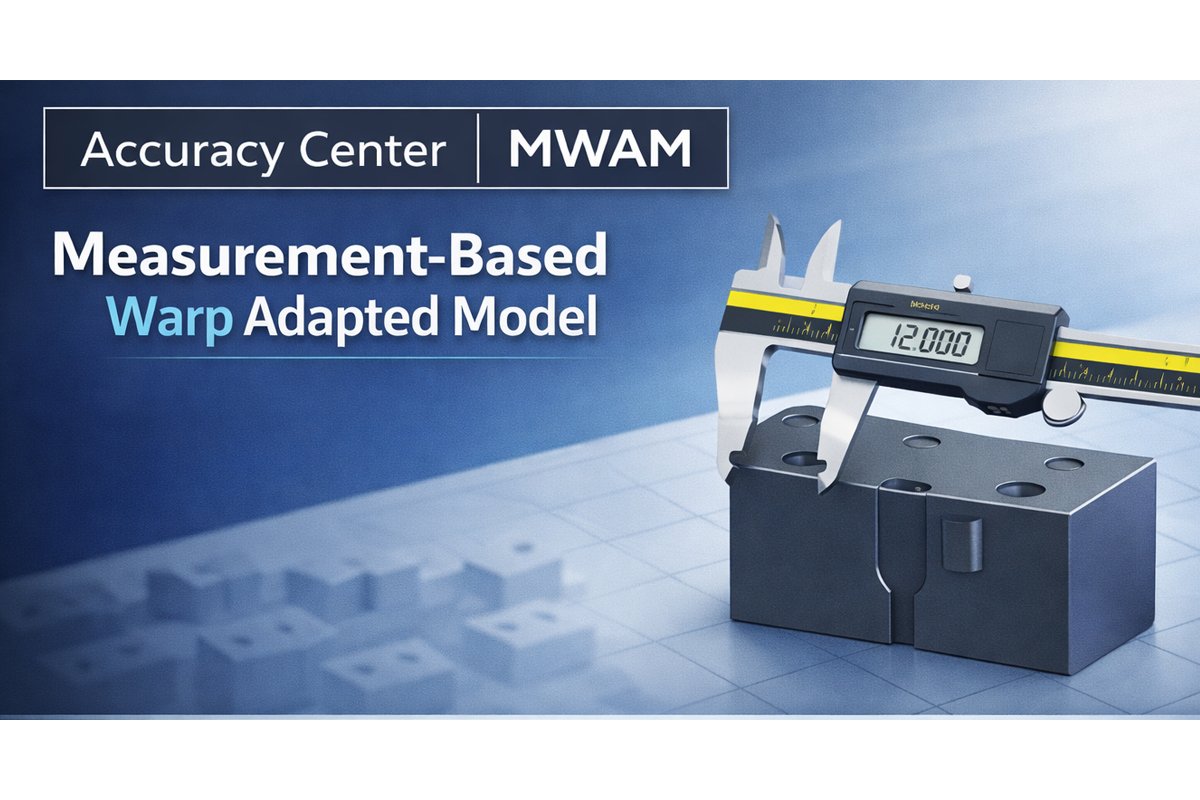
Stratasys has announced a comprehensive update to its additive manufacturing ecosystem, integrating new high-performance materials, software enhancements, and hardware compatibility. Key additions include ULTEM 1010 filament specifically for the F3300 system to support aerospace-grade tooling, and the P3 Deflect 110 material for the Origin DLP platform designed for high-load automotive applications. The company is also deploying Measurement-Based Warped Adaptive Modeling (WAM) within GrabCAD Print Pro, a software feature that uses empirical data to automatically compensate for geometric distortion during the printing process. Additionally, the PolyJet line expands with ToughONE White and Black, while the SLA segment receives the Somos WaterShed White for high-definition prototyping.
This multi-layered update addresses the critical industry gap between rapid prototyping and functional end-use production. By introducing WAM software, Stratasys is tackling the recurring challenge of dimensional accuracy in large-format or high-temperature polymer prints, which has historically required significant manual intervention and iterative testing. The expansion of ULTEM 1010 and Loctite 3D IND3785 materials positions the company to capture more volume in highly regulated sectors like medical, food, and aerospace, where material certification and chemical resistance are non-negotiable. This strategy moves the company further up the value chain by providing a closed-loop solution of hardware, validated materials, and corrective software.
For industrial users, the integration of WAM into the GrabCAD workflow is the most significant development, as it reduces the scrap rate for precision components like electrical connectors and jigs. The availability of large-format ULTEM 1010 spools combined with the Fortus FDC dryer suggests a focus on increasing machine uptime for continuous, long-duration production runs. Buyers in the automotive and aerospace sectors should evaluate these updates based on their specific requirements for thermal stability and dimensional repeatability in functional part manufacturing.
This article is an AI-assisted rewrite of the linked source report. Facts originate from the source; phrasing is AMPulse's. Use Read Original below to verify, or Report an issue if something is wrong.