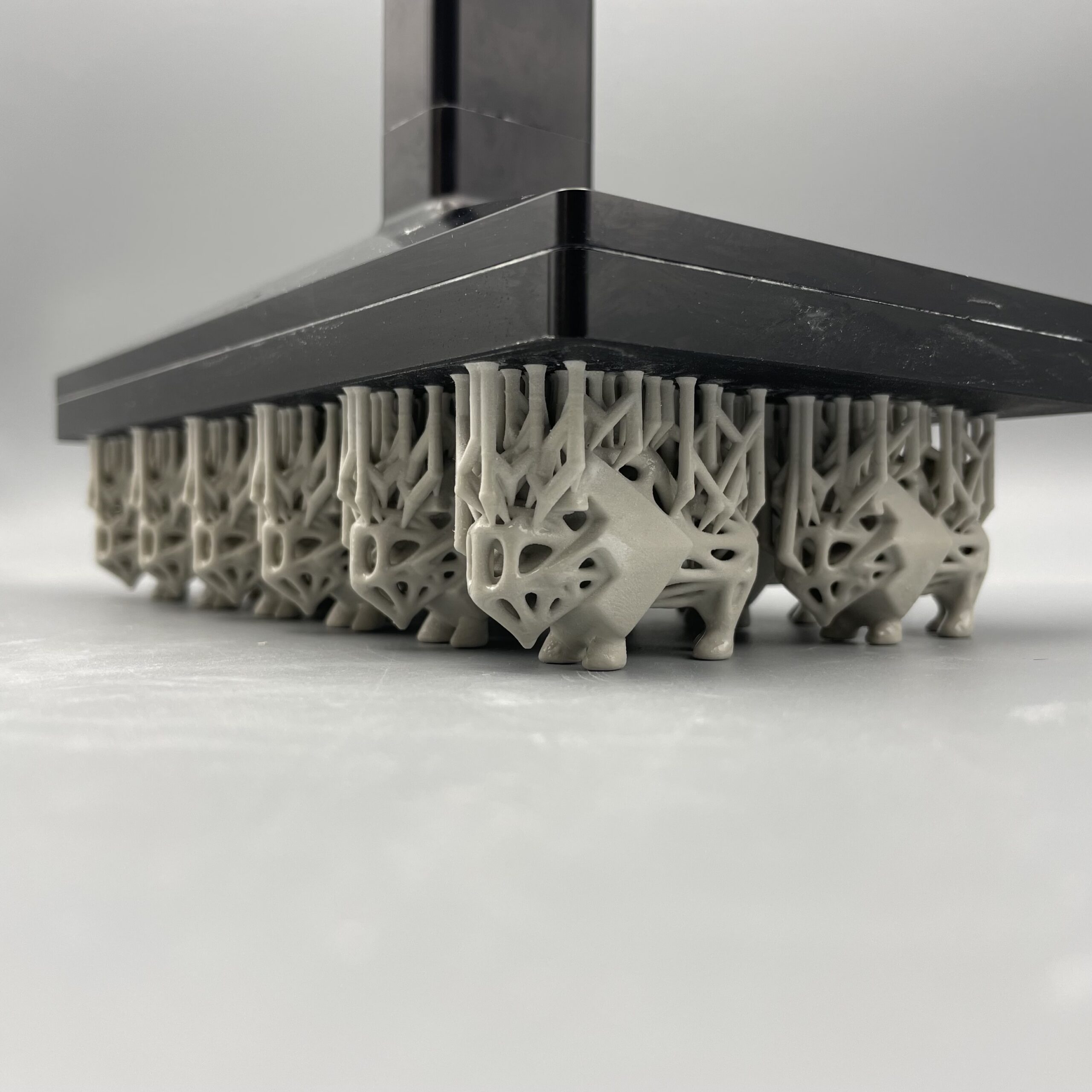
Tethon 3D has acquired the intellectual property portfolio of Fortify, a company previously backed by $12 million in funding from investors including Lockheed Martin and Raytheon.

Materials
Originally reported by 3DPrint.com
Tethon 3D has acquired the intellectual property portfolio of Fortify, a company previously backed by $12 million in funding from investors including Lockheed Martin and Raytheon. The acquisition centers on Fortify's technical ceramic materials and dielectric formulations specifically engineered for radio frequency (RF) applications. Tethon 3D, based in Omaha, Nebraska, will integrate these assets into its existing vat polymerization and ceramic 3D printing ecosystem to target defense and aerospace sectors. This move follows a multi-year partnership between the two firms that began in 2021, focusing on the development of high-performance materials for microwave and millimeter-wave components.
The acquisition addresses a critical bottleneck in the defense supply chain: the production of complex, high-dielectric radomes and antenna components that are difficult to manufacture using traditional subtractive methods. While Fortify struggled to achieve commercial scale with its proprietary fiber-reinforced vat polymerization hardware, its material science IP remains highly relevant for the growing demand in satellite communications and electronic warfare. By absorbing this technology, Tethon 3D positions itself as a specialized supplier for the defense industrial base, competing against established ceramic injection molding and traditional machining providers in the RF component market.
Tethon 3D must now successfully transition these specialized dielectric formulations into its own DLP-based production workflows to ensure consistent performance for mission-critical hardware. Users in the defense sector should evaluate the compatibility of these materials with existing Tethon 3D platforms to determine if the ceramic properties meet specific radar cross-section and signal attenuation requirements. The success of this acquisition depends on the company's ability to provide repeatable, certified parts that meet stringent military standards for environmental and thermal stability.
This article is an AI-assisted rewrite of the linked source report. Facts originate from the source; phrasing is AMPulse's. Use Read Original below to verify, or Report an issue if something is wrong.
Topics