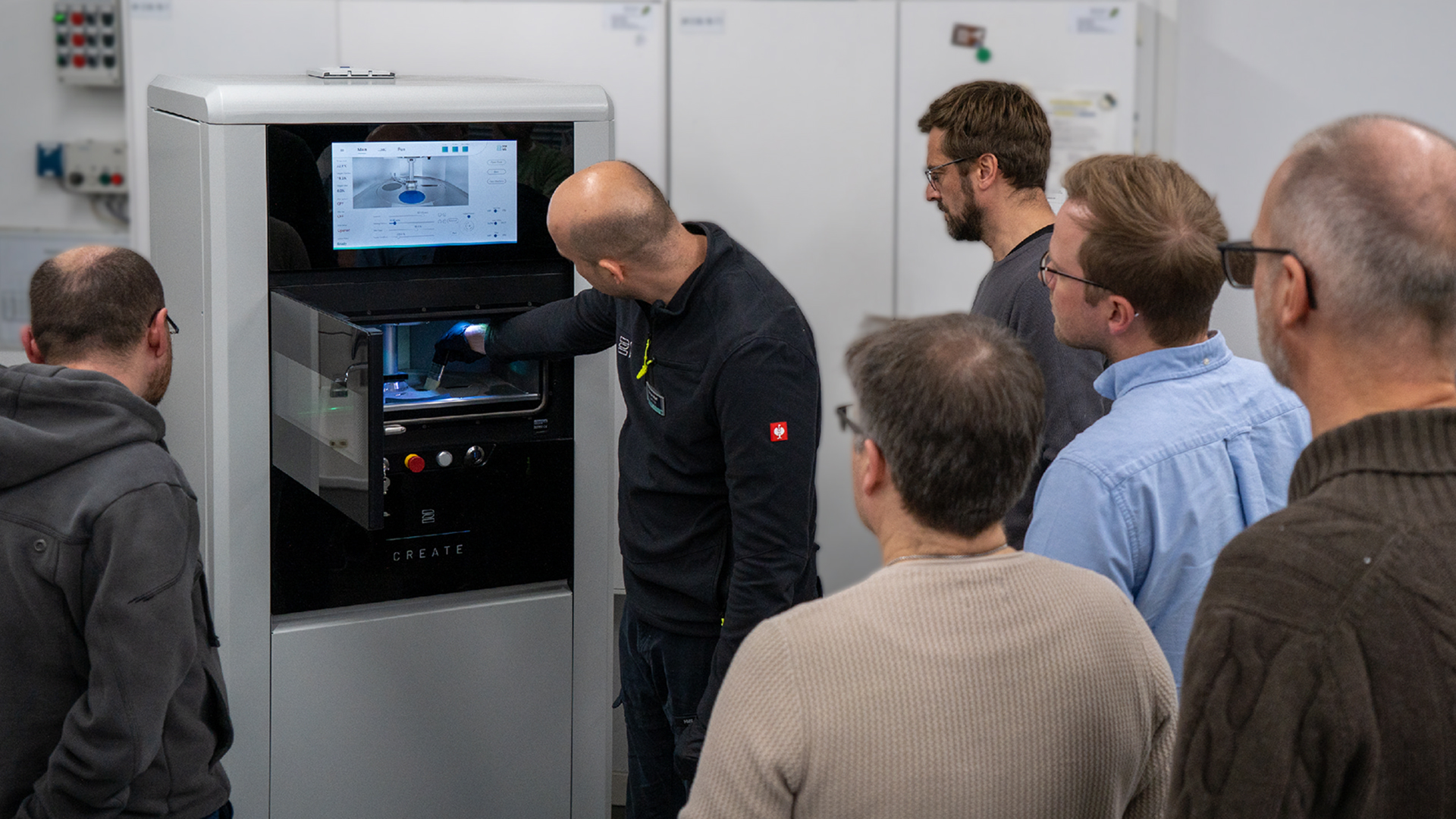
The Sinterdays 2026 event series, organized by Siladent in partnership with 2oneLab and CIMsystem, highlights the integration of Selective Laser Melting (SLM) workflows in dental l...

Hardware
Originally reported by dentalwelt.spitta.de
The Sinterdays 2026 event series, organized by Siladent in partnership with 2oneLab and CIMsystem, highlights the integration of Selective Laser Melting (SLM) workflows in dental laboratories across Germany. The 2026 tour features four locations in Hildesheim, Dachau, Solingen, and Göppingen, showcasing the new 2Create Desktop System. This compact hardware addition is designed for small-footprint laboratory integration, aiming to lower the barrier to entry for metal additive manufacturing in dental applications. The event series emphasizes a full-stack workflow demonstration, covering digital scanning, CAD design, metal printing, and post-processing steps for dental technicians.
This initiative addresses the ongoing challenge of digitizing small-to-medium dental laboratories that have historically relied on traditional casting methods. By focusing on a compact, desktop-oriented SLM solution, the organizers are targeting the segment of the market that requires high-precision metal parts like crowns and bridges without the infrastructure demands of industrial-scale LPBF systems. The competitive landscape in dental AM is currently dominated by established players offering high-throughput systems, but the shift toward decentralized, lab-based metal production is a growing trend as software interoperability improves. This approach positions the 2Create system as a direct competitor to entry-level metal AM solutions currently serving the European dental market.
For dental laboratories, the value of this event lies in the practical validation of the SLM workflow rather than theoretical capability. Prospective users should evaluate the 2Create system based on its specific material compatibility, build speed, and the total cost of ownership compared to traditional milling or outsourcing models. Success for this hardware expansion depends on the reliability of the integrated software ecosystem and the availability of technical support for local lab operators.
Topics