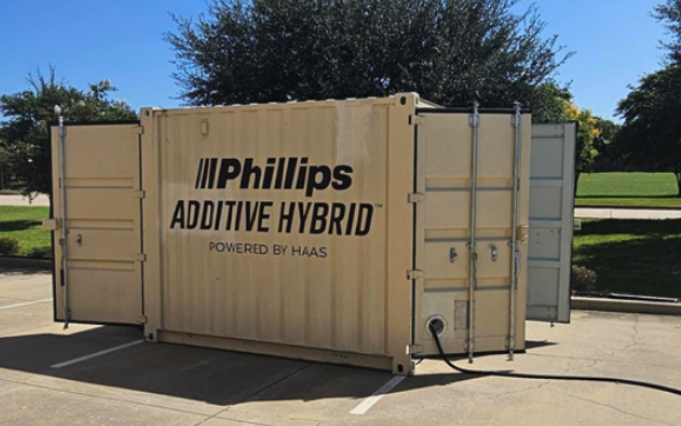
U.S. Marines field exercise deploys containerized AM ecosystem for expeditionary sustainment
Originally reported by TCT Magazine
The U.S. Marine Corps is running a two-week field exercise from April 28 to May 8, 2026, focused on sustaining operations in austere environments using additive manufacturing. The 1st Maintenance Battalion, 1st Marine Logistics Group, I Marine Expeditionary Force (I MEF) is supported by Phillips Corporation, Federal Division (Phillips Federal) and a consortium including Phillips Additive Hybrid, EOS, Markforged, BigRep, and 3YOURMIND. The deployed ecosystem includes hybrid Wire Arc Additive Manufacturing (WAAM), EOS M290 and P 3 Next platforms, Markforged X7, BigRep VIIO 250 printers, and 3YOURMIND’s part identification and MES software. The exercise aims to demonstrate critical maintenance, repair, and drone production directly in forward operating bases and expeditionary advanced base operations.
This exercise represents a concrete operational test of the defense vertical’s politically accelerated AM adoption wave, which has been building since 2025. The U.S. Department of Defense has been under pressure to reduce supply chain vulnerability and shorten logistics tails, and this field trial moves beyond lab demonstrations into live military exercises with real maintenance units. The combination of metal DED (WAAM) for large repairs, polymer PBF-LB (EOS P 3 Next) for drone parts, and Markforged’s composite systems for tooling mirrors the multi-process approach that defense logistics planners have been advocating. The involvement of 3YOURMIND’s software layer for part identification and workflow management addresses a persistent gap: without digital thread integration, deployed printers become isolated tools rather than a coordinated sustainment capability. This aligns with the broader pattern of defense customers demanding turnkey, containerized solutions rather than standalone machines.
For the AM industry, this is a validation of the expeditionary manufacturing concept that has been discussed for years but rarely tested at this scale with a full maintenance battalion. The key execution risk is whether the software-to-hardware integration holds up under field conditions-network connectivity, power stability, and operator training remain the practical bottlenecks. Phillips Federal’s leadership, under retired Colonel Patrick Tucker, provides the military-domain credibility that pure technology vendors often lack. The real signal will be whether this exercise leads to procurement programs or remains a demonstration. For now, the Marines are doing what the industry has long asked: treating AM as a logistics capability, not a novelty.
This article is an AI-assisted rewrite of the linked source report. Facts originate from the source; phrasing is AMPulse's. Use Read Original below to verify, or Report an issue if something is wrong.
Topics